
Preparing Skin for Permanent Hair Removal


Table of Contents
- Why Skin Preparation Matters for Permanent Hair Removal
- How to Prepare for Electrolysis: Your Pre-Treatment Checklist
- What to Avoid Before Electrolysis
- How Long Should Hair Be for Electrolysis
- Shaving Before Electrolysis: The Right Approach
- Electrolysis Aftercare: What to Do After Your Treatment
- Preparing Your Skin for Multiple Treatment Sessions
- Frequently Asked Questions
Last Updated: October 10, 2026
Why Skin Preparation Matters for Permanent Hair Removal
Preparing skin for permanent hair removal is the single most important step you can take before your electrolysis appointment. Your skin’s condition directly affects treatment comfort, results, and healing.
Irritated, sunburned, or sensitized skin makes electrolysis less effective and more uncomfortable. Clean, healthy skin allows the treatment to work as intended.
Proper skin preparation reduces treatment discomfort, speeds up healing, and improves permanent hair reduction results.
How to Prepare for Electrolysis: Your Pre-Treatment Checklist
Start preparing skin for permanent hair removal two weeks before your appointment. Adjust timing based on your skin tone, hair type, and treatment area, as sensitivity varies.
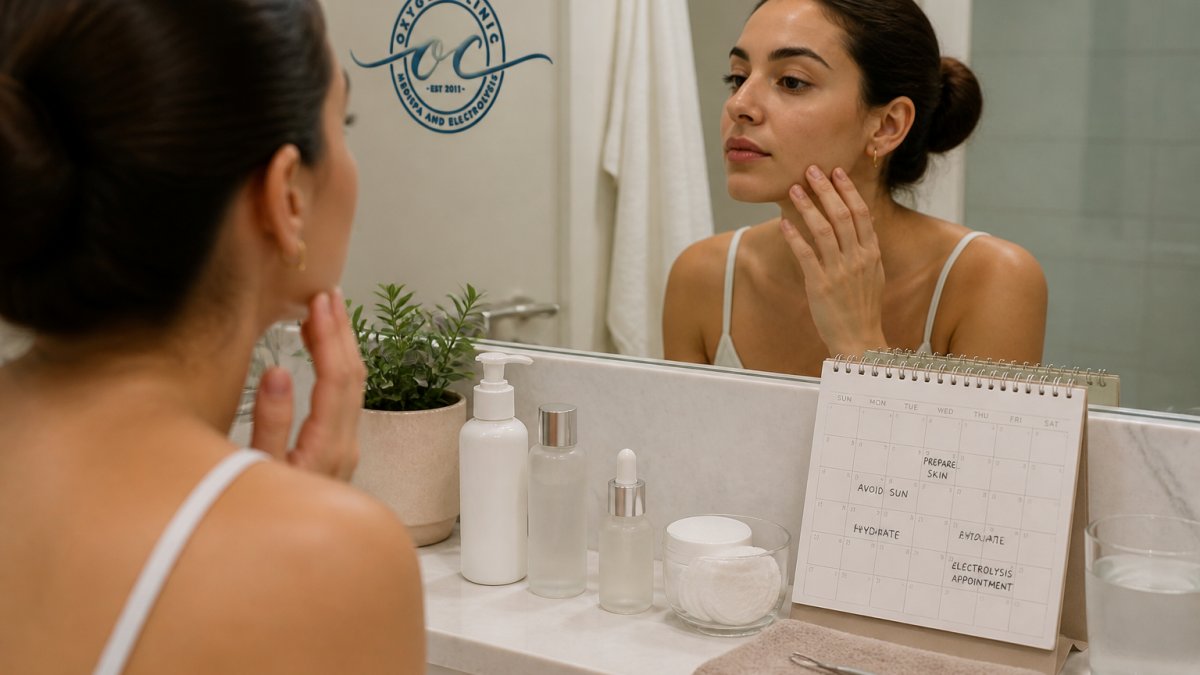
Two Weeks Before Your Appointment
Two weeks before your appointment, stop using active skincare ingredients that sensitize skin.
Pause retinoids, vitamin C serums, and exfoliating acids (AHA and BHA). If using prescription tretinoin, discuss timing with your provider.
Switch to gentle, fragrance-free cleansers and moisturizers. Use products that support your skin barrier rather than challenge it.
Note on skin tone: Deeper skin tones may experience temporary darkening after electrolysis. Start with a calm, well-hydrated skin barrier two weeks out and avoid products that have caused past irritation.
Note on sensitive areas: For underarms, bikini line, or face, pause actives three weeks before treatment and use minimal skincare in the final week.
- Stop retinoids and prescription acne treatments
- Pause exfoliating acids and vitamin C
- Use only gentle, hydrating skincare
- Avoid new skincare products entirely
- For sensitive areas or deeper skin tones, consider extending the pause to three weeks
One Week Before Your Appointment
One week before, focus on hydration and protection to achieve calm, healthy skin.
Avoid waxing, plucking, threading, and depilatory creams, these root-removal methods inflame follicles and reduce electrolysis effectiveness.
Keep skin clean and moisturized. Use lukewarm water, avoid hot showers, and pat skin dry gently.
Note on coarse or dense hair: Keeping skin hydrated and calm one week before reduces inflammation and allows more effective treatment per session.
- Avoid all root-removal hair methods
- Stop exfoliation completely
- Moisturize twice daily with fragrance-free products
- Use sunscreen daily, even if staying indoors
- Avoid hot water and harsh towel friction
24 to 48 Hours Before Treatment
In the final 24 to 48 hours, keep skin clean and protected, avoid anything that might irritate it.
Shave 24 to 48 hours before your appointment. Shaving removes hair at skin level without disturbing the follicle. Shaving too early allows regrowth; too close causes irritation.
Avoid all other hair removal methods. Waxing, plucking, and depilatory creams pull hair from the root, which makes electrolysis less effective because the follicle is already damaged.
Note on treatment area: For the face, shave 24 hours before. For larger areas, shave the night before or morning of treatment.
Note on skin texture: If you have bumpy skin or ingrown hairs, shave gently with a sharp razor to reduce discomfort.
- Shave 24-48 hours before appointment
- Do not wax, pluck, or use hair removal cream
- Keep skin clean and dry
- Avoid makeup, lotions, and oils on treatment area
- For sensitive areas, shave gently and allow extra recovery time
Waxing or plucking before electrolysis damages the hair follicle, making permanent hair removal less effective. Plan hair removal timing carefully. If you accidentally wax or pluck a few hairs, contact your clinic to discuss whether to reschedule or proceed.
What to Avoid Before Electrolysis
Certain habits, products, and medical factors affect electrolysis safety and results. Disclose relevant information to your electrologist to prepare skin for permanent hair removal properly.
Sun Exposure and Tanning
Sun exposure is the biggest threat to electrolysis results. UV exposure darkens skin and increases reactivity to treatment.
Avoid direct sun exposure for at least two weeks before your appointment. If you must be outdoors, wear protective clothing and apply broad-spectrum sunscreen with SPF 30 or higher.
Avoid tanning beds, spray tans, and self-tanning products, they interfere with electrolysis and cause uneven results.
If you have a sunburn, reschedule your appointment. Treating sunburned skin with electrolysis causes unnecessary pain and can lead to post-treatment complications.
- Avoid sun exposure for 2 weeks before treatment
- Do not use tanning beds or spray tans
- Wear protective clothing and sunscreen outdoors
- Reschedule if you have sunburn
Root-Removal Methods
Root-removal methods damage the follicle electrolysis needs to treat. Damaged or inflamed follicles reduce treatment effectiveness.
Waxing, plucking, and threading pull hair from the root, inflaming follicles and causing ingrown hairs.
Depilatory creams contain strong chemicals that sensitize skin and make it too irritated for safe treatment.
Shaving is safe because it cuts hair at skin level without disturbing the follicle. This is the only hair removal method to use in the week before electrolysis.
- Avoid waxing and plucking for 1-2 weeks before treatment
- Do not use depilatory hair removal creams
- Do not use threading
- Shaving is the only safe method
Skincare Actives and Irritating Products
Active skincare ingredients increase sensitivity and discomfort during electrolysis.
Retinoids increase reactivity, vitamin C serums irritate sensitized skin, and acids thin the outer layer, making skin vulnerable.
Benzoyl peroxide is drying and irritating. High-concentration niacinamide causes flushing and sensitivity.
Stop all actives one week before. Use only gentle cleanser, hydrating moisturizer, and broad-spectrum sunscreen.
- Pause retinoids and vitamin C serums
- Stop all exfoliating acids (AHA and BHA)
- Avoid benzoyl peroxide products
- Use only gentle, fragrance-free skincare
Medications and Medical History Disclosure
Certain medications and medical conditions affect how your skin responds to electrolysis and whether treatment is safe for you.
Photosensitizing medications (some antibiotics, high-dose NSAIDs, St. John’s wort) make skin more reactive to heat and electrical current.
Retinoid medications require special timing. Wait at least 6 months after isotretinoin before electrolysis.
Skin conditions (eczema, psoriasis, rosacea, herpes simplex) require disclosure. Electrolysis may not be suitable during active flares.
Recent procedures (chemical peels, microdermabrasion, laser, fillers) require 2-4 weeks recovery before electrolysis.
Pregnancy: Many practitioners defer treatment until after delivery and breastfeeding due to hormonal changes affecting hair growth and skin sensitivity.
Immunosuppression or bleeding disorders should be disclosed, as they may affect healing or increase bruising risk.
During consultation, answer honestly about medical history, medications, and skin conditions.
- Disclose all prescription and over-the-counter medications
- Mention photosensitizing drugs and herbal supplements
- Report active skin conditions or recent procedures
- Inform your electrologist if you are pregnant or breastfeeding
- Share any bleeding disorders or immunosuppression concerns
Certain medications and medical conditions require special consideration before electrolysis. Always disclose your full medical history and current medications to your electrologist during your consultation.
How Long Should Hair Be for Electrolysis
Shave 24 to 48 hours before your appointment to leave hair at skin level for your electrologist to treat.
Hair must be visible at skin level so your electrologist can treat the follicle. Plucked or waxed hair leaves no visible root.
Shaving 24 to 48 hours before treatment is the standard. This timing ensures hair is present but skin is not irritated from recent shaving.
If you accidentally pluck or wax a few hairs, contact your clinic. Your electrologist can still treat those follicles, but results may be slower because the follicle is already irritated.
Shave the morning of your appointment if treatment is in the afternoon, or the night before if treatment is in the morning. This timing keeps hair visible and skin calm.
Shaving Before Electrolysis: The Right Approach
Shaving is the only safe hair removal method before electrolysis because it removes hair at skin level without damaging the follicle. Done correctly, shaving prepares skin for permanent hair removal.
Use a clean, sharp razor. A dull blade requires more pressure and can cause irritation. Rinse the blade between strokes to remove hair and shaving cream buildup.
Apply shaving cream, gel, or soap to soften hair and protect skin. Shave in the direction of hair growth, not against it. Shaving against the grain gives a closer shave but irritates skin more.
Rinse with lukewarm water and pat skin dry. Do not rub. Apply a fragrance-free moisturizer to calm skin.
- Use a sharp, clean razor
- Apply shaving cream or gel
- Shave with the grain, not against it
- Shave 24-48 hours before your appointment
- Moisturize after shaving
Electrolysis Aftercare: What to Do After Your Treatment
What you do after electrolysis is as important as what you do before. Proper aftercare speeds healing and improves results.
Your skin will be red and slightly swollen immediately after treatment. This is normal and usually fades within a few hours.
Keep the treatment area clean and dry for the first 24 hours. Use a gentle, fragrance-free cleanser. Do not use makeup, lotions, or oils on the treated area for at least 24 hours.
Avoid sun exposure for at least one week after treatment. UV exposure can darken the treated area and slow healing. Wear protective clothing and apply broad-spectrum sunscreen if you must be outdoors.
Do not pick at scabs or crusting. Let them heal naturally. Picking can cause scarring and infection.
- Keep treated area clean and dry for 24 hours
- Avoid makeup and lotions for 24 hours
- Avoid sun exposure for 1 week
- Do not pick at scabs
- Avoid hot baths and showers for 24 hours
Preparing Your Skin for Multiple Treatment Sessions
Permanent hair removal with electrolysis requires multiple sessions. Your hair grows in cycles, and electrolysis treats one hair cycle at a time. Most clients need 4 to 6 weeks between sessions.
Between sessions, follow the same preparation steps. Two weeks before your next appointment, stop active skincare ingredients.
Your skin builds tolerance with each session. By your third or fourth appointment, you’ll understand your skin’s needs and what helps you feel most comfortable.
After each session, allow at least one week before any other skin treatments. Space treatments at least 7 to 10 days apart.
Track your results. Take photos before your first appointment and after every 2 to 3 sessions. You’ll see progressive hair reduction over time.
- Prepare the same way for every session
- Space sessions 4-6 weeks apart
- Wait 1 week before other skin treatments
- Track results with photos
Preparing skin for permanent hair removal sets you up for success. When you follow a structured timeline, avoid irritating products and methods, and protect your skin from sun exposure, electrolysis delivers the permanent results you want. Learn more about electrolysis safety and efficacy from dermatological research to understand the science behind permanent hair removal.
Frequently Asked Questions
How should I prepare my skin for electrolysis?
Start preparing two weeks before your appointment by avoiding sun exposure and stopping active skincare ingredients like retinoids. One week before, ensure the treatment area is clean and free of makeup or lotions. Shave 24 to 48 hours before your session, then leave the area untouched. Arrive with clean, dry skin and wear loose clothing. Avoid waxing, plucking, or hair removal cream for at least two weeks prior, as these methods remove hair from the root and interfere with electrolysis effectiveness.
What should I avoid before an electrolysis appointment?
Avoid sun exposure and tanning for at least two weeks before treatment, as UV exposure increases skin sensitivity and irritation risk. Do not wax, pluck, or use hair removal cream on the treatment area, as electrolysis requires hair to be present in the follicle. Stop using retinoids, vitamin C serums, and exfoliating products one week before your session. Avoid makeup, lotions, oils, and perfumed products on the treatment area on appointment day. Do not apply numbing gels or other topical treatments unless your provider recommends them.
How long should hair be for electrolysis?
Hair should be 1 to 2 millimetres long when you arrive for electrolysis. This means you should shave 24 to 48 hours before your appointment, allowing just enough regrowth for the electrologist to see and target the hair follicle. If hair is too long, it can be trimmed during your consultation. If you accidentally wax or pluck the area, wait at least two weeks before scheduling treatment to allow new hair to grow through the follicle.
What should I do after electrolysis to care for my skin?
After electrolysis, avoid sun exposure and UV rays for at least 48 hours. Keep the treatment area clean and dry, and do not apply makeup or heavy lotions for 24 hours. Use only gentle, fragrance-free cleansers. Avoid hot baths, saunas, and strenuous exercise for 24 to 48 hours, as heat and sweating can irritate treated skin. If redness or swelling occurs, apply a cool compress. Resume your regular skincare routine gradually, and wait one week before using active ingredients like retinoids or exfoliating products.


