
Permanent Hair Removal for Blonde Hair: What Actually Works


Last Updated: November 14, 2026
Quick Summary
Electrolysis is the only method that delivers permanent hair removal for blonde hair, because it treats each follicle directly and does not depend on melanin. Laser and IPL need pigment to work, so they give weak, temporary results on blonde hair.
- Blonde hair contains very little melanin, so light-based devices cannot heat the follicle enough to disable it.
- Laser and IPL support only permanent hair reduction, and even that fades on light hair once treatments stop.
- Electrolysis treats one follicle at a time, so a full area takes multiple sessions spread over months.
- Expect a clearance phase, a maintenance phase and occasional touch-ups rather than a fixed session count.
- Keep the treated area clean and dry for the first day.
Table of Contents
- Why Blonde Hair Resists Light-Based Hair Removal
- Laser Hair Removal for Blonde Hair: What the Evidence Shows
- Electrolysis for Blonde Hair: How It Removes Every Color
- Permanent Removal vs Permanent Hair Reduction
- How Many Electrolysis Sessions Are Needed
- Electrolysis Aftercare: What to Do Between Appointments
- Choosing a Provider and Booking Your Consultation
- Frequently Asked Questions
Why Blonde Hair Resists Light-Based Hair Removal
If you have blonde hair and you’ve tried laser, you already know the frustration. You sat through the appointments, wore the goggles, paid the fees, and watched the hair grow back. Light-based devices need pigment to work, and blonde hair has very little of it.
So let’s start with the science, because it explains everything that follows.
The Role of Melanin in Laser and IPL Treatment
Melanin is the pigment that gives hair and skin their color, and it is the target that laser and IPL devices rely on to disable a hair follicle. The device fires a burst of light, the melanin absorbs it, and the heat travels down to the hair root. If there’s enough pigment, the follicle takes damage and stops producing hair.
Blonde hair contains very little melanin. Some shades have almost none. That means the light passes straight through the hair shaft without generating enough heat to affect the root. The follicle survives, and the hair returns on its normal growth cycle.
There’s a second problem. Devices can’t easily tell light hair from light skin. A practitioner has to crank up the energy to reach the follicle, which raises the risk of burns and pigmentation changes on the surrounding skin.
Which Hair Colors Respond Poorly to Light-Based Treatment
Blonde sits at the difficult end of the spectrum, but it isn’t alone. The general rule is simple: the less pigment near the root, the weaker the response.
- Blonde hair: Poor to minimal response, especially fine blonde hair
- Red hair: Mixed results; the pigment type absorbs light differently
- Gray and white hair: Little to no response once pigment is gone
- Light brown hair: Variable; some clients respond, many don’t
- Dark brown and black hair: The strongest response
Coarse hair generally responds better than fine hair within any color group, because there’s more pigment per strand. But color remains the deciding factor.
Laser Hair Removal for Blonde Hair: What the Evidence Shows
Laser hair removal for blonde hair produces limited, often temporary results. The treatment works best on dark hair against lighter skin, and blonde hair falls outside that sweet spot.
That doesn’t mean laser is useless. It means the promise of “permanent” results doesn’t hold for light hair. You may see a reduction in density while sessions continue, then watch it reverse once you stop. For a full breakdown of how the two methods compare on results, see our guide to electrolysis vs laser hair removal efficacy.
Laser Types and Their Limits on Light Hair
Different lasers target different things, and none of them solve the blonde problem.
| Laser Type | Best For | Response on Blonde Hair |
|---|---|---|
| Alexandrite | Dark hair, light skin | Weak; needs pigment to absorb |
| Diode | Dark to medium hair | Weak on light hair |
| Nd:YAG | Darker skin tones | Very weak; longer wavelength skips fine pigment |
| Ruby | Dark hair | Weak; largely replaced by Alexandrite |
| IPL (intense pulsed light) | Broad use, dark hair | Weak; not a true laser, less precise |
IPL is often marketed alongside lasers, but it’s a different technology. It spreads a wider band of light across the skin rather than targeting a single wavelength. That makes it even less precise on fine, light hair. If a clinic promises IPL will permanently clear blonde hair, ask them how the light reaches a follicle with almost no melanin. There isn’t a good answer.
Electrolysis for Blonde Hair: How It Removes Every Color
Electrolysis for blonde hair works because it doesn’t depend on pigment at all. Instead of light, a trained electrologist inserts a fine probe directly into each hair follicle and delivers a small current that destroys the growth cells at the root. The hair color is irrelevant. Blonde, red, gray, white, dark: the follicle is treated the same way.
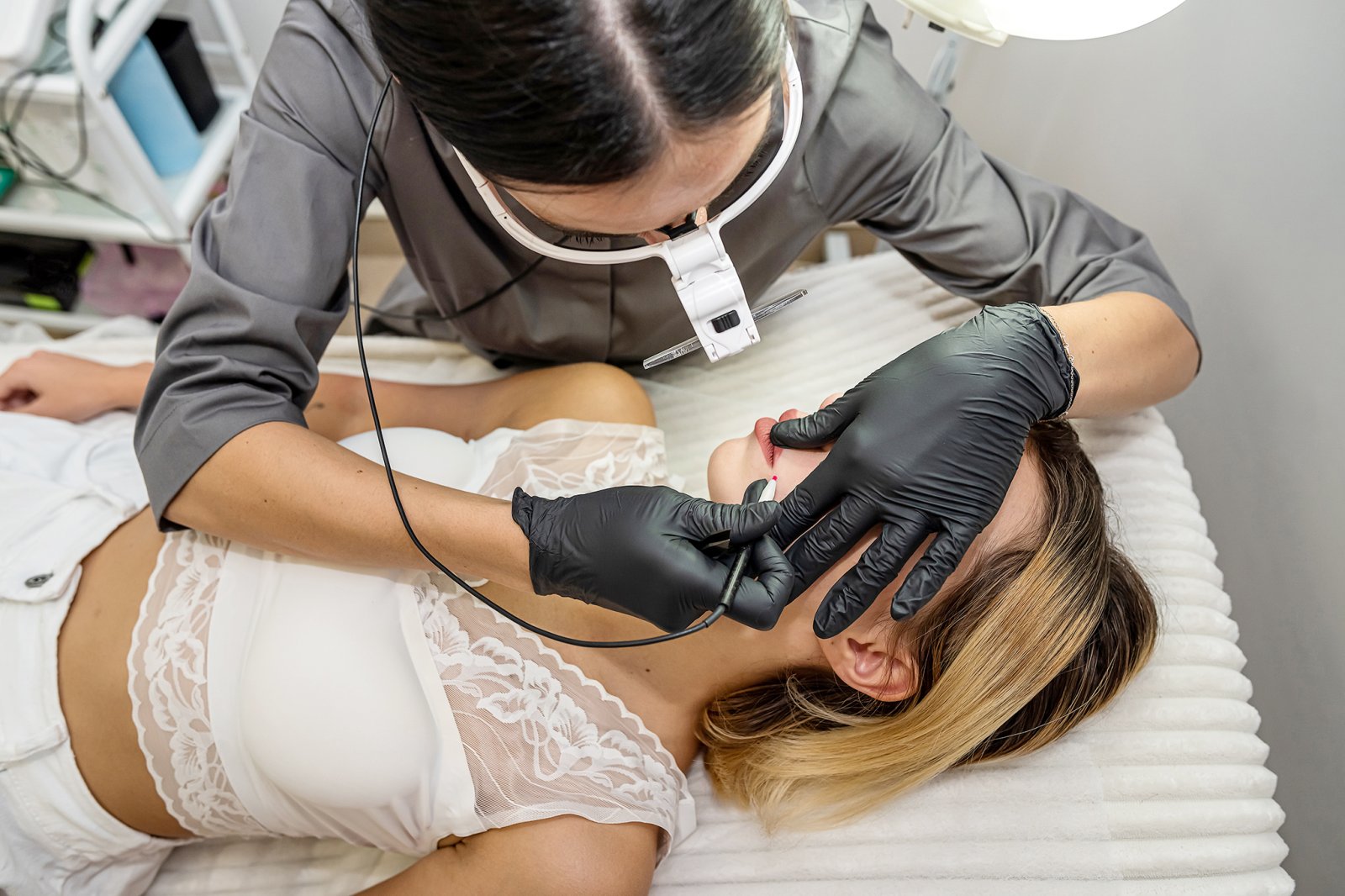
This is the key difference. Laser needs melanin as a messenger to reach the follicle. Electrolysis skips the messenger and goes straight to the source. That’s why it is a method that can deliver permanent hair removal for blonde hair, and for other shades.
The trade-off is time. Each follicle is treated individually, so a full area takes multiple sessions spread over months. You’re trading speed for permanence, and for most of our blonde clients, that’s a trade worth making. You can read more about what we offer on our electrolysis treatment page.
Permanent Removal vs Permanent Hair Reduction
These two phrases get used interchangeably in marketing, and that’s where a lot of disappointment starts. They are not the same claim.
Permanent hair removal means the treated follicles stop producing hair for good. Permanent hair reduction means the total amount of hair is reduced and stays reduced over time. Only electrolysis supports the first claim. Laser and IPL support the second, and even then, only on hair with enough pigment.
What most guides miss is that “reduction” is doing a lot of quiet work in those laser ads. A reduction of half your hair is still a lot of hair. And for blonde clients, the reduction often fades once treatments stop.
If you want the longer answer on whether results truly last for every client, our article on whether electrolysis is permanent for everyone covers the realistic picture.
How Many Electrolysis Sessions Are Needed
There is no single number, and the number depends on the factors below. The honest answer depends on four things:
- The treatment area: an upper lip needs far fewer sessions than a full chin or neck
- Hair density: more hair means more follicles to treat
- Hair growth cycle: follicles only respond in the active growth phase, so sessions are spaced to catch them
- Hormones and health: conditions like PCOS or perimenopause can drive new growth
What most guides skip is the arithmetic behind those variables. Electrolysis treats one follicle at a time, so the practical unit is time per follicle, not sessions per area. From that, you can estimate the total treatment hours an area will need and divide by the length of appointment you can tolerate.
A Realistic Scheduling Framework
Rather than a session count, think in phases:
- Clearance phase: the first series of appointments works through the area, catching follicles in the active growth phase. Because not all follicles are active at once, the area will not look clear after the first pass.
- Maintenance phase: once the initial pass is complete, appointments are spaced further apart to catch follicles that were dormant during clearance.
- Touch-up phase: occasional short appointments address any regrowth, which is normal and does not mean the treatment failed.
The total calendar time depends on the area being treated and how often appointments are scheduled.
Time and Commitment Compared Across Methods
| Method | Typical session length | Typical number of sessions | Calendar time to final result |
|---|---|---|---|
| Electrolysis (small facial area) | Short, frequent appointments | A series over several months, plus touch-ups | Months, with occasional maintenance |
| Electrolysis (larger area) | Longer appointments or more of them | More sessions than a small area | Several months to over a year |
| Laser | Short appointments | A series spaced weeks apart | Months, with results that may fade after stopping |
| IPL | Short appointments | A series spaced weeks apart | Months, with weaker and less durable results on light hair |
These are frameworks, not promises. Your own schedule depends on how much hair you have, how well you tolerate treatment, and how consistently you attend. A clinic that maps out phases rather than quoting a fixed session count is giving you a more honest picture.
What Affects Your Personal Session Count
Several factors affect how long treatment takes, including hair density, hair thickness, hormonal conditions and how consistently appointments are kept.
Electrolysis Aftercare: What to Do Between Appointments
Electrolysis aftercare is simple, and following it helps the treated area stay calm. The treated area is mildly stressed after each session, and a little care keeps it calm.
- Keep the area clean and dry for the first day
- Skip makeup on treated facial areas for 24 hours
- Avoid direct sun and use sunscreen on exposed areas
- Don’t pick or scratch at any small scabs
- Pause strong exfoliants and retinoids for a few days
- Skip saunas, hot yoga and heavy sweating for 24 hours
Mild redness and tiny bumps are normal and settle within a day or two. If you want the full recovery timeline, our guide to what to expect during electrolysis recovery walks through it day by day.
Choosing a Provider and Booking Your Consultation
Here’s how we’d suggest you vet anyone before booking:
- Confirm the electrologist is trained and certified in electrolysis
- Ask how many years they’ve worked specifically with light or gray hair
- Ask what method they use and why it suits your hair type
- Request a consultation before committing to a package
- Check that they explain a realistic session plan, not a guaranteed number
- Look for a clean, private treatment space
- Ask about aftercare guidance and follow-up
When you’re ready, our step-by-step guide to booking professional electrolysis covers what to bring and what to ask.
Blonde hair doesn’t have to mean a lifetime of shaving, waxing, or failed laser appointments. Electrolysis treats the follicle directly and does not depend on pigment. Our team specializes in permanent hair removal through electrolysis for light, red, gray and white hair. Book your free consultation to learn more about your options.
Frequently Asked Questions
Can blonde hair be removed permanently?
Yes, but the method matters. Laser and IPL depend on pigment in the hair to absorb light, so blonde, red, grey and white hair often respond poorly or not at all. Electrolysis works differently: it delivers current to the hair follicle itself, so it does not rely on hair color. That makes it the reliable route to permanent hair removal for blonde hair, though results depend on consistent sessions and a skilled practitioner.
How many electrolysis sessions are needed for blonde hair?
There is no single number. Sessions depend on the treatment area, how much hair you have, hair growth cycles and hormone factors. Small areas such as the upper lip usually need fewer sessions than the chin or neck, and most plans involve a series of appointments spaced to catch hair in its active growth phase.
Is electrolysis suitable for all skin tones?
Because electrolysis targets the follicle rather than pigment, it does not carry the contrast requirements that limit laser and IPL on light hair.
Can electrolysis remove white or gray hair?
It can. White and gray hair has lost most of its pigment, which is exactly why light-based treatments struggle with it. Electrolysis does not need pigment to work, so it can treat white, gray, blonde and red hair with the same approach.


