
What to Expect During Electrolysis Recovery


Table of Contents
- What to Expect During Electrolysis Recovery: A Session-by-Session Timeline
- Electrolysis Aftercare Instructions: The First 48 Hours
- How to Soothe Skin After Electrolysis: Managing Redness, Swelling and Tenderness
- How Many Electrolysis Sessions for Face: Planning Your Recovery Around Your Treatment Schedule
- Skin-Type Specific Recovery: What Changes If Your Skin Is Sensitive, Oily or Prone to Pigmentation
- When to Contact a Professional About Your Electrolysis Recovery
- The Emotional Side of Electrolysis Recovery: What Nobody Tells You
- Frequently Asked Questions
Last Updated: October 2, 2026
What to Expect During Electrolysis Recovery: A Session-by-Session Timeline
Here is the part most guides skip. The healing process is not a single event.
Electrolysis recovery is the period of skin healing that follows each treatment session, during which the treated follicles close, redness fades, and the epidermis repairs itself.
The timeline below shows what a typical recovery looks like.
| Stage | What You’ll See | Typical Duration |
|---|---|---|
| Immediately after | Redness, warmth, tiny bumps | 1-3 hours |
| First 24 hours | Mild swelling, tenderness | Up to 1 day |
| Days 2-3 | Redness fades, slight scabbing | 2-3 days |
| Days 4-7 | Skin settles, follicles clear | Up to 1 week |
Most clients book sessions every one to three weeks, so recovery overlaps with daily life. Plan around it rather than fighting it.
Electrolysis Aftercare Instructions: The First 48 Hours
The first 48 hours decide how well your skin recovers. Treat the area like a fresh minor wound: keep it clean, keep it cool, and keep your hands off it. These electrolysis aftercare instructions apply to every skin type, but the ingredient choices below are where most people accidentally slow their own healing.
What to Avoid in the First Two Days
Skip makeup on the treated area for at least 24 hours. Pores are open and products can trap bacteria.
Also avoid:
- Hot showers, saunas, and steam rooms
- Swimming pools and hot tubs
- Intense workouts that cause heavy sweating
- Direct sun exposure without protection
- Touching, picking, or scratching the area
Sweat and bacteria are the two biggest threats in the first two days. Both raise your risk of irritation and infection.
Cleansing and Protecting Treated Skin
Wash gently with lukewarm water and a mild, fragrance-free cleanser. Pat dry with a clean towel. Do not rub.
Follow with a light, non-comedogenic moisturizer. If you go outside, apply broad-spectrum SPF 30 or higher. Sun protection matters most in the days right after a session, when the skin is still repairing.
Ingredient Safety: What to Use and What to Pause
This is the part most aftercare pages skip. Your skin barrier is temporarily more permeable after a session, so what you apply is absorbed faster and can sting, clog, or inflame freshly treated follicles.
Safe in the first 48 hours:
- Aloe vera (plain, no added fragrance or alcohol)
- Niacinamide, calms redness and supports the barrier
- Ceramides and squalane, replace lipids the skin is temporarily short on
- Hyaluronic acid, holds water without occluding pores
- Panthenol (provitamin B5), reduces tightness and irritation
- Zinc oxide or titanium dioxide sunscreen, mineral filters are gentler on compromised skin than chemical filters
Pause until the area is fully calm (usually 5-7 days):
- Retinoids and retinoid derivatives, increase turnover and thin the barrier
- AHAs (glycolic, lactic) and BHAs (salicylic), exfoliate skin that is already repairing
- Vitamin C serums at high concentrations, can sting open follicles
- Benzoyl peroxide, drying and irritating on treated skin
- Alcohol-based toners and astringents
- Fragrance, essential oils, and botanical extracts
- Physical scrubs, cleansing brushes, and anything abrasive
If you use a prescription topical (for example, tretinoin or a prescription acne treatment), ask your electrologist how many days to pause it before and after each session.
Keep a small tube of plain, fragrance-free moisturizer in your bag on session days. Applying it within an hour of leaving the clinic calms tightness before it starts.
A Sample First-48-Hours Routine
- Hour 0-1: Cool compress for 10 minutes. Apply a thin layer of fragrance-free moisturizer.
- Hour 1-8: Repeat cool compresses as needed. No makeup, no touching.
- Evening: Gentle cleanse with lukewarm water and a mild cleanser. Pat dry. Moisturize.
- Day 2 morning: Cleanse, moisturize, mineral SPF if going outside.
- Day 2 evening: Same routine. If redness is fading and there is no scabbing, you can usually return to normal gentle skincare on day 3.
If anything burns, itches intensely, or looks worse on day 2 than day 1, stop the product and contact your provider.
How to Soothe Skin After Electrolysis: Managing Redness, Swelling and Tenderness
Cool compresses are the fastest way to calm redness and swelling. Wrap an ice pack in a thin cloth and hold it on the area for 10 minutes at a time.
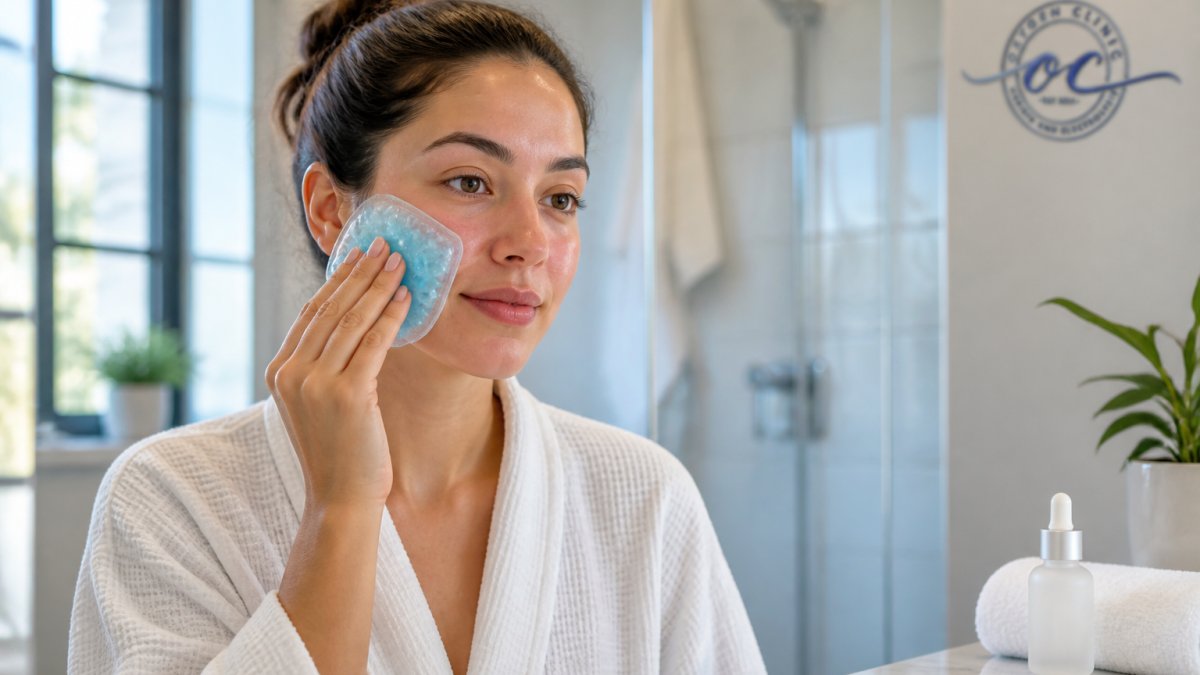
If you want to know how to soothe skin after electrolysis, start with these steps:
- Apply a cool compress for 10 minutes, several times a day
- Sleep with your head slightly elevated to reduce swelling
- Use a fragrance-free, soothing moisturizer
- Take an over-the-counter pain reliever if needed
- Keep the area out of direct sun
Erythema, the clinical term for that red flush, is a normal sign that blood is flowing to the healing tissue. It is not a warning sign on its own.
Ingredients That Help and Ingredients to Skip
Look for soothing, simple formulas. Ingredients like aloe, niacinamide, and ceramides support the skin barrier without irritation.
Skip these until the area is fully calm:
- Retinoids and strong exfoliating acids
- Alcohol-based toners
- Fragrance and essential oils
- Harsh scrubs
Product ingredient safety matters more after electrolysis than at almost any other time. Your skin is more permeable, so what you apply gets absorbed faster.
How Many Electrolysis Sessions for Face: Planning Your Recovery Around Your Treatment Schedule
Hair usually needs a series of sessions, not one. The exact number depends on hair density, growth cycle, and hormone factors, so a qualified electrologist assesses your case in person rather than quoting a fixed figure.
That said, a common approach is spacing sessions every one to three weeks. This gives each area time to heal before the next pass.
Understanding how many electrolysis sessions for face you’ll need helps you plan recovery realistically. Hair grows in cycles, and only active-growth hairs respond to treatment. That is why one visit rarely clears an area.
A simple way to plan:
- Book your first few sessions close together
- Space later sessions as density drops
- Avoid scheduling right before major events
- Give yourself at least 48 hours of buffer
Booking a session the day before a wedding, photo shoot, or interview is a common mistake. Mild redness can last a full day, and no amount of makeup covers fresh, tender skin well.
Skin-Type Specific Recovery: What Changes If Your Skin Is Sensitive, Oily or Prone to Pigmentation
Skin type changes how your recovery looks and how long it takes. A sensitive client may stay pink for two days, while an oily client might see small bumps clear within hours. More importantly, skin type changes what can go wrong, and that is where most aftercare advice stops being useful.
Sensitive Skin
Expect more visible redness and a longer window of tenderness. Use only fragrance-free, dye-free products. Cool compresses help most here. Patch-test anything new on your inner arm for 24 hours before it goes near treated skin. If your skin reacts to adhesives, avoid covering the area with bandages.
Oily and Acne-Prone Skin
Cleanse gently twice a day, no more. Over-washing strips the barrier and triggers more oil. Avoid heavy creams and occlusive balms that can clog freshly treated follicles and contribute to milia or small bumps. Lightweight, non-comedogenic moisturizers and gel textures work better. Do not reach for salicylic acid or benzoyl peroxide to manage breakouts in the first week; both are too irritating on treated skin.
Dry Skin
Layer a richer moisturizer at night and consider a humidifier if you sleep in dry air. Dry skin can crack and slow healing, and cracked skin is an entry point for bacteria. Avoid long hot showers, which strip lipids further.
Melanin-Rich Skin and Pigmentation-Prone Skin
This is the group most aftercare guides overlook, and it deserves its own plan. Skin with more melanin, including medium-brown, deep-brown, and Black skin, has a higher risk of post-inflammatory hyperpigmentation (PIH) after any trauma, including electrolysis (pubmed.ncbi.nlm.nih.gov). PIH shows up as darker patches at the treated site, sometimes appearing days after the session rather than immediately.
The good news: PIH after electrolysis is usually temporary, and it is largely preventable with the right habits.
- Sun protection is non-negotiable. UV exposure is the single biggest driver of PIH. Use a broad-spectrum mineral SPF 30 or higher every day, reapply every two hours outdoors, and wear a hat or seek shade.
- Do not pick or scrub. Any additional trauma to the area increases pigment risk.
- Avoid heat and friction on the treated area for the first few days.
- Skip strong actives (retinoids, AHAs, BHAs) until the skin is fully calm, they can irritate and worsen pigment.
- Tell your electrologist about past PIH. If you have had dark marks after acne, waxing, or other treatments, say so before the session. They can adjust intensity and spacing.
- Consider spacing sessions slightly further apart if your skin pigments easily, giving each area more time to settle.
If PIH does appear, it typically fades over weeks to months on its own. A dermatologist can discuss options such as prescription lightening agents if it bothers you, but do not start over-the-counter lightening products on freshly treated skin without guidance.
A Note on Keloid and Scarring Risk
If you have a personal or family history of keloid scarring, mention it before treatment, not after. The same goes for any history of cold sores in the treatment area, electrolysis can trigger a flare, and your provider may recommend antiviral prophylaxis.
When Skin Type Is Unclear
Many people are a mix, oily in the T-zone, sensitive on the cheeks, pigmentation-prone after breakouts. If you are unsure which group you fall into, a professional skin assessment takes the guesswork out. Personalized home care routines built around your actual skin, not a generic category, are what keep recovery predictable session after session.
When to Contact a Professional About Your Electrolysis Recovery
Most reactions settle on their own. Contact your provider if you notice signs that go beyond normal healing.
Watch for:
- Spreading redness or warmth after day three
- Pus or a foul odor
- Fever or chills
- Pain that gets worse instead of better
- Raised, thickened scarring at the site
Keloid scarring is rare but more likely in people with a family history of it.
A dermatological review is worth it if anything looks unusual. Trust your instincts here. It is always better to ask than to wait.
Normal recovery is redness, tenderness, and mild swelling that improves each day. Anything that worsens after 48 hours deserves a call to your provider.
The Emotional Side of Electrolysis Recovery: What Nobody Tells You
The physical recovery is the easy part for many clients. The emotional side catches people off guard.
Facial hair carries a real weight, and treatment brings that weight to the surface.
That return is normal. Hairs in a resting phase surface later, and it can look like the treatment failed.
A few things help:
- Track progress with photos every few weeks
- Expect ups and downs, not a straight line
- Ask your electrologist what to expect at each stage
- Remember that permanent hair removal takes time by design
For clients dealing with perimenopause or menopause-related hair, the emotional load can be heavier.
Frequently Asked Questions
How long does skin take to heal after electrolysis?
Most redness and swelling settle within a few hours to two days after a session. Tiny scabs may form around treated follicles and typically fall off within a week to ten days. Deeper healing continues beneath the surface for several weeks, which is why gentle care and sun protection matter between appointments. If your skin is still irritated beyond a week, contact your electrologist.
Is it normal to have red bumps after electrolysis?
Yes. Red bumps and mild swelling are a normal part of the healing process because the follicle and surrounding epidermis respond to the treatment. They usually fade within 24 to 48 hours. Keeping the area clean, avoiding makeup and heavy creams, and skipping strenuous activity that causes sweat will help them settle faster. Persistent or worsening bumps should be checked by a professional.
What activities should I avoid after electrolysis?
Skip intense exercise, saunas, steam rooms, hot tubs and swimming for at least 24 to 48 hours. Sweat and bacteria can irritate treated follicles, and chlorinated or hot water can aggravate redness. Direct sun exposure should also be avoided, and daily SPF 30 or higher on the treated area helps prevent hyperpigmentation while the skin recovers.
Can I wear makeup after an electrolysis session?
Wait at least 24 hours before applying makeup to the treated area. Makeup can trap bacteria in open follicles and slow the healing process. If you must cover redness for an event, ask your electrologist about a gentle mineral option and apply it with a clean brush. In most cases, letting the skin breathe for a day produces better long-term results.
Facial hair and the recovery that follows can feel like a lot to manage alone. Oxygen Facial Clinic offers expert electrolysis using our innovative Oxygen Electrolysis technique, personalized home care routines built from a professional skin analysis, and a discreet setting where every client is treated with care. Get started with Oxygen Facial Clinic and move through your electrolysis recovery with a plan you actually understand.


