
How Long Does Microblading Really Last


Table of Contents
- Understanding Microblading Duration: What to Expect
- Microblading Healing Stages and Timeline
- Key Factors That Affect How Long Microblading Lasts
- Microblading Aftercare for Extended Results
- Does Microblading Fade Completely Over Time
- Microblading Touch-Up Timing and Refresh Appointments
- Maximizing Microblading Longevity: Professional Tips
- Frequently Asked Questions
Last Updated: October 11, 2026
Understanding Microblading Duration: What to Expect
Understanding the timeline helps you plan touch-ups and set realistic expectations. Your brows won’t disappear overnight; instead, they fade gradually, giving you a window to decide whether you want a refresh appointment to restore color and definition.
Microblading Healing Stages and Timeline
Microblading results don’t look the same on day one as they do after healing. The healing process unfolds over several weeks, and understanding each stage helps you care for your brows properly.
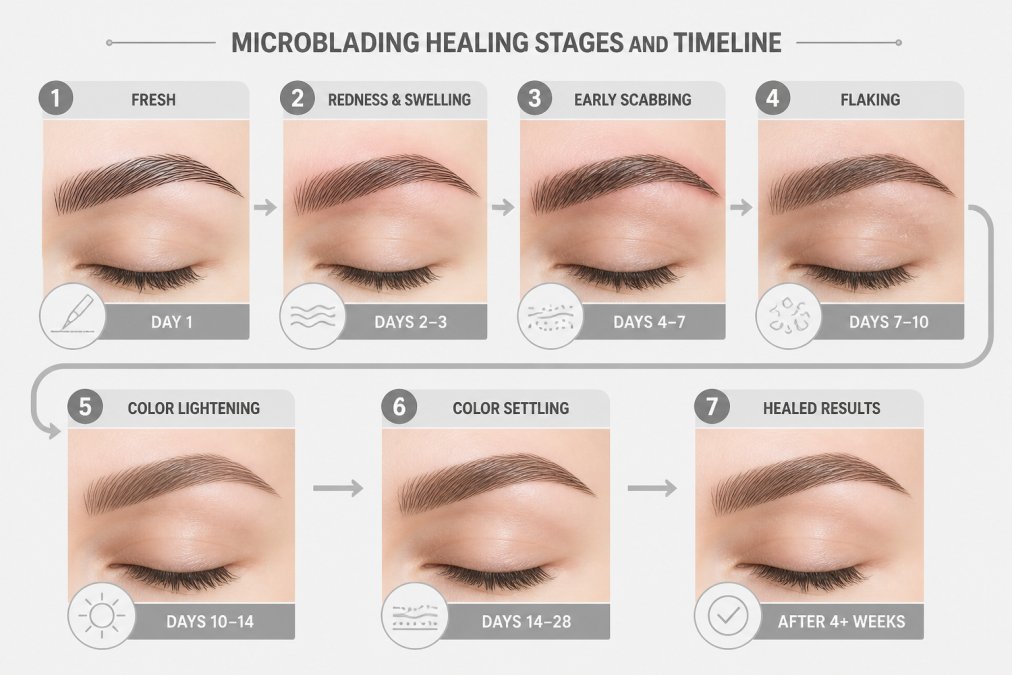
Week 1-2: Initial Healing
You’ll notice some scabbing and itching as your body’s natural response kicks in. Resist the urge to pick at or scratch the brows, this is critical. Picking removes pigment and disrupts the healing process, leading to patchy results and uneven color retention.
Week 3-4: Pigment Settling
Some pigment naturally sheds with the scabs. This is why your touch-up appointment, typically scheduled 4 to 8 weeks after the initial procedure, is so important. The touch-up allows your technician to assess color retention and add pigment where needed.
Month 2-3: Final Color Stabilization
At this point, you can resume normal skincare routines and activities. The brows are no longer fragile, though they’ll continue to fade gradually over the coming months and years.
Key Factors That Affect How Long Microblading Lasts
Several factors determine whether your microblading results last 12 months or 30 months.
Skin Type and Pigment Retention
Your skin type is one of the biggest predictors of how long microblading really lasts. Oily skin tends to push pigment out more quickly because oil naturally breaks down the ink particles. If you have oily skin, expect results to fade faster, often within 12 to 18 months. Dry skin holds pigment longer, sometimes extending results to 24 months or beyond.
Sun Exposure and UV Damage
UV exposure is one of the fastest ways to fade microblading pigment. Sun exposure breaks down ink particles and causes premature fading. Protecting your brows from direct sunlight extends their lifespan. Wear a hat or apply sunscreen to your eyebrows when you’re outside for extended periods. Even in winter, UV rays penetrate clouds and reflect off snow, so year-round protection matters.
Lifestyle and Skincare Habits
If you use retinoids, chemical exfoliants, or other active ingredients in your skincare routine, these can speed up skin cell turnover and cause faster fading. Adjusting your routine during the healing phase and being mindful afterward helps preserve your results.
Microblading Aftercare for Extended Results
How you care for your brows immediately after microblading and in the long term directly affects longevity. Proper aftercare is non-negotiable if you want results to last.
First Two Weeks: Critical Care Steps
These precautions protect the healing skin and allow pigment to settle properly.
Long-Term Maintenance Beyond Healing
Be mindful of harsh skincare products near your brows. If you use strong exfoliants or retinoids, apply them carefully around the brow area to preserve pigment longevity.
Schedule your touch-up appointment before your brows fade significantly. Many clients wait too long, making it harder for the technician to assess original color and add pigment accurately. Booking early ensures the best refresh results.
Does Microblading Fade Completely Over Time
Microblading doesn’t disappear entirely; it fades gradually over months and years. Understanding the typical fading timeline helps you recognize when your brows have moved from “fresh” to “faded” and whether a touch-up makes sense.
Month-by-Month Fading Timeline
While individual variation is significant, most clients follow a predictable fading pattern:
Months 1-3: After your initial appointment and first touch-up (scheduled 4-8 weeks in), your brows are at their darkest and most defined. This is the “fresh” phase.
Months 4-6: Subtle fading begins. The color softens slightly, and the edges of the strokes become less sharp. The brows still look full and intentional.
Months 7-12: More noticeable fading occurs. The color becomes lighter, and the strokes appear less defined. The brows still have presence, but they’re no longer at peak vibrancy.
Months 13-18: Significant fading is visible. The color may be 40-60% lighter than the original result. Many clients schedule a touch-up around this timeframe.
Months 19-24: The brows are noticeably light. Pigment remains visible, but the cosmetic effect has largely faded.
Beyond 24 months: Some pigment typically persists, but it’s usually so faint that the brows no longer look intentionally microbladed.
Distinguishing Pigment Persistence from Cosmetic Longevity
An important distinction: pigment may remain in your skin long after the brows stop looking fresh. After 18-24 months, you might still have faint color, but the cosmetic result, the defined, intentional appearance, has faded. The “real” lifespan of microblading, from a cosmetic standpoint, is typically 12-18 months for most clients.
Observable Signs That Touch-Up Timing Is Right
Instead of waiting for a specific calendar date, watch for these signs:
- Color has faded 30-50% from peak: The brows are noticeably lighter but still visible. This is the ideal time to touch up.
- Strokes are no longer crisp: The hair-like lines have softened and blended.
- Brows look more like a tint than intentional strokes: A touch-up can restore definition.
- You no longer feel confident in your brow appearance: If you’re no longer happy with how your brows look, a refresh is worth considering.
Microblading Touch-Up Timing and Refresh Appointments
The Mandatory First Touch-Up: Why It’s Non-Negotiable
Skipping this appointment often results in noticeably uneven brows and significantly shorter longevity. Most practitioners consider the first touch-up part of the initial service. Attending this appointment is essential for achieving the best long-term results.
Subsequent Touch-Ups: Assessing Your Individual Need
Wait longer if:
- Your brows still look reasonably full and defined.
- You prefer a more natural, softer look as pigment fades.
- You’re uncertain whether fading warrants a refresh. Schedule a consultation with your technician.
Understanding Pigment Buildup and Overworking Risks
Most experienced practitioners recommend spacing touch-ups at least 12 months apart. If you’re considering a touch-up sooner than 12 months, consult your technician first, it may indicate that your initial procedure didn’t set well, or that your skin type requires a different approach.
When to Pause and Reassess
If you’ve had multiple touch-ups over several years and are noticing color changes, texture changes, or brows that look darker or less natural than desired, it may be time to pause and let the pigment fade naturally. Your technician can assess whether continuing touch-ups is advisable or whether a break allows the skin to recover.
Avoid scheduling touch-ups more frequently than every 12 months. Excessive touch-ups in short intervals can lead to pigment accumulation, color shifts, or skin texture changes. If you feel your brows need refreshing sooner than a year, discuss this with your technician.
Maximizing Microblading Longevity: Professional Tips
Our team helps clients achieve even, full, and symmetrical eyebrows that look naturally beautiful. Book a free consultation to discuss your brow goals and learn how we can help you.
Frequently Asked Questions
How long does microblading usually last before it fades?
Microblading typically lasts between 12 and 18 months before noticeable fading occurs. However, individual results vary based on skin type, lifestyle, and aftercare practices. Some clients retain visible pigment for up to 2 years, while others may see fading begin around 10 months. The outer layer of skin naturally sheds and renews, which gradually lightens the brow pigment over time.
What factors make microblading fade faster?
Several factors accelerate fading: oily skin naturally breaks down pigment more quickly than dry skin; frequent sun exposure and UV rays fade color significantly; exfoliating skincare products and treatments can remove pigment faster; swimming in chlorinated pools or saltwater; and certain medications that increase skin cell turnover. Lifestyle habits like excessive sweating or regular heat exposure also contribute to faster fading.
Does microblading fade completely, or does pigment stay under the skin forever?
Microblading does not fade completely; some pigment can remain visible for years, though it becomes increasingly light. The pigment is deposited in the outer layers of skin and gradually disperses as skin cells naturally turn over. While the brows may stop looking fresh and defined after 12-18 months, residual pigment may be detectable for several years, which is why touch-ups blend with existing color rather than starting from scratch.
When should I get a microblading touch-up?
Most clients benefit from their first touch-up 6-8 weeks after the initial procedure to refine shape and address any pigment loss during healing. Subsequent touch-ups are typically recommended every 12-18 months to maintain fresh-looking brows. However, timing depends on how quickly your skin fades the pigment. Some clients stretch appointments to 2 years, while others prefer annual refreshes. Assess your brows’ appearance and consult your microblading professional to determine the right interval for you.


