
Electrolysis vs Laser for Dark Skin: 2026 Guide


Table of Contents
- Electrolysis vs Laser for Dark Skin: How the Two Methods Differ
- Electrolysis Hair Removal Safety for Dark Skin
- Laser Hair Removal Hyperpigmentation Risks on Higher Fitzpatrick Skin Types
- Suitability by Hair Color, Skin Phototype, and Hormonal Changes
- How Many Electrolysis Sessions for Face and Body Areas
- Tattooed Skin, Sensitive Areas, and Other Treatment Considerations
- Choosing Between Electrolysis and Laser: A Practical Decision Framework
- Conclusion
- Frequently Asked Questions
Last Updated: October 4, 2026
Electrolysis vs Laser for Dark Skin: How the Two Methods Differ
Electrolysis vs laser for dark skin is not a simple either/or question, and the difference comes down to how each method finds and destroys the hair follicle. Electrolysis is the only method that works on every hair color and every skin tone, while laser depends on melanin to absorb light energy.
Here is the short version: electrolysis destroys the follicle directly with a fine probe, one hair at a time. Laser floods an area with light and hopes the pigment in the hair absorbs enough energy to damage the follicle.
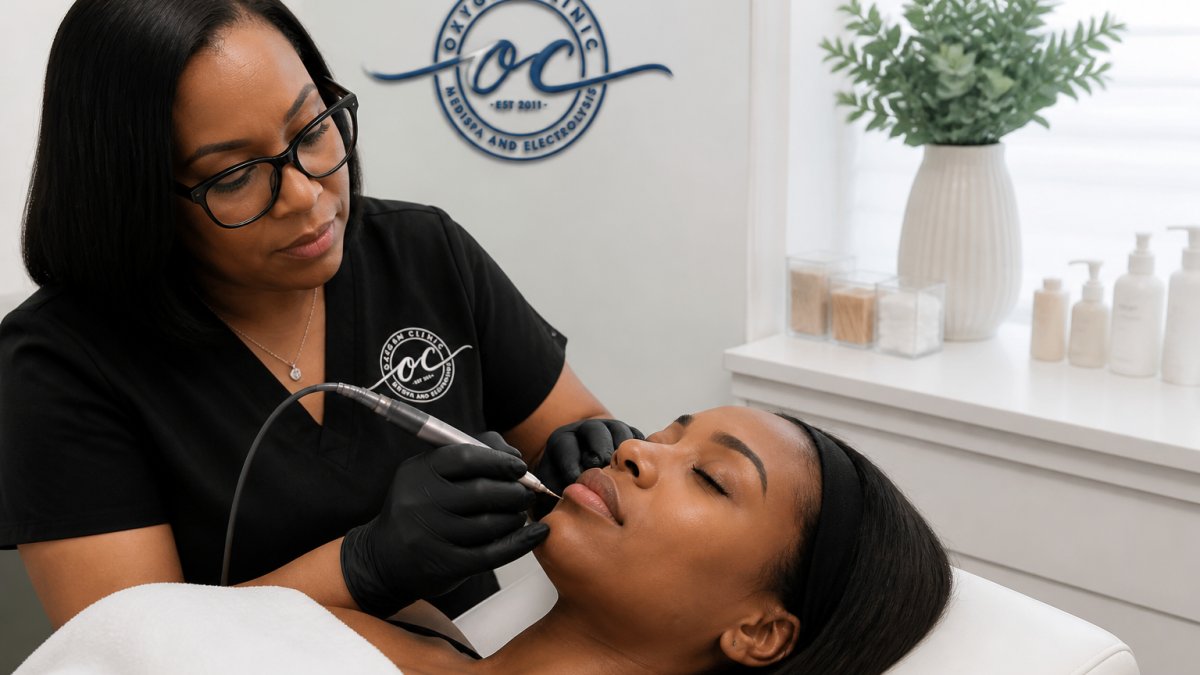
How Electrolysis Destroys Hair at the Follicle
Electrolysis is a permanent hair removal method that inserts a fine probe into the hair follicle and delivers an electrical current to destroy the cells that regrow hair. There are three modalities: galvanic current, thermolysis, and the blend method, which combines both.
Because the probe is placed directly into the follicle, the treatment does not depend on hair color or melanin. That is why electrolysis works on blonde, red, grey, and white hairs, the exact hairs a laser cannot target.
How Laser Targets Melanin in the Follicle
Laser hair removal works by heating melanin, the pigment in hair and skin, until the follicle sustains thermal damage.
The catch for darker skin is obvious. Melanin sits in the epidermis as well as the hair, so a laser that cannot tell the two apart risks heating the skin itself. That is where hyperpigmentation, burns, and scarring enter the conversation.
Electrolysis Hair Removal Safety for Dark Skin
Electrolysis hair removal safety for dark skin is straightforward: because the method bypasses melanin entirely, it carries no pigment-related burn risk.
That does not mean zero risk. Poor technique, unsterile probes, or over-treatment can cause folliculitis, ingrown hairs, or temporary skin irritation. Insulated probes, like those in the Dectro International range, protect the skin surface by keeping current inside the follicle.
Ask your electrologist which probe type they use. Insulated probes cost more per unit, but they keep current concentrated in the follicle instead of leaking into the epidermis, which matters most on the upper lip and chin.
Laser Hair Removal Hyperpigmentation Risks on Higher Fitzpatrick Skin Types
Laser hair removal hyperpigmentation risks rise sharply as skin phototype increases on the Fitzpatrick scale. Higher Fitzpatrick types carry more epidermal melanin, and a laser tuned for lighter skin will heat that melanin instead of passing through it.
The device matters more than the marketing. Broad-spectrum light devices such as IPL are the biggest offender, because they emit a wide band of wavelengths with no selectivity for hair over skin.
Why Nd:YAG Lasers Are Safer Than IPL for Melanin-Rich Skin
The Nd:YAG laser operates at a 1064 nm wavelength, which passes through epidermal melanin with far less absorption than shorter wavelengths (pubmed.ncbi.nlm.nih.gov). That longer wavelength is why Nd:YAG is considered the safer choice for melanin-rich skin.
Platforms like the Candela GentleMax Pro and Lutronic Clarity II combine wavelengths so a provider can select the appropriate setting per client. A 1064 nm Nd:YAG handpiece is not a guarantee of safety on its own.
| Device Type | Wavelength | Best For | Main Risk on Dark Skin |
|---|---|---|---|
| IPL | Broad-spectrum | Lighter phototypes | High burn and PIH risk |
| Alexandrite | 755 nm | Fair skin, dark hair | Pigment absorption in skin |
| Diode | 800-810 nm | Medium phototypes | Moderate, setting-dependent |
| Nd:YAG | 1064 nm | Higher Fitzpatrick types | Lower, technique-dependent |
Pre-Treatment Protocol to Lower PIH Risk
Most guides name PIH as a risk and stop there. The practical question is what to do in the two to four weeks before a session. A common clinical pattern looks like this:
- Stop actives that inflame the skin. Retinoids, strong alpha-hydroxy acids, and benzoyl peroxide increase epidermal turnover and irritation. Most practitioners advise pausing them 5-7 days before treatment.
- Avoid UV exposure and tanning. Fresh tans raise epidermal melanin and blur the contrast a laser needs. Sun protection in the weeks before treatment is not optional on higher phototypes.
- Do not wax, pluck, or thread for 4 weeks. The laser needs the hair shaft in the follicle to conduct heat. Shaving is fine and is usually requested 24 hours before.
- Run a test spot. A small test on a less visible area, observed for 7-14 days, tells you how the skin responds before committing to a full pass.
- Disclose every medication. Isotretinoin, some antibiotics, and certain blood thinners change how skin responds to light and heat.
Managing Post-Inflammatory Hyperpigmentation After Treatment
Post-inflammatory hyperpigmentation after laser appears as darkened patches that can take months to fade. Management starts with prevention: a test spot, conservative settings, and adequate cooling during treatment. If PIH develops, the priorities are sun protection, gentle skincare, and time.
A workable post-treatment routine usually includes:
- Broad-spectrum SPF 30 or higher, daily. UV exposure darkens existing PIH and can trigger new patches. This is the single highest-impact step.
- Gentle cleansing and a bland moisturizer. Skip scrubs, brushes, and anything that causes friction over the treated area.
- No picking or exfoliating the treated area. Picking extends the inflammation that drives pigment production.
- Wait a full healing cycle before another session. Treating over fresh PIH deepens it rather than clearing it.
- Consider a consultation with a physician if the pigmentation is not fading after several months, or if it covers a large area.
This is one of the areas most guides skip. Aggressive exfoliation or a second laser session too soon will deepen the pigmentation rather than clear it.
If you are prone to keloids or have a history of scarring, tell your provider before any laser session. On higher phototypes, the same energy that causes PIH can, in rare cases, cause a raised scar.
Suitability by Hair Color, Skin Phototype, and Hormonal Changes
Hair color and skin phototype determine which method is even viable. Laser needs pigment in the hair to work, so grey, white, blonde, and red hairs typically do not respond.
Hormonal hair growth factors complicate both methods. Conditions such as PCOS, thyroid disorders, and the hormonal shifts of perimenopause and menopause can drive new growth in areas that were previously clear.
How Many Electrolysis Sessions for Face and Body Areas
How many electrolysis sessions depends on the density of hair, the hair growth cycle, and the area treated. Because hair grows in cycles and only follicles in the anagen phase respond to treatment, a single session cannot clear an area permanently.
Small areas such as the upper lip or chin clear faster than the full face or neck. Larger body areas take longer simply because there are more follicles to treat.
Tattooed Skin, Sensitive Areas, and Other Treatment Considerations
Why Tattooed Skin Is a Hard Stop for Laser
Tattoo ink is pigment suspended in the dermis, and it absorbs light energy across a wide range of wavelengths, including the 1064 nm Nd:YAG wavelength that is otherwise the safest choice for melanin-rich skin.
This is why electrolysis is the only safe option for hair growing on or immediately next to a tattoo.
If you have a tattoo in the treatment area, tell your electrologist at consultation so they can map the boundary before the first session.
Sensitive Areas and What Changes
Sensitive areas such as the eyebrows, ears, upper lip, chin, and bikini line require a steady hand and the right probe. The skin is thinner, the follicles are often curved, and the margin for error is smaller.
Eyebrow work deserves a specific mention. Because electrolysis is permanent, an electrologist will typically shape conservatively and confirm the intended line with you before treating, since regrowth is not an option once a follicle is destroyed.
Medical History That Changes the Plan
Other considerations include active infections, recent sun exposure, and certain medications that increase photosensitivity. A thorough consultation should cover medical history, current medications, and any prior laser treatments before a plan is set. Conditions worth flagging include:
- Active cold sores or skin infections in the treatment area, reschedule until cleared.
- Recent sun exposure or a fresh tan, wait until the skin returns to its baseline tone.
- Isotretinoin use, most providers ask for a waiting period after the last dose.
- Blood thinners or anticoagulants, higher risk of bruising and prolonged healing.
- A history of keloids or hypertrophic scarring, changes probe selection and treatment spacing.
Choosing Between Electrolysis and Laser: A Practical Decision Framework
Choosing between electrolysis and laser comes down to hair color, skin phototype, area size, and your definition of “permanent.” Use the framework below rather than picking the method with the best marketing.
- If your hair is blonde, red, grey, or white → choose electrolysis
- If you have a higher Fitzpatrick skin type and want the lowest pigment risk → choose electrolysis, or Nd:YAG laser with an experienced provider
- If you want to treat a large area quickly and have dark hair on a lower phototype → laser may be reasonable
- If you want true permanent removal rather than reduction → electrolysis
- If a hormonal condition is driving growth → treat the cause first, then decide
Electrolysis is the only method that works on every hair color and skin tone without pigment-related burn risk. Laser can be safe on darker skin, but only with the correct wavelength, conservative settings, and a provider who treats phototype as a starting point rather than an afterthought.
Conclusion
The honest answer is that electrolysis and laser for dark skin are not interchangeable, and the choice should follow your hair color, skin phototype, and how permanent you need the result to be. Electrolysis removes the guesswork because it never depends on melanin.
Frequently Asked Questions
Why is electrolysis considered safer for dark skin than laser?
Electrolysis uses a fine probe inserted directly into each hair follicle, delivering galvanic current or thermolysis to destroy it. It does not rely on melanin absorption, so it cannot accidentally target pigment in the surrounding epidermis. Laser devices, by contrast, work by heating melanin, which is present in both hair and skin. On darker skin tones, that shared target increases the risk of thermal damage, burns, and post-inflammatory hyperpigmentation. Electrolysis sidesteps that risk entirely because the energy is confined to the follicle itself.
How many electrolysis sessions for face areas like the chin or upper lip?
Most people need a series of short appointments spaced over 12 to 24 months. The exact number depends on hair density, follicle depth, and whether the hair is hormonal in origin. Chin and upper-lip areas typically require more sessions than eyebrows because the hair growth cycle there is influenced by hormones. A qualified electrologist will assess your hair growth pattern and give you a realistic schedule after a consultation.
Can laser hair removal cause hyperpigmentation on dark skin?
Yes, if the wrong device or settings are used. Lasers that target melanin can overheat the epidermis when the skin itself contains high melanin levels. The result is post-inflammatory hyperpigmentation, which appears as dark patches that may take months to fade. Nd:YAG lasers operating at 1064 nm penetrate deeper and bypass much of the epidermal melanin, making them the safest laser option for Fitzpatrick IV to VI skin. IPL devices are not recommended for darker skin tones because their broad-spectrum light lacks the precision needed to protect the epidermis.
Is electrolysis truly permanent for all hair types and colors?
Electrolysis is the only method recognized as permanent hair removal because it destroys the follicle’s ability to regrow hair. It works on white, grey, red, and blonde hair, all of which lack enough melanin for laser to target. The catch is that hair grows in cycles, so you need repeated sessions to catch every follicle in its active anagen phase. Once a follicle is destroyed, it does not produce hair again. New follicles can still emerge later due to hormonal shifts, which is why some clients return for occasional maintenance.
If you have been told laser is your only option, or that your skin tone rules out permanent removal, that advice deserves a second look. Oxygen Facial Clinic specializes in expert electrolysis using the innovative Oxygen Electrolysis technique, with personalized treatment plans built around your skin profile and hair growth pattern. Book a free consultation with Oxygen Facial Clinic and get a clear, honest plan for permanent hair removal.


