
Electrolysis for Hormonal Hair Growth: What to Expect


Table of Contents
- How Electrolysis Destroys Hair Follicles for Hormonal Hair Growth
- Why Hormonal Hair Growth Needs More Than a Few Sessions
- How Many Electrolysis Sessions for Facial Hair With a Hormonal Cause
- Electrolysis Hair Regrowth After Treatment: Treated Follicles vs. New Hairs
- Electrolysis vs. Laser Hair Removal for PCOS and Hormonal Imbalance
- Building a Treatment Plan for Hirsutism and Hormonal Hair
- Frequently Asked Questions
Last Updated: October 5, 2026
How Electrolysis Destroys Hair Follicles for Hormonal Hair Growth
Electrolysis for hormonal hair growth works by inserting a fine probe into each individual hair follicle and delivering a small electrical current that destroys the follicle’s ability to produce hair.
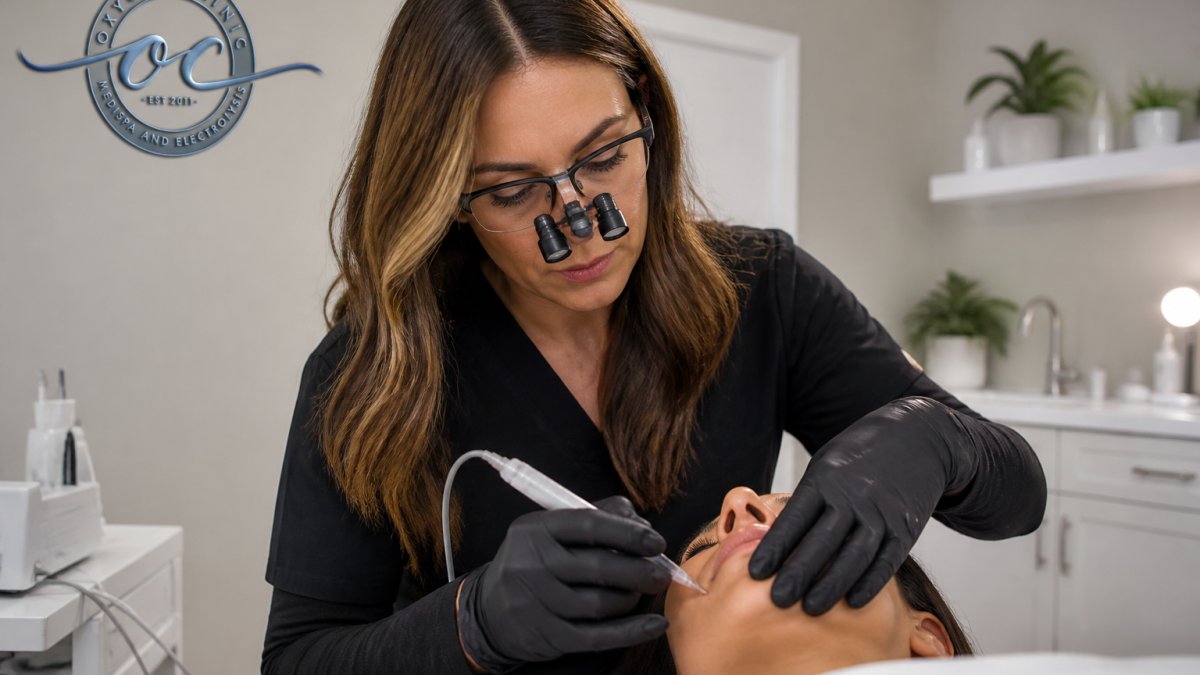
Hormonal hair growth is the development of unwanted hair caused by androgens or other hormone shifts rather than genetics alone. It shows up most often as chin hair and upper-lip hair.
Electrolysis is the only method approved as permanent hair removal, because it targets the follicle directly. According to Health Canada guidance on hair removal devices, light-based devices are cleared for hair reduction, not permanent removal.
What Permanence Actually Means for Hormone-Related Hair
Permanence means the treated follicle will not produce hair again. It does not mean you will never grow another hair on that area.
A follicle destroyed by electrolysis is gone for good. But hormones can stimulate new follicles that were dormant before. So you can finish treatment with a clear chin, then develop new hair growth years later during a hormonal shift. That is new hair, not a failure of treatment. We see this pattern often in clients navigating perimenopause.
Electrolysis permanently removes the hairs it treats. It cannot stop hormones from activating new follicles later, which is why some clients return for occasional maintenance sessions.
Why Hormonal Hair Growth Needs More Than a Few Sessions
Hormonal hair growth needs multiple sessions because hair grows in cycles, and only hairs in the active growth phase can be destroyed. At any given time, a portion of your follicles are dormant, a portion are shedding, and a portion are actively growing.
Electrolysis only works on the active ones. Treating a dormant follicle does nothing, because the probe cannot reach a structure that is not supporting a hair. So you treat what is visible now, wait for the next wave to emerge, and treat again.
Hair Growth Cycles and Follicle Destruction
Every hair moves through three phases: growth, transition, and rest. Only during the growth phase is the follicle fully connected to the blood supply and the hair shaft. That connection is what allows the electrical current to travel down and destroy the follicle’s growth center.
This is why a single session never clears an area permanently, no matter how thorough the electrologist is. The hairs simply are not all available on the same day. Sessions are spaced to catch each wave as it enters the growth phase.
- Growth phase: the follicle is treatable
- Transition phase: the follicle is shutting down
- Rest phase: the hair sheds and the follicle waits
A common mistake is judging progress after two or three sessions. That is far too early to draw conclusions.
How Many Electrolysis Sessions for Facial Hair With a Hormonal Cause
Most people with a hormonal cause need more sessions than someone treating the same area for genetic hair growth. The honest answer is that the number depends on how many follicles are active, how large the area is, and whether the underlying hormone issue is being managed.
For chin and upper-lip hair, a typical course runs across many months, with sessions every one to three weeks at first. As the area thins out, appointments stretch further apart. Clients often ask how many electrolysis sessions they should budget for. We tell them to plan for a course, not a count.
A Step-by-Step Treatment Plan for Hormonal Hair Growth
A practical plan moves through four stages. Most practitioners find this arc holds whether the driver is PCOS, perimenopause, or another hormonal shift.
- Consultation and assessment. The electrologist maps the treatment area, notes hair density and texture, and reviews your history, including any diagnosis, medication, or prior laser or waxing. This is also when a referral to your doctor is discussed if the hair growth is new, rapid, or accompanied by other symptoms.
- Clearing phase. Sessions every one to two weeks. The goal is to reduce visible hair, not to clear the area in one visit. Expect the first few sessions to feel like you are barely keeping up, because only hairs in the growth phase can be treated.
- Refinement phase. Sessions every two to four weeks. Visible hair is lighter and sparser. The electrologist is now catching hairs that were dormant during the clearing phase.
- Maintenance. Sessions every four to eight weeks, then as needed. Only a few hairs remain, and new hormonal hairs may still appear over time.
Realistic Timelines and Session Intervals
Early sessions are frequent because there is more hair to clear. Later sessions are shorter and spaced further apart. A realistic arc looks like this:
| Stage | Typical Interval | What Changes |
|---|---|---|
| Clearing phase | Every 1-2 weeks | Reducing visible hair |
| Refinement phase | Every 2-4 weeks | Catching new growth |
| Maintenance | Every 4-8 weeks | Few hairs remain |
Progress is measured in density, not in perfect clearance. If your chin looks lighter every month, treatment is working.
Tracking Progress and Distinguishing Regrowth From New Hairs
A treatment map is the single most useful tool for a hormonal case. The electrologist records the location and type of each hair treated, so that at the next session you can tell whether a hair is regrowth from a treated follicle or a new hormonally stimulated hair.
- Regrowth from a treated follicle tends to appear in the same spot, often finer and weaker than before, and shows up within weeks.
- New hormonally stimulated hair appears in a new location or as a fresh, strong hair, and can appear months or years later.
Without a record, it is impossible to know whether you are seeing a stubborn follicle or a brand-new one. That distinction changes how you plan: regrowth may mean the current or technique needs adjustment, while new hairs mean the hormonal driver is still active and maintenance will continue.
Stopping treatment during the clearing phase because the area “looks better” almost always means starting over. The remaining dormant follicles will produce hair within weeks.
Ask your electrologist to show you the treatment map at each visit. Seeing the density drop on paper is the most reliable way to judge progress when the mirror is not obvious.
Electrolysis Hair Regrowth After Treatment: Treated Follicles vs. New Hairs
Electrolysis hair regrowth after treatment falls into two categories, and telling them apart changes how you plan. Regrowth from a treated follicle means the follicle survived, usually because the hair was not in its growth phase or the current did not fully destroy it. New hair growth means a different follicle has been activated by hormones.
Here is how to tell the difference in practice:
- Regrowth from a treated follicle tends to appear in the same spot, often finer and weaker than before
- New hormonally stimulated hair appears in a new location or as a fresh, strong hair
- Timing matters: regrowth shows up within weeks, new hormonal hair can appear months or years later
This distinction is exactly why we track treatment maps for clients. Without a record, it is impossible to know whether you are seeing a stubborn follicle or a brand-new one.
Electrolysis vs. Laser Hair Removal for PCOS and Hormonal Imbalance
For PCOS and hormonal imbalance, electrolysis is the more reliable long-term option because it destroys the follicle rather than just damaging it. Laser hair removal often produces good short-term clearing, then disappointing regrowth, because the underlying hormones keep stimulating new hair.
Laser works by heating the follicle with light. It depends on pigment, so it struggles with blonde, red, grey, and white hair. It also depends on the follicle being in the growth phase, just like electrolysis, but it cannot be repeated on the same follicle as precisely.
Why Laser Results Often Fade With PCOS
Laser results fade because the hormone imbalance never stops. Laser reduces hair, sometimes dramatically, but the follicles that survive and the new follicles that activate keep the problem alive. Clients who have tried laser twice and felt let down are usually describing exactly this.
Electrolysis handles the same situation differently. Each treated follicle is permanently gone, so the total number of follicles that can produce hair keeps dropping. Even if hormones activate new ones, you are working from a shrinking base.
| Factor | Electrolysis | Laser |
|---|---|---|
| Mechanism | Destroys follicle | Heats follicle |
| Permanence | Permanent removal | Reduction |
| Works on white/grey hair | Yes | No |
| Best for PCOS | Yes | Partial help |
Canadian Dermatology Association information on hair removal
Building a Treatment Plan for Hirsutism and Hormonal Hair
A treatment plan for hirsutism and hormonal hair combines regular electrolysis with a look at what is driving the hormones. Electrolysis clears the hair. It does not change the cause. If the cause is unmanaged, you will keep creating new hair to treat.
This is where many people get stuck. They invest in sessions, see great progress, then plateau because the hormonal driver was never addressed. Our approach pairs electrolysis with a clear plan for maintenance and, where appropriate, a referral back to your doctor.
Medical Evaluation and Managing the Underlying Cause
A medical evaluation is worth having before committing to a long course of treatment. Sudden or rapidly worsening hair, especially with other symptoms, deserves a doctor’s attention. Conditions like polycystic ovary syndrome, thyroid issues, and other hormonal imbalances can all drive unwanted hair.
Your doctor can order blood work and, if needed, recommend treatment for the underlying cause. Managing the cause does not remove existing hair, but it can slow the arrival of new hair. That makes your electrolysis results last longer and your maintenance lighter.
Pain, Skin Reactions, and Aftercare
Electrolysis feels like a brief sting or warmth at each follicle. Most clients describe it as very tolerable, and discomfort varies by area and by individual. The upper lip tends to be more sensitive than the chin.
After treatment, mild redness and small bumps are normal and settle within hours to a day. To protect your skin:
- Keep the area clean and avoid touching it
- Skip makeup on the treated area for the rest of the day
- Avoid strong sun exposure and use sunscreen
- Skip harsh scrubs and active ingredients for a few days
If you have sensitive skin, tell your electrologist before treatment so the plan can be adjusted. We use high-quality European skincare from Swissline and Dr. Morelli to support calm, comfortable recovery.
Book electrolysis at least two weeks before a big event. Skin settles quickly, but giving yourself a buffer means no redness on the day.
Hormonal hair growth is stubborn, and it rarely responds to quick fixes. Permanent results come from a real plan: consistent sessions, a clear understanding of what permanence means, and attention to the underlying cause. We specialize in expert electrolysis using our innovative technique, backed by medical-grade skincare from Dr. Robert Morelli and a discreet, welcoming environment.
Frequently Asked Questions
Does electrolysis work on hormonal hair growth?
Yes, electrolysis destroys each hair follicle it treats, including hairs stimulated by androgens or a hormonal imbalance. The catch is that it cannot stop hormones from activating new follicles later. For PCOS, hirsutism, or perimenopause-related growth, you will likely need ongoing maintenance sessions. Many clients reach a point where only a handful of new hairs appear between visits, which keeps upkeep quick and manageable.
How many electrolysis sessions are needed for hormonal hair growth?
Most people with a hormonal cause need more sessions than those with non-hormonal hair. Chin, upper-lip, or hair often requires 12 to 24 or more sessions spaced two to six weeks apart, since hair grows in cycles and hormones keep stimulating new growth. Your electrologist will map a treatment plan after a consultation and adjust frequency as results build.
Can hormonal changes cause hair to grow back after electrolysis?
Hair cannot regrow from a follicle that electrolysis has permanently destroyed. What can happen is that hormonal shifts, such as those from PCOS, pregnancy, or menopause, stimulate new hairs from follicles that were never treated. This is new hair growth, not regrowth of treated follicles. Regular maintenance sessions keep new growth under control, and a medical review of the hormonal cause can reduce how often it appears.
Is electrolysis or laser hair removal better for PCOS-related hair growth?
Electrolysis is usually the stronger long-term option for PCOS-related hair because it works on any hair color, including blonde, grey, and white, and permanently destroys the follicle. Laser hair removal can reduce dark hair temporarily, but results often fade when androgens keep stimulating new growth. Many people combine both, using laser for bulk reduction and electrolysis for permanent clearance and stubborn or light-colored hairs.
