
Can Electrolysis Get Rid of Ingrown Hairs for Good?


Last Updated: November 10, 2026
Quick Summary
Electrolysis for ingrown hairs works by destroying the follicle itself, so the trapped hair cannot regrow and cannot become ingrown again. Because it targets one follicle at a time, it also treats hairs trapped below the skin with no visible opening, and it works on light, red, grey, and white hair that laser may miss.
- An ingrown hair is a hair that curled back into the skin or grew sideways beneath the surface.
- Stop shaving, waxing, plucking, and threading the treatment area for at least three to five days before a session.
- Postpone electrolysis and see a doctor if a bump is hot, spreading, or leaking pus.
- Skip makeup, lotion, sunscreen, and deodorant on the treatment area on session day.
- Exfoliate gently two to three times a week once skin has calmed, never right after a session.
Table of Contents
- Why Ingrown Hairs Keep Coming Back
- How Electrolysis for Ingrown Hairs Works
- Electrolysis vs Laser for Ingrown Hairs
- How Many Electrolysis Sessions for Face and Body
- Preparing Skin Before a Session and Handling Active Bumps
- Your Post-Electrolysis Skin Care Routine
- Preventing Ingrown Hairs Between Sessions
- Book a Consultation to Map Your Treatment Plan
- Frequently Asked Questions
Why Ingrown Hairs Keep Coming Back
An ingrown hair is a hair that has curled back into the skin or grown sideways beneath the surface instead of breaking through. It is a common complaint among people who have shaved, waxed, or plucked for years and assumed the bumps were just part of the deal. They are not. Understanding electrolysis for ingrown hairs starts with understanding why the hair gets trapped in the first place.
How a Trapped Hair Forms
Every hair grows from a follicle with a root below the skin. When the follicle’s opening is blocked by dead skin cells, or when the hair shaft is cut sharply and regrows with a curl, the hair root can turn back on itself. The body treats the trapped hair as a foreign object. Redness, tenderness, and a raised bump follow. Sometimes the bump fills with pus. Left alone, repeated trapping in the same follicle can leave darkened skin or a small scar.
Causes and Risk Factors
Curly and coarse hair is the biggest structural risk factor. Shaving cuts the hair at an angle and leaves a sharp edge that can pierce the skin as it regrows. Waxing and plucking can snap the shaft below the surface, creating the same trap. Friction from tight clothing, heavy moisturizers that clog pores, and a buildup of dead skin all raise the odds. Hormonal conditions such as PCOS are associated with recurring unwanted hair and more frequent ingrowns. So is simply having a lot of fine, light hair that grows at a shallow angle.
How Electrolysis for Ingrown Hairs Works
Electrolysis for ingrown hairs works by destroying the follicle itself, so the hair cannot regrow and cannot become trapped again. An electrologist inserts a sterile probe, finer than a hair, alongside the hair root and applies a small electrical current. That current damages the follicle’s ability to produce new hair. The treated hair is then released and removed.
The technique matters here. Many ingrowns sit under a layer of skin with no visible opening, so the electrologist has to locate the follicle by feel and by the direction of the hair growth. If you want to see the service itself, you can review our electrolysis treatment options for body hair.
The result is permanent hair removal, follicle by follicle. No hair, no regrowth, no new trap.
Electrolysis vs Laser for Ingrown Hairs
Electrolysis is often considered for ingrown hairs because it can be used on light, red, grey, and white hairs, which laser may not target effectively. Laser hair removal works by heating pigment in the hair (Cosmetic Laser Treatments). Blonde, red, grey, and white hair carries little pigment, so laser often leaves those hairs behind.
Laser does have a place. It can reduce bulk quickly across large areas with dark hair on lighter skin. But it is not permanent for everyone, and the hairs it misses can still become ingrown. If you have had laser and were left with patches of fine or light regrowth, electrolysis is the method that finishes the job. For a deeper side-by-side, read our electrolysis vs laser efficacy comparison.
| Method | Works on light/red/grey hair | Permanent | Treats trapped hair below skin | Best for |
|---|---|---|---|---|
| Electrolysis | Yes | Yes | Yes | Recurring ingrowns, all hair colors |
| Laser | No | Not for all | No | Fast bulk reduction, dark hair |
| Shaving | Yes | No | No | Temporary, high ingrown risk |
| Waxing | Yes | No | No | Temporary, can snap shafts |
How Many Electrolysis Sessions for Face and Body
Most clients need a series of sessions rather than one, because hair grows in cycles and only hair in the active growth phase can be treated effectively. Facial areas such as the chin and upper lip typically need more frequent, shorter appointments. Larger body areas need longer sessions spaced further apart. A realistic plan is built around your hair density, your hormone profile, and how much of the hair is currently trapped or inflamed.
We map this out at the consultation rather than quoting a fixed number, because guessing sets the wrong expectation. If you want a sense of what body-area treatment involves, our electrolysis body treatments page outlines the areas we cover and how sessions are structured.
Preparing Skin Before a Session and Handling Active Bumps
Skin preparation is where most people go wrong, and it is the difference between a comfortable session and a flare-up. The goal is simple: arrive with clean skin, visible hair, and a calm barrier so the electrologist can see exactly what is happening under the surface.
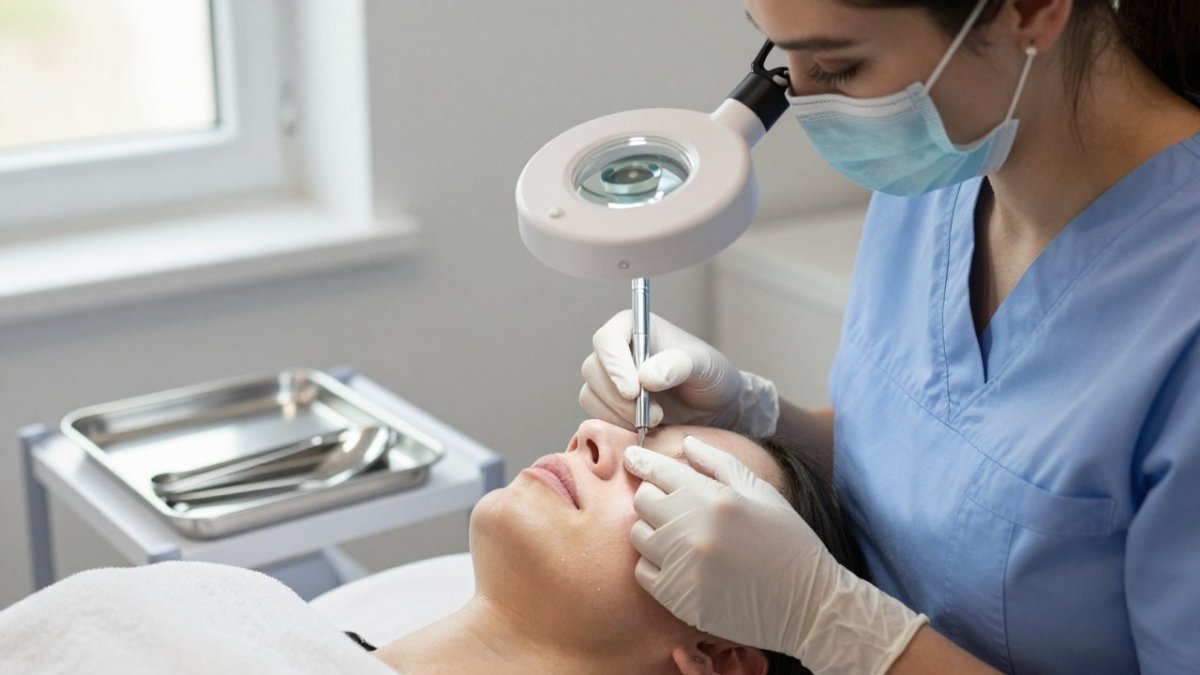
Before Your Appointment
- Stop shaving, waxing, plucking, and threading the treatment area for at least three to five days beforehand. The electrologist needs to see the true direction and depth of growth to locate trapped hairs.
- Skip makeup, lotion, sunscreen, and deodorant on the treatment area on the day of your session. Residue can block the probe path and raise the risk of irritation.
- Do not exfoliate aggressively the day before. A scrubbed, raw barrier reacts more strongly to current.
- Avoid alcohol and blood-thinning medication for 24 hours before treatment if your clinician has approved it, since both can increase sensitivity and bruising.
- Wear loose clothing that does not rub the area on the way home.
Handling an Active, Inflamed, or Infected Bump
An ingrown hair can be a minor nuisance or the start of a real infection, and the two need different responses.
A simple, uninfected bump is red, raised, and tender but not hot, not spreading, and not leaking pus.
A bump that is hot, spreading, or leaking pus is a sign of infection. Postpone electrolysis on that area and see a doctor. Treating through an active infection can push bacteria deeper and worsen scarring.
A trapped hair with no visible opening is the case where professional care matters most.
Watch out: digging at a bump with unsterile tools is the fastest way to turn a minor ingrown into a scar or a spreading infection.
If your skin reacts easily, our guide to electrolysis for sensitive skin covers how to prepare reactive skin without triggering irritation.
Your Post-Electrolysis Skin Care Routine
A post-electrolysis skin care routine is deliberately boring: clean, calm, and hands-off for the first 24 hours. But the details of what to do, what to avoid, and when to resume normal habits are where most people get it wrong. Here is a practical timeline you can follow after every session.
First 24 Hours
- Skip makeup, harsh actives (retinoids, acids, vitamin C), hot workouts, saunas, and swimming on treatment day.
- Cleanse gently with lukewarm water and a non-stripping cleanser. Pat dry; do not rub.
- Apply a soothing, fragrance-free moisturizer. Avoid anything with alcohol, essential oils, or exfoliating acids.
- Keep the area out of direct sun. If you must be outside, use a physical sunscreen on healed skin only, not on open or crusted spots.
- Small redness and slight swelling are normal and settle within a day or two. Cool compresses can help if the area feels warm.
Days 2 to 7
- Continue gentle cleansing and moisturizing twice daily.
- Do not pick at any scab or crust that forms. It is part of skin healing, and picking reopens the follicle and raises the risk of scarring or infection.
- Avoid tight clothing, heavy sweating, and friction on the treated area.
- Do not shave, wax, pluck, or thread the treated area during this window. Let the follicles heal undisturbed.
Week 2 and Beyond
- Once the skin has fully calmed and any crusts have fallen away on their own, reintroduce gentle exfoliation two or three times a week. This keeps dead cells from blocking follicle openings and helps new hairs surface cleanly.
- Keep moisturizing daily so the skin stays supple.
- Resume normal hair removal habits only on areas your electrologist has cleared. On treated areas, leave regrowth to the electrologist so the next session can target it directly.
Watch out: over-exfoliating in the first week strips the barrier and creates the exact irritation a trapped hair thrives in. If redness, swelling, or pain worsens after 48 hours, or if you see spreading warmth or pus, contact a clinician rather than treating it at home.
For a fuller picture of what recovery looks like week by week, see our electrolysis recovery guide.
Preventing Ingrown Hairs Between Sessions
Prevention between sessions comes down to three habits: keep the skin clear, stop cutting hair below the surface, and let the follicle do its job. Every hair you remove by shaving or waxing between appointments risks another trap, so leave the area to the electrologist.
- Cleanse the area daily with a gentle, non-stripping cleanser
- Exfoliate gently two to three times a week, never right after a session
- Moisturize daily to keep skin supple and follicle openings clear
- Stop shaving, waxing, and plucking the treatment area
- Avoid tight clothing that rubs the area
- Do not squeeze or dig at a bump, ever
- Book the next session on schedule so regrowth is caught early
A common mistake is over-exfoliating in an attempt to “prevent” bumps. That backfires. It strips the skin barrier and creates more irritation, which is exactly the environment a trapped hair thrives in.
Book a Consultation to Map Your Treatment Plan
Recurring ingrowns are a follicle problem, not a surface problem, and that is why they keep returning no matter how carefully you shave. Permanent removal is the only fix that stops the cycle at the root. At Oxygen Clinic, we offer electrolysis using our Oxygen Electrolysis technique, and home care routines can be based on a professional skin analysis.
Get started with Oxygen Clinic and stop managing ingrowns for good.
Frequently Asked Questions
Can electrolysis be performed on an active ingrown hair?
Usually not on the day itself. A raised, red or tender bump signals inflammation, and working a sterile probe through that area raises the risk of irritation or infection. Most electrologists will treat the surrounding hairs and leave the inflamed spot until the swelling settles. If the bump is hot, spreading or oozing, see a doctor first. Once the skin is calm, electrolysis for ingrown hairs can resume and target the follicle that keeps producing the trapped hair.
How many sessions are typically needed to see fewer ingrown hairs?
Expect several sessions spread over months rather than one visit. Hair grows in cycles, so only follicles in the active growth phase respond to treatment on any given day. Facial areas such as the chin and upper lip often need a series of appointments spaced a few weeks apart, with touch-ups after that. Many clients notice less bumping and smoother skin as the treated follicles stop producing hair, but the timeline depends on hair type, density and hormone-related factors such as PCOS.
What should I do if I have an ingrown hair before my electrolysis appointment?
Leave it alone. Do not squeeze, pick or dig at it, since self-extraction often pushes bacteria deeper and can cause scarring or a worse infection. Apply a warm compress for a few minutes to encourage the hair to release naturally, and keep the area clean. Call the clinic before your appointment and describe the bump, so your electrologist can decide whether to treat around it or reschedule that patch. Arriving with clean, product-free skin helps too.
Are there specific aftercare steps to prevent ingrown hairs after electrolysis?
Keep the treated area clean and avoid touching it for the first day. Skip harsh scrubs, strong actives and picking at any crusting that forms. Once the skin has settled, gentle exfoliation two or three times a week helps loose hairs surface instead of curling back in, and a light moisturizer keeps the skin barrier intact. Daily sunscreen on exposed areas matters, because treated skin is more sensitive to the sun. Your electrologist can tailor a post-electrolysis skin care routine to your skin type.


