
How to Choose the Best Anti-Aging Treatments in 2026


Last Updated: November 8, 2026
Quick Summary
The best anti-aging treatments depend on your main concern, skin type and how much downtime you can accept. Microneedling, radiofrequency and laser options each target different issues, and most people need a series of sessions rather than one visit.
- Match the treatment to your main concern, such as fine lines, laxity, texture or pigmentation.
- Microneedling often involves a few days of redness and mild sensitivity afterward.
- Most device treatments are courses of several sessions, not one-off appointments.
- Ask for a written plan listing session count, spacing and maintenance before booking.
- Choose a provider who can explain qualifications, contraindications and what to do if a complication occurs.
Table of Contents
- How Non-Surgical Anti-Aging Treatments Work
- Microneedling for Aging Skin: What to Expect
- Microneedling Results and Recovery Time
- Radiofrequency, Laser and Other Tightening Options Compared
- How to Choose a Skin Treatment for Your Concerns and Age
- Skin Treatment Consultation Questions to Ask Before You Book
- Booking Your Anti-Aging Consultation at Oxygen Facial Clinic
- Frequently Asked Questions
How Non-Surgical Anti-Aging Treatments Work
Non-surgical anti-aging treatments aim to improve skin texture, firmness and tone without an operation. Most of them work by prompting the skin to repair itself, which can gradually support collagen and elastin over several weeks.
The main categories include microneedling, radiofrequency, laser and light-based options, and supportive skincare. Each one works differently, so the best choice depends on your concerns, your skin type and how much downtime you can accept. Results also depend on consistency. Most people need a series of sessions rather than a single visit.
A common mistake is expecting one appointment to reverse years of sun exposure. Treat each session as one step in a plan, and ask your provider what a realistic timeline looks like for your skin.
Microneedling for Aging Skin: What to Expect
Microneedling uses fine, sterile needles to create tiny controlled punctures in the skin. The body responds by producing new collagen, which can help with fine lines, uneven texture and mild laxity over time.
A typical session starts with a numbing step and a cleansing routine. The practitioner then passes the device across the treated area.
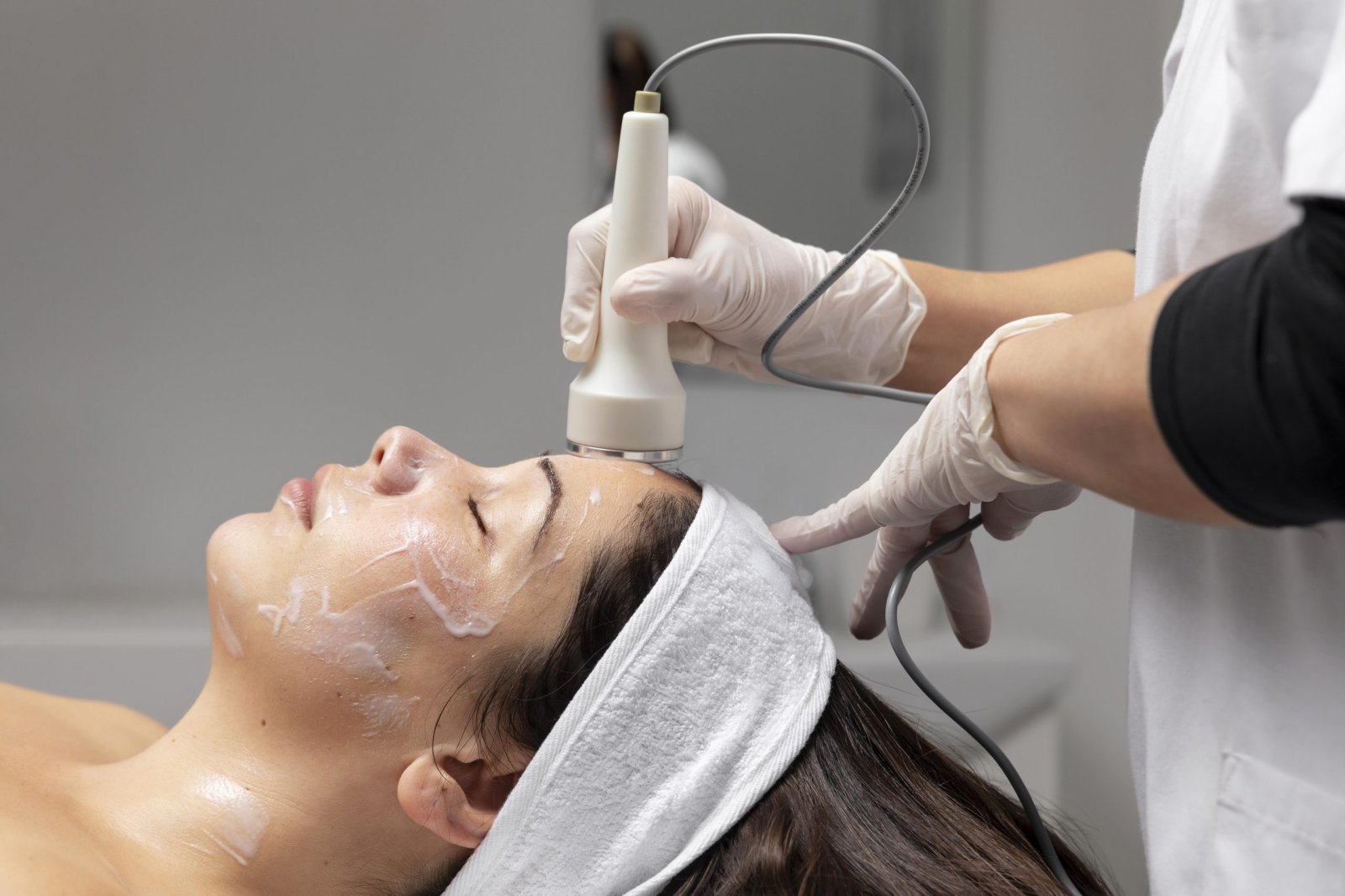
Expect some redness and mild sensitivity for a few days afterward. Gentle skincare and daily sunscreen help the skin settle. You can also read a guide on what to ask and expect before booking professional treatment.
Who Gets the Most Benefit From Microneedling
Microneedling tends to suit people with fine lines, mild texture changes or early laxity who want a non-surgical option. A consultation helps confirm whether it is a good fit.
Discuss your skin history with your provider so they can adjust the approach or recommend an alternative.
Microneedling Results and Recovery Time
Results usually build gradually as collagen forms over the weeks following treatment. Individual timelines vary, so set expectations with your provider.
Recovery is typically short. Redness often settles within a few days, though some people have slightly longer sensitivity. Avoid harsh exfoliants and direct sun exposure during recovery, and follow the aftercare plan you are given.
Radiofrequency, Laser and Other Tightening Options Compared
Device-based tightening is the most crowded category in anti-aging skin care, and the options differ far more than marketing pages suggest. The table below compares the main approaches on mechanism, typical downtime, evidence quality and who tends to be a good candidate. Use it as a starting point for a consultation, not as a substitute for one. For a look at the electrolysis and laser services on offer, see the electrolysis and laser hair removal page.
| Option | How It Works | Typical Downtime | Evidence Quality | Best For | Cautions |
|---|---|---|---|---|---|
| Microneedling (collagen induction) | Fine sterile needles create controlled micro-injuries that trigger collagen and elastin production | A few days of redness and mild sensitivity | Well established for texture and fine lines; modest for laxity | Fine lines, uneven texture, early laxity, acne scarring | Avoid on active infection, certain skin conditions, or recently sun-damaged skin |
| Radiofrequency (RF) | Heat delivered to deeper dermal layers encourages collagen contraction and new collagen over weeks | Little to none; occasional mild redness | Established for mild to moderate laxity; results build over a series | Mild skin tightening on the face and jawline | Not ideal for significant sagging; multiple sessions usually needed |
| RF microneedling | Combines microneedle delivery with RF energy at depth | Two to four days of redness and slight swelling | Growing evidence for texture and mild laxity; stronger than needling alone in most comparisons | Texture, pores, mild laxity, acne scarring | Higher discomfort than plain microneedling; provider skill matters |
| Non-ablative laser | Fractionated light energy triggers collagen remodeling with the surface layer largely intact | Three to seven days of redness, depending on intensity | Well established for texture, fine lines and pigment | Texture, fine lines, sun-related pigmentation | Multiple sessions; pigment risk in deeper skin tones with some wavelengths |
| Ablative laser | Removes the surface layer to resurface the skin | One to two weeks of significant redness and peeling | Well established for wrinkles and pigmentation; strongest results and strongest risks | Pronounced wrinkles, significant sun damage | Not suitable for all skin tones; requires an experienced clinician |
| Ultrasound-based tightening | Focused ultrasound energy creates small coagulation points at deeper structural layers | Minimal to a few days of tenderness | Established for lifting on the lower face and neck; results vary | Mild to moderate laxity on the jawline and neck | Discomfort during treatment; not a substitute for surgery |
| Light therapy (LED) | Low-level light exposure supports skin tone and recovery | Usually none | Modest evidence; best viewed as supportive | Maintenance, post-treatment recovery, overall tone | Not a stand-alone tightening treatment |
A few practical points that the table cannot capture:
- Skin tone matters. Some laser wavelengths carry a higher risk of post-inflammatory pigmentation in deeper skin tones. Ask specifically how your provider adjusts settings or chooses an alternative.
- Downtime is a range, not a number. The same device can produce very different recovery depending on energy settings, the number of passes and your skin’s reactivity. Ask what the realistic upper end looks like for your plan.
- Evidence quality varies. Microneedling, non-ablative laser and ultrasound tightening have the longest track records. RF microneedling is well studied but newer. LED therapy is best treated as supportive rather than corrective.
- Combinations are common but need sequencing. Many practitioners pair microneedling with RF, or use laser and ultrasound in separate sessions spaced weeks apart. Combining too much in one visit raises the risk of irritation and prolongs recovery.
Watch out: choosing a device because it is the newest or most heavily marketed, rather than because it matches your concern and skin type, is the most common route to disappointment.
If your main concern is unwanted hair rather than skin texture or laxity, device-based skin tightening is not the right category, permanent hair removal works through a different mechanism entirely and is worth discussing separately at your consultation.
How to Choose a Skin Treatment for Your Concerns and Age
Most roundups list treatments without helping you decide between them. A more useful approach is to match your primary concern to the mechanism that actually addresses it, then layer in your age, skin type, downtime tolerance and budget.
Match the concern to the mechanism
- Fine lines and early wrinkles: microneedling, non-ablative laser, and RF microneedling have the strongest evidence. Neuromodulators address dynamic lines but do not improve texture.
- Mild to moderate laxity (jawline, neck): ultrasound-based tightening and RF have the best track records. RF microneedling is a reasonable middle option.
- Uneven texture, pores and acne scarring: microneedling and RF microneedling are first-line non-surgical options; fractional laser is stronger but carries more downtime.
- Pigmentation and sun damage: non-ablative laser and light-based options are the usual starting point. Deeper skin tones need wavelength selection that minimizes pigment risk.
- Volume loss and hollowing: this is a filler and biostimulator question, not a device question. Devices tighten; they do not restore volume.
- Overall dullness and maintenance: LED light therapy and supportive topical care fit here, but they are not corrective.
Age is a rough guide, not a rule
In the late 20s and 30s, the focus is usually prevention and early texture change, microneedling and gentle laser are common. In the 40s, early laxity and volume loss appear, so RF, ultrasound and injectables enter the plan. From the 50s onward, laxity and volume loss dominate, and device treatments are often combined with injectables or considered alongside surgical options. Skin condition matters more than the number: a 45-year-old with significant sun damage may need a different plan than a 55-year-old with good skin quality.
Sequencing and maintenance
Most device treatments are courses, not one-offs. A typical pattern is three to six sessions spaced four to six weeks apart, followed by maintenance every six to twelve months. Combining treatments requires spacing: laser and microneedling in the same area usually need two to four weeks between sessions, and RF can often be layered with microneedling in the same visit. Ask your provider to write the sequence down, including which treatments cannot be combined and why.
Safety and provider qualifications
Ask who will perform the treatment and what their training and licensing are (Cosmetic Laser Treatments). Confirm who performs device treatments and under what medical direction where you are treated, as rules vary by province. Ask about contraindications: active infection, pregnancy, certain autoimmune conditions, recent isotretinoin use, and a history of keloid scarring all change the plan. Ask what the clinic’s protocol is if you have a complication.
Budget and time
Ask for a written plan that lists the number of sessions, the interval between them, and what maintenance looks like over twelve months. A cheaper per-session price with more sessions is often more expensive overall than a shorter course at a higher per-session rate. Factor in downtime: a treatment you cannot recover from before a work event is not a good fit regardless of results.
Watch out: booking a package before a consultation, or choosing a clinic based on a discount rather than a treatment plan matched to your concern, is the most common way people end up paying for sessions that do not address their actual issue.
Skin Treatment Consultation Questions to Ask Before You Book
Before you commit, ask a few clear questions:
- Which treatment do you recommend for my specific concerns, and why?
- How many sessions will I likely need, and how far apart should they be?
- What downtime should I expect, and what aftercare do you provide?
- What are the main risks, and who should avoid this treatment?
- What are the qualifications of the person performing my treatment?
- Can you explain the costs, and what is included in the plan?
Pricing depends on the treatment, the number of sessions and your individual plan. For current prices or a personalized quote, contact Oxygen Facial Clinic directly.
Booking Your Anti-Aging Consultation at Oxygen Facial Clinic
A consultation is the best way to find out which anti-aging approach suits your skin. At Oxygen Facial Clinic, you can discuss your concerns and goals with the team. You can book a free consultation to start the conversation, or learn more about microneedling before you decide.
Ready to build a plan around your skin? Oxygen Facial Clinic offers personalized consultations that match treatments to your concerns and age.
Frequently Asked Questions
What professional skin treatments can help improve the appearance of aging skin?
Several professional options target visible aging, including microneedling, radiofrequency tightening and laser resurfacing. Each works through a different mechanism: microneedling creates controlled micro-channels that prompt the skin to produce new collagen, radiofrequency heats deeper tissue to encourage tightening, and laser treatments remove surface layers to improve texture. A consultation helps match the method to your skin type, concerns and tolerance for downtime.
How long does it take to see results from microneedling?
Skin texture changes from microneedling typically develop gradually over several weeks and months after a course of sessions. Results are gradual rather than immediate, and a provider will usually recommend a series rather than a single appointment. Your practitioner can set a realistic timeline based on your skin condition and goals during your consultation.
How much downtime should I expect after a professional skin treatment?
Downtime depends on the treatment. Microneedling typically causes redness and mild swelling for a day or two, while more aggressive laser resurfacing can require several days of visible recovery. Sun protection and gentle skincare are important during healing. Ask your provider for a recovery plan tailored to your schedule, especially if you have an event coming up.
What should I ask a provider before booking a skin treatment?
Ask about the provider’s training, the specific device or product used, expected results and timeline, likely downtime, and possible side effects. Confirm who will perform the treatment and what follow-up care is included. You should also ask how the treatment suits your skin type and whether you need a patch test or pre-treatment routine. A clear, specific answer to each question is a good sign.

