
How to Get Clinical Microblading on Sensitive Skin Safely


Last Updated: November 7, 2026
Quick Summary
Clinical microblading can be safe for sensitive skin when your skin is calm and your barrier is stable, but active flares, broken skin, or known pigment allergies mean you should postpone or get clinical clearance first. A patch test with the exact pigments and numbing products, observed for at least 48 to 72 hours, is a screening step rather than a guarantee.
- Sensitive skin usually shows more redness, swelling, and tenderness in the first 24 to 48 hours after treatment.
- Never proceed with pigment over broken skin, an active eczema flare, or an infected patch.
- A patch test typically needs 48 to 72 hours minimum, and some clinics extend it to seven days.
- Surface healing takes about one to two weeks, with pigment settling continuing for several weeks after.
- Ask whether needles and blades are single-use and opened in front of you before booking.
Table of Contents
- Is Clinical Microblading Safe for Sensitive Skin?
- What Sensitive Skin Actually Means for a Needle Procedure
- How Sensitive Skin Reacts During and After Treatment
- Microblading with Eczema and Other Active Skin Conditions
- Microblading Patch Test: What It Can and Cannot Tell You
- Microblading Allergic Reaction: Pigment Ingredients and Risk
- Microblading Healing Time on Sensitive Skin
- Your Pre-Procedure Decision Checklist and When to See a Clinician
- Book a Consultation to Confirm Your Skin Is Ready
- Frequently Asked Questions
Is Clinical Microblading Safe for Sensitive Skin?
Clinical microblading can be suitable for sensitive skin when the procedure is matched to your skin’s actual condition and history.
Screening every brow client before a blade touches skin is one of the steps that matters most for a good healed result.
Here is the honest version: sensitive skin does not automatically rule you out. It changes what a responsible practitioner does before, during, and after treatment.
Clinical microblading is a semi-permanent brow technique that deposits pigment into the upper surface layer of the skin using fine, single-use needles. The result is fuller-looking brows with hair-like strokes.
What Sensitive Skin Actually Means for a Needle Procedure
Sensitive skin is not one condition. It describes a skin barrier that reacts faster and recovers slower than average. That distinction matters for a needle procedure.
A weakened skin barrier lets irritants in more easily. So the same stroke depth that suits a resilient client can trigger more redness, more tenderness, and slower healing on reactive skin.
Skin sensitivity usually shows up as:
- Redness that lingers after pressure or product contact
- Stinging or itching from products others tolerate
- Dry, tight patches that flare with weather changes
- A history of contact dermatitis or reactions to cosmetics
What most guides miss is that sensitivity is a spectrum, not a yes-or-no label. A client with mild reactivity and a client with active rosacea are not in the same category. Treating them the same way is where complications start.
How Sensitive Skin Reacts During and After Treatment
Expect more surface reaction, not necessarily a worse outcome. Reactive skin typically shows more visible redness, swelling, and tenderness in the first 24 to 48 hours. The intensity usually settles faster when the barrier was healthy going in.
During the appointment, you may feel more pain and tenderness than a non-sensitive client. That is a signal, not a failure. A skilled artist adjusts pressure and pacing rather than pushing through.
After treatment, watch for:
- Inflammation that worsens after day three instead of easing
- Itching that turns into scratching, which disrupts pigment retention
- Skin irritation spreading beyond the brow area
Mild redness and light swelling are normal post-procedure reactions. Spreading heat, increasing pain, or a raised, weeping rash is not. That is your cue to call the clinic and, if needed, a clinician.
Microblading with Eczema and Other Active Skin Conditions
Microblading with eczema is a case-by-case decision, and the deciding factor is whether the skin is currently active. Pigment should never go into broken skin, an active flare, or an infected patch.
The same rule applies to rosacea, psoriasis, and contact dermatitis. An active skin condition in or near the brow area is a postpone, not a proceed.
When the flare has settled and the barrier is calm, many clients can be treated safely with a modified plan.
For redness-prone or reactive skin, a soothing botanical product can help calm irritation before treatment. Our Sensitive Skin Extract is formulated for skin prone to redness and irritation, and we often recommend it in the pre-treatment window.
Microblading Patch Test: What It Can and Cannot Tell You
A microblading patch test is a screening step, not a safety certificate. It checks whether your immune system mounts a visible reaction to a specific pigment or numbing product.
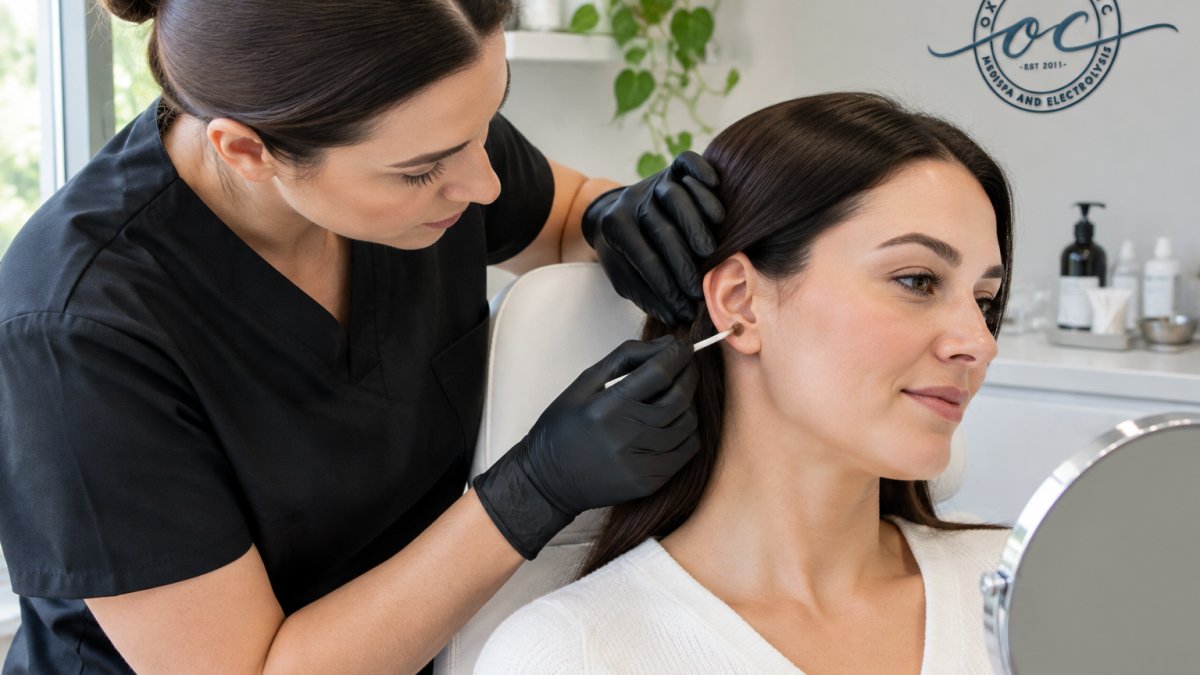
Here is the mechanism that matters. Allergic contact dermatitis is a delayed hypersensitivity response. The first exposure sensitizes your immune system silently.
A responsible patch test follows a clear process:
- Apply a small amount of each pigment to be used, plus the numbing product, to a discreet test area, commonly behind the ear or on the inner forearm
- Leave the area dry and untouched for the full observation window your practitioner sets, which most clinics place at 48 to 72 hours minimum and some extend to seven days
- Photograph the site at 24, 48, and 72 hours so you have a record rather than a memory
- Report any redness, itching, swelling, or blistering before your appointment, not on the day
What a patch test can and cannot do:
| What it checks | What it cannot predict |
|---|---|
| Delayed allergic response to a specific pigment batch | Infection risk from the procedure itself |
| Reaction to the numbing product | Pigment retention or fading pattern |
| Immediate contact sensitivity | Healing speed on reactive skin |
| Suitability of one pigment brand or lot | Reaction to a different batch used later |
If you have a known metal, dye, or cosmetic allergy, ask whether the pigment line publishes its ingredient list and whether a metal-free or vegan option is available.
Microblading Allergic Reaction: Pigment Ingredients and Risk
A microblading allergic reaction is uncommon but real, and pigment ingredients are the usual trigger. Most reactions are contact dermatitis: redness, itching, and swelling confined to the treated area.
The risk rises with:
- A known allergy to metals, dyes, or cosmetics
- Previous reactions to permanent makeup or tattoo ink
- A history of contact dermatitis from skincare
If you have reacted to pigment before, say so at consultation. That single disclosure changes the plan, sometimes to a different pigment line and sometimes to a different treatment entirely.
Signs to act on quickly include a rash that spreads, blistering, or swelling that worsens after the first week. Those warrant a call to your practitioner and, if they persist, a clinician.
Microblading Healing Time on Sensitive Skin
Microblading healing time on sensitive skin usually runs longer than the standard window. Surface healing takes about one to two weeks, while the deeper pigment settling phase continues for several weeks after that.
Reactive skin often looks redder for the first few days and can feel tight or itchy as it heals. Both are common. The key is protecting the skin barrier so healing stays on track.
Aftercare that supports sensitive skin:
- Keep the area clean with a gentle, fragrance-free cleanser
- Apply a thin layer of barrier-repair cream as directed
- Avoid makeup, sweating, and sun exposure on the brow area during early healing
- Do not pick or scratch, which causes poor pigment retention
If you want to see how healed results look on fair and delicate skin, our guide to natural-looking microblading styles for blonde hair shows what realistic outcomes look like. For aftercare on reactive skin, a barrier-repair cream such as our Sensitive Skin Cream supports the protective layer while the skin recovers.
Your Pre-Procedure Decision Checklist and When to See a Clinician
Sensitive skin is not one risk level. The decision to proceed, postpone, or seek medical clearance depends on which condition you have and whether it is currently active. Use the framework below before you book.
Risk by skin condition and treatment status:
| Situation | Typical guidance |
|---|---|
| Stable sensitive skin, no active flare | Often suitable with a modified plan and patch test |
| Active eczema, dermatitis, or psoriasis in or near the brow area | Postpone until the flare has fully settled |
| Rosacea in a calm phase | Case-by-case; gentler pass and longer healing window |
| Broken, weeping, or infected skin | Do not proceed; seek clinical advice first |
| Recent chemical peel, retinol, or exfoliating treatment near the brows | Wait until the barrier has recovered, typically one to two weeks depending on intensity |
| Known pigment or metal allergy | Seek clinical advice and consider a different pigment line or no treatment |
| Weakened immune status or poor wound healing history | Get medical clearance before booking |
Your pre-procedure checklist:
- My skin is calm, with no active flare, rash, or broken skin in the brow area
- I have disclosed eczema, rosacea, psoriasis, or contact dermatitis and described how recently it was active
- I have listed every prescription, topical, and over-the-counter product that affects my skin
- I have had a patch test with the exact pigments and numbing products to be used, observed for at least 48 to 72 hours
- I understand my healing may take longer than average and have planned around it
- I can commit to the aftercare routine for the full healing window
When to see a clinician first: if you have an active skin condition in the brow area, a known pigment allergy, a weakened immune status, a history of poor wound healing, or a reaction that spread beyond a test patch.
How to verify your practitioner’s safety standards:
- Ask whether needles and blades are single-use and sterile, and whether you can see them opened in front of you
- Ask what licensing or certification the practitioner holds and who performs the procedure
- Ask for the pigment brand and ingredient documentation, and whether a patch test is included
- Ask how tools are sanitized between clients and what informed consent covers
- Ask what the clinic’s complication protocol is if you react after treatment
A qualified practitioner welcomes these questions and answers them plainly. If a clinic dodges them, walk away. That single decision protects you more than any aftercare product.
Book a Consultation to Confirm Your Skin Is Ready
Sensitive skin rewards a careful plan. The right approach is a proper sensitivity assessment, an honest medical history review, and a patch test with time to read the result.
Assessing your skin barrier and history before recommending treatment is part of how we approach consultations. Our team offers professional microblading, and we aim to build a personalized aftercare routine around your skin profile.
Book a consultation to confirm your skin is ready. You can review our microblading brow services and consultation options before you come in. Our clinical microblading guide for eyebrow enhancement covers the full process from first consult to healed result.
Sensitive skin does not have to stand between you and well-shaped brows. It does mean choosing a clinic that screens first and treats second. Get started with Oxygen Facial Clinic and confirm your skin is ready before your first appointment.
Frequently Asked Questions
Is microblading safe for sensitive skin?
It can be, but safety depends on your specific sensitivity rather than the label alone. Clinical microblading breaks the skin barrier, so redness, swelling and irritation are expected in the first days. What decides safety is whether you have an active flare, a pigment allergy history or a condition like eczema or rosacea in the brow area. A consultation, a patch test and honest disclosure of your medical history let a qualified practitioner judge whether your skin can tolerate the trauma of the procedure.
Can you get microblading if you have eczema?
Microblading with eczema is possible only when the skin in and around the brow area is calm and unbroken. Needling over an active flare risks infection, delayed healing and poor pigment retention. Wait until the area has been settled for several weeks, tell your practitioner about your triggers and treatment history, and ask whether powder brows or a softer technique suits your skin better. If your eczema is widespread or frequently active, speak to your doctor before booking.
Should I get a patch test before microblading?
Yes, a microblading patch test is a sensible precaution, especially with sensitive skin or a history of contact dermatitis. A small amount of pigment is applied to a discreet area, usually behind the ear, and checked after 24 to 48 hours for redness, itching or swelling. Understand its limits: it screens for pigment allergy, not for how your skin will heal from needle trauma. It also cannot predict pigment retention. Treat it as one part of screening, not a guarantee.
Does sensitive skin take longer to heal after microblading?
Healing time varies, and sensitive or reactive skin often takes longer to settle. Expect redness, tenderness and light flaking in the first week, with itching common as the skin repairs. Follow your aftercare exactly, avoid harsh products and sun exposure on the brow area, and contact your practitioner if you see spreading redness, pus or worsening pain rather than steady improvement.


