
Is Electrolysis Permanent for Everyone? What to Expect


Table of Contents
- What Permanent Hair Removal Actually Means
- How Electrolysis Works on Hair Follicles
- Who Can Receive Electrolysis Treatment
- How Many Electrolysis Sessions Are Needed
- Understanding Hair Growth Cycles and Electrolysis Hair Regrowth
- Hair Too Short for Electrolysis: Preparation and Timing
- Electrolysis Aftercare and Long-Term Results
- Factors That Affect Individual Outcomes
- Frequently Asked Questions
Last Updated: October 18, 2026
What Permanent Hair Removal Actually Means
When people ask if electrolysis permanent results are guaranteed for everyone, they’re asking something specific: Will the hair stay gone forever? The answer is yes, but “permanent” needs real definition.
Permanent hair removal means the hair follicle is destroyed so completely that it cannot produce new hair from that same follicle. Electrolysis achieves this by sending an electrical current directly into individual follicles, destroying the cells responsible for hair growth. Once those cells are gone, they don’t regenerate.
Here’s what matters: permanent doesn’t mean you’ll never see hair in that area again. New hairs can grow from follicles that weren’t treated during your sessions. Hormonal changes can also activate dormant follicles over time. But the hairs that were treated? Those are gone for good.
Permanent removal of treated hairs is guaranteed with electrolysis. New hair growth from untreated follicles or hormonal activation is possible and normal.
The difference between “permanent” and “complete” is critical.
How Electrolysis Works on Hair Follicles
Electrolysis targets hair at its source: the follicle itself. The process works by inserting a fine probe into the hair follicle and delivering electrical current that destroys the follicle’s growth cells.
The mechanics are straightforward:
- A thin probe enters the follicle alongside the hair
- Electrical current heats the follicle and damages the dermal papilla (the structure that generates new hair)
- The destroyed follicle can no longer produce hair
- The treated hair is removed and the follicle remains inactive
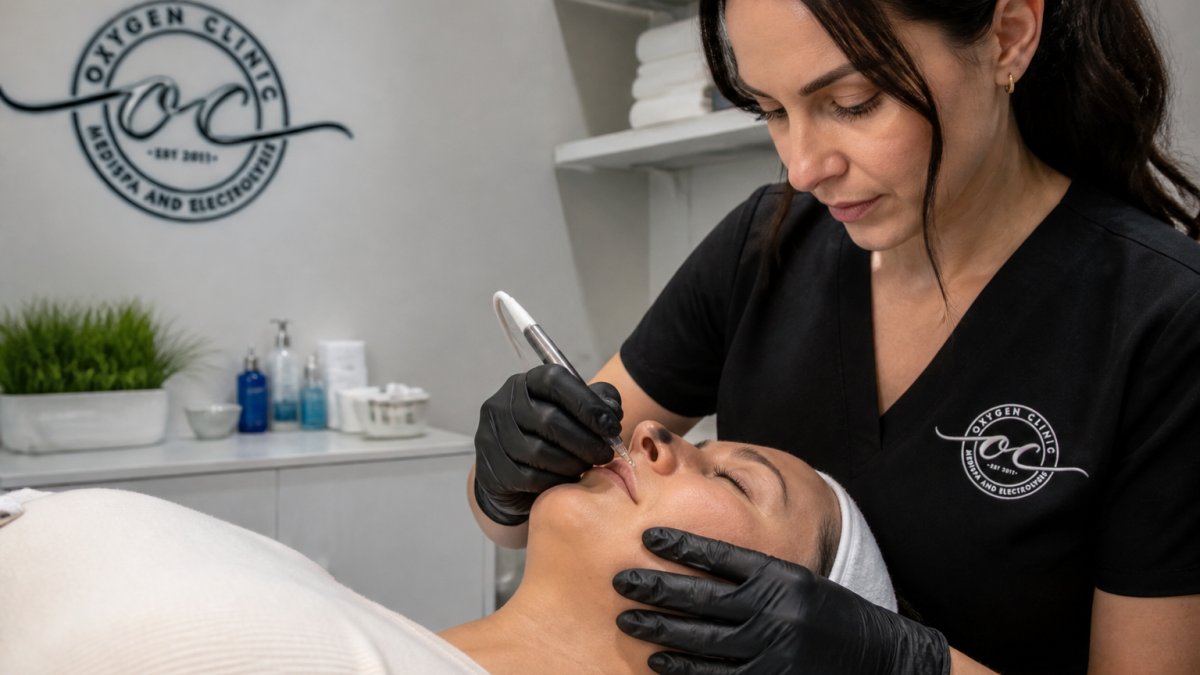
What makes electrolysis different from other methods: it destroys the follicle itself, not just the hair above the skin. Laser hair removal, by contrast, targets pigment in the hair and can miss lighter hairs or be less effective on certain skin tones.
The current type matters. Galvanic electrolysis uses direct current to create a chemical reaction. Thermolysis uses radiofrequency current to generate heat. Blend electrolysis combines both methods. Each approach destroys the follicle, but thermolysis tends to work faster, which is why many professionals prefer it.
Thermolysis sessions move faster than galvanic, but blend electrolysis may require fewer total sessions for stubborn hair. Ask your electrologist which method they recommend for your hair type and skin sensitivity.
Who Can Receive Electrolysis Treatment
Electrolysis works for nearly everyone, but suitability depends on a few factors. The treatment is safe across different ages, skin types, and hair colors, which is a major advantage over laser-based methods.
Ideal candidates have:
- Unwanted hair on the face, body, or both
- Realistic expectations about treatment timelines
- Commitment to multiple sessions
- Ability to follow aftercare instructions
People who should consult before starting include those with:
- Active skin infections or open wounds in the treatment area
- Certain heart conditions (due to electrical current)
- Keloid scarring tendency
- Severe needle anxiety
Pregnancy isn’t a contraindication, but many practitioners recommend postponing treatment until after delivery, partly due to hormonal changes that affect hair growth.
Suitability for Different Skin Tones and Hair Colors
One of electrolysis’s strongest advantages: it works on all skin tones and all hair colors. This matters because laser hair removal struggles with darker skin tones (higher risk of burns) and light-colored hair (insufficient pigment for the laser to target).
Electrolysis removes:
- Blonde, red, grey, and white hair (where laser often fails)
- Hair on dark skin tones (where laser carries higher risk)
- Hair remaining after laser treatments that didn’t work
- Fine, coarse, and mixed hair textures
The follicle destruction doesn’t depend on hair color or skin pigmentation. It’s purely mechanical and electrical, making electrolysis permanent the most inclusive hair removal method available.
People with darker skin tones benefit especially because electrolysis eliminates the burn risk associated with laser treatments. Those with grey, white, or very light hair benefit because electrolysis is one of the few permanent options that actually works for them.
How Many Electrolysis Sessions Are Needed
The number of sessions varies widely because it depends on hair density, follicle depth, and how many hairs are actively growing when you start treatment.
Most people need between 8 and 12 sessions for significant results on a small area like the upper lip. Larger areas like the legs or full face may require 15 to 30+ sessions. Some people need more; others need fewer.
Each session typically lasts 15 minutes to an hour, depending on the area size and hair density. Sessions are usually scheduled 1 to 2 weeks apart to allow the skin to heal between treatments.
Rushing sessions or spacing them too close together increases irritation and doesn’t improve results. Skin needs time to recover. Spacing sessions properly actually speeds up the overall timeline.
Why so many sessions? Hair grows in cycles, and electrolysis only works on hair that’s actively growing. Hair in resting phases won’t be visible or treatable. You need multiple sessions to catch each follicle during its growth phase.
Understanding Hair Growth Cycles and Electrolysis Hair Regrowth
Hair doesn’t all grow at the same time. Each follicle cycles through growth, transition, and resting phases independently. This is why hair regrowth happens, not from treated follicles, but from follicles that were in a resting phase during your sessions.
The hair growth cycle has three main phases:
Anagen (growth phase): Hair is actively growing and visible. This is when electrolysis works. The follicle is active and can be destroyed.
Catagen (transition phase): Hair stops growing but hasn’t shed yet. The follicle is disconnecting from its blood supply.
Telogen (resting phase): Hair is shed or dormant. The follicle is inactive. Electrolysis won’t work on these follicles because they’re not producing hair.
At any given time, roughly 70% of your hair is in the growth phase. That means 30% of follicles are resting and invisible.
This is why multiple sessions are necessary and why spacing matters. You need time between sessions for resting follicles to wake up so you can treat them too.
New hair appearing after electrolysis isn’t regrowth from treated follicles. It’s hair from follicles that were resting during earlier sessions. Multiple sessions catch all follicles during their active phases.
Hair Too Short for Electrolysis: Preparation and Timing
Hair needs to be long enough for the electrologist to grasp and insert the probe into the follicle. If hair is too short, the probe can’t enter the follicle properly, and treatment won’t work.
Minimum hair length is typically about 1.5 millimeters, barely visible but long enough to handle. Some electrologists prefer slightly longer hair for easier insertion, around 3 millimeters.
Preparation is simple:
- Stop shaving or waxing 24 to 48 hours before your appointment
- Let hair grow naturally for a day or two
- Avoid plucking (it removes the hair you need for treatment)
- Arrive with clean skin, no makeup or lotion on the treatment area
Don’t arrive with very long hair either. Hair that’s too long can be uncomfortable during treatment and doesn’t improve results. A few millimeters of growth is perfect.
Electrolysis Aftercare and Long-Term Results
Aftercare directly affects your results. Proper care speeds healing, reduces irritation, and protects the follicles you’ve just treated. It also lowers the risk of the most common side effects.
Common Side Effects and Risks
Most reactions are temporary and resolve within a few days. A common pattern includes:
- Redness and mild swelling around each treated follicle, lasting a few hours to a day
- Small pinpoint scabs or crusting at the insertion points, which heal without scarring if left alone
- Temporary tenderness or a mild sunburn-like sensation in the treated area
- Rarely, temporary changes in skin pigmentation, more likely in people with darker skin tones or those who pick at scabs
More serious complications are uncommon but possible. These include infection at treated sites, keloid scarring in people with a tendency toward it, and rarely, a small electric burn from improper technique. Choosing a qualified electrologist and following aftercare instructions are the two biggest ways to reduce these risks.
Immediate Aftercare
Immediately after treatment:
- Avoid touching the treated area
- Skip hot water, saunas, and steam rooms for 24 hours
- Don’t apply makeup or heavy lotions for at least 12 hours
- Wear loose clothing over treated areas
- Use sunscreen if the area will be exposed to sun
Over the next few days:
- Keep the area clean and dry
- Apply gentle, fragrance-free moisturizer
- Avoid chlorine pools
- Don’t pick at any scabs or crusting
- Avoid strenuous exercise that causes sweating
How to Choose a Qualified Electrologist
Because results and safety depend heavily on technique, provider selection matters as much as aftercare. Ask concrete questions before booking:
- What training and certification do you hold, and are you licensed or registered where required?
- What type of electrolysis do you use (galvanic, thermolysis, or blend), and why for my hair and skin?
- How do you sterilize probes and equipment between clients?
- How do you plan a treatment schedule for my area and hair type?
- What is your policy if I experience an adverse reaction?
A practitioner who answers these clearly and describes a staged treatment plan is a better sign than one who promises a fixed number of sessions or guaranteed results.
Long-Term Results
Long-term results depend on completing all recommended sessions. If you stop treatment before all active follicles have been addressed, new hair will continue to grow. Consistency matters more than anything else.
Many people see permanent results after completing their full course of treatment. Some experience occasional stray hairs years later, usually from hormonal changes or newly activated follicles. Touch-up sessions are occasional and quick, far less frequent than ongoing laser treatments.
“Permanent” refers to the destruction of treated follicles, not a promise that no hair will ever appear in the area. New growth from untreated or later-activated follicles is normal and does not mean the treatment failed.
Factors That Affect Individual Outcomes
Why do some people need fewer sessions than others?
Hair density: More hair means more follicles to treat. Dense hair requires more sessions than sparse hair.
Follicle depth: Deeper follicles take longer to destroy completely. Surface-level follicles respond faster.
Hair coarseness: Coarse, strong hair often requires higher settings and more sessions than fine hair.
Hormonal factors: Hormonal changes activate new follicles or strengthen existing ones.
Skin sensitivity: Sensitive skin may require lower settings and longer intervals between sessions, extending your overall timeline.
Consistency with appointments: Skipping sessions or spacing them too far apart resets progress. Regular, scheduled appointments speed results.
Age: Younger people sometimes need more sessions because hormonal activity is higher. Older clients may need fewer sessions.
Ethnicity and genetics: Some people naturally have more active hair follicles. This is genetic and affects session count.
The takeaway: your timeline is personal.
Frequently Asked Questions
Is electrolysis truly permanent for everyone?
Electrolysis is a method for permanent hair removal, meaning treated hairs do not regrow from destroyed follicles. However, permanence depends on whether all individual follicles in the treatment area receive adequate treatment. New hairs from previously inactive follicles may emerge later, which is why multiple sessions and sometimes repeat treatments are necessary. Results vary based on hair density, skin type, hormones, and treatment consistency.
How many electrolysis sessions are needed for permanent results?
The number of treatment sessions depends on hair density, the size of the treatment area, and individual hair growth cycles. Most people need multiple sessions spaced weeks apart to target hairs in different growth phases. Facial hair typically requires 8-12 sessions, while larger body areas may need more. Your electrologist will assess your specific situation during a consultation and create a personalized treatment plan.
Can hair grow back after electrolysis treatment?
Hair that emerges after electrolysis treatment comes from follicles that were not treated or from previously dormant follicles becoming active due to hormonal changes. Treated follicles do not produce new hairs. This is why repeat treatments may be needed over time, especially if hormones shift or if initial treatment did not address all active follicles in the area. Consistent aftercare helps maintain results.
Can everyone receive electrolysis treatment?
Electrolysis works on all hair colors and all skin tones, making it suitable for people laser-resistant hair cannot treat. However, certain medical conditions, medications, or skin sensitivities may require consultation with a qualified professional. Pregnant individuals should wait until after pregnancy. A thorough consultation with an experienced electrologist ensures treatment is safe and appropriate for your individual circumstances.
If you’re ready to explore electrolysis permanent hair removal as your solution, we’d like to help. At Oxygen Facial Clinic, we combine expert electrolysis with personalized skincare to address your unique needs. Our team uses advanced techniques and European skincare products to ensure your skin stays healthy throughout treatment. Book your free consultation today and discover how we can help you achieve lasting results with a treatment plan designed specifically for you.


