
How to Manage Electrolysis Pain During Sessions


Table of Contents
- What Electrolysis Pain Actually Feels Like
- How to Make Electrolysis Less Painful: A Step-by-Step Plan
- Electrolysis Numbing Cream: What’s Safe and What Isn’t
- In-Session Coping Techniques That Work
- Electrolysis Session Length and Breaks: Pacing for Comfort
- Electrolysis Aftercare for Redness and Soreness
- When Pain Changes: Knowing When to Speak Up
- Conclusion
- Frequently Asked Questions
Last Updated: October 8, 2026
What Electrolysis Pain Actually Feels Like
Electrolysis pain is the brief, localized sensation of heat or a small sting that occurs when a fine probe delivers current to a single hair follicle.
The sensation comes from the current itself, not from the probe entering the skin. Insertion is usually felt as a light tickle or nothing at all.
That distinction matters. It means the discomfort is tied to treatment settings, session length, and your own sensitivity, not to a needle jabbing you.
Sensation by Modality: Thermolysis, Galvanic, and Blend
Thermolysis uses a short burst of high-frequency current to heat and destroy the follicle. Clients often describe it as a quick, hot pinprick.
Galvanic electrolysis uses direct current to create a chemical reaction inside the follicle. It is slower per hair, and the sensation is more of a dull warmth or tingling than a sharp sting.
Blend method combines both currents. It works faster than galvanic alone and is often described as more comfortable than thermolysis for sensitive areas.
The modality your electrologist uses changes how the current feels, not just how fast it works. If one method feels too sharp, ask whether blend might suit you better.
How to Make Electrolysis Less Painful: A Step-by-Step Plan
You can make electrolysis less painful by preparing your skin and body in the two weeks before your appointment. Preparation does more for comfort than any single trick during the session.
Here is the plan we walk clients through:
- Two weeks out: Increase daily water intake and moisturize the treatment area twice a day.
- One week out: Pause strong exfoliants and retinoids on the area.
- Three days out: Cut back on caffeine.
- Day of: Eat a normal meal, avoid alcohol, and arrive with clean, product-free skin.
- One hour before: Apply any approved numbing product exactly as directed.
- During: Ask for breaks, use breathing techniques, and speak up early.
Each step is small. Together they change how a session feels.
Two Weeks Out: Hydration, Skin Condition, and Caffeine
Well-hydrated skin conducts current more evenly, which can mean less discomfort per insertion. Dry or irritated skin tends to feel more sensitive.
Drink water steadily through the day rather than in one large amount. Add a gentle moisturizer to the treatment area morning and night.
Caffeine is worth attention. Many clients find that a coffee habit tightens their muscles and sharpens their sensitivity.
Day Of: What to Do in the Hour Before Your Appointment
Eat something. Low blood sugar makes discomfort feel worse, and it also raises the odds of feeling lightheaded in the chair.
Avoid alcohol for at least 24 hours. It thins the blood and can make the skin react more.
Wash the area with a mild cleanser.
If your electrologist has approved a numbing product, apply it about an hour ahead so it has time to work.
Electrolysis Numbing Cream: What’s Safe and What Isn’t
Topical anesthetics are the most common numbing option clients ask about, and they deserve more care than most articles give them. In Canada, lidocaine creams are regulated as drugs under the Food and Drugs Act, so the label directions are not suggestions, they are the legal and clinical limits for safe use.
What’s Typically Available
- Over-the-counter lidocaine products usually contain 4% to 5% lidocaine. These are the most common option for at-home use before a session.
- Higher-concentration products (for example, lidocaine combined with prilocaine, or concentrations above 5%) generally require a prescription.
- Compounded numbing creams prepared by a pharmacy for a specific client may be prescribed by a physician or nurse practitioner.
Concentration is not the only variable. How much you apply, how large an area you cover, and how long it stays on all affect how much drug is absorbed into your bloodstream. More is not better.
Safety Rules That Actually Matter
- Follow the label or prescription exactly. Do not apply more often, more thickly, or over a larger area than directed.
- Never apply to broken, irritated, or recently treated skin. Absorption rises sharply and so does the risk of a systemic reaction.
- Do not wrap or occlude the area to “boost” absorption unless a clinician has told you to. Occlusion can multiply how much lidocaine enters the bloodstream.
Talk to a Clinician First If You…
- Are pregnant or breastfeeding
- Take prescription medication, especially for heart rhythm, seizures, or liver conditions
- Have ever had a reaction to a numbing product
A pharmacist is a fast, free resource for checking interactions and confirming whether an over-the-counter product is suitable for you.
Over-the-Counter Pain Relievers
Acetaminophen or ibuprofen taken before a session is an option some clients use. Two cautions:
- Ibuprofen and other NSAIDs can increase bleeding and bruising at the treatment site, so ask your electrologist and pharmacist whether it makes sense for you.
- Acetaminophen does not affect bleeding but has a maximum daily dose that is easy to exceed if you are also taking cold or flu products that contain it.
If you take prescription medication, check with your doctor or pharmacist before adding anything.
Numbing products reduce sensation, they do not eliminate it, and they do not make it safe to push through pain that signals a problem. If a session hurts sharply despite numbing, tell your electrologist so settings can be adjusted.
What Not to Do
- Do not buy numbing products from unregulated online sellers.
- Do not use a product prescribed for someone else.
- Do not apply numbing cream and then cover it with plastic wrap for hours.
Used correctly, a topical anesthetic can take the edge off a session. Used carelessly, it can cause a serious reaction. The difference is following directions and checking with a qualified clinician when anything is unclear.
In-Session Coping Techniques That Work
In-session coping is about pacing, attention, and communication, not toughness. The clients who handle long sessions best are usually the ones who arrive with a plan and reset the moment discomfort starts to climb.
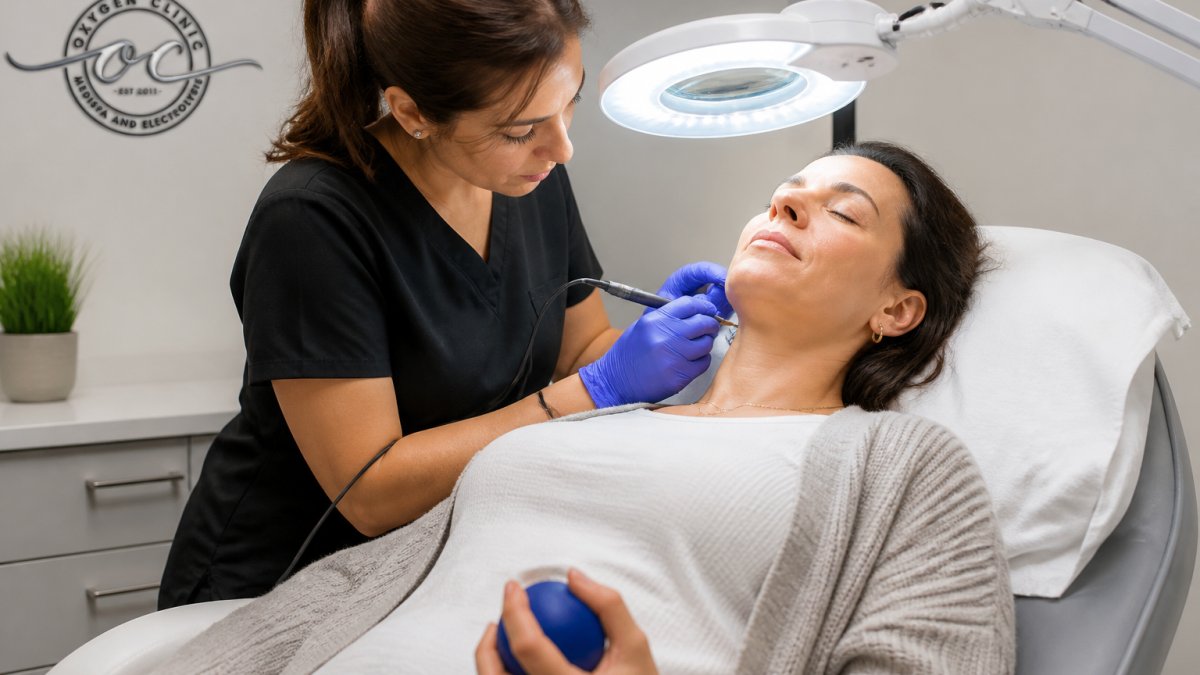
Set Up Before the First Insertion
A few seconds of setup changes the whole session:
- Agree on a stop signal. A raised hand, a word, or a tap means “pause now”, no explanation needed. This single agreement removes most of the anxiety that amplifies pain.
- Agree on a heads-up signal. Ask your electrologist to warn you before a longer or more sensitive stretch so you can breathe through it instead of being caught off guard.
- Position for comfort. A slight recline, a pillow under the knees, and arms supported reduce muscle tension that makes stings feel sharper.
Breathing That Actually Blunts the Sting
Slow, low breathing works because it keeps your diaphragm relaxed and prevents the held-breath, tensed-muscle pattern that sharpens pain.
- Inhale through the nose for a count of four.
- Exhale slowly through the mouth for a count of six to eight.
- Time the exhale to each insertion if you can. The long exhale on the moment of current is the single most effective in-session technique most clients report.
Distraction That Works
Distraction is not about ignoring the session, it is about giving your nervous system something else to process.
- Audio: A podcast, audiobook, or playlist with a clear narrative works better than ambient music because it holds attention.
- Physical outlet: A stress ball, a smooth stone, or a folded cloth to grip gives the nervous system a place to put tension.
- Visual: A show or video on a phone or tablet, angled so you can watch without turning your head.
Pacing and Reset Techniques
- Ask for a pause the moment pain climbs. Ten to twenty seconds is often enough to reset. Do not wait until you are dreading the next insertion.
- Change position slightly during a pause, shift your shoulders, unclench your jaw, flex your feet.
- Ask about a modality or setting change if a stretch feels sharper than earlier in the same session. Thermolysis, galvanic, and blend feel different, and a switch can help.
What to Say to Your Electrologist
You do not need to be polite about pain. Useful phrases:
- “Can we pause for a moment?”
- “That area feels sharper than the last one, can we adjust?”
- “I’d like a break every 15 minutes today.”
A good practitioner wants this feedback. It makes their work more precise and your sessions more sustainable.
Ask your electrologist to tell you when a longer or more sensitive stretch is coming. Knowing it is coming makes it easier to breathe through.
Never grit your teeth through escalating pain to “get it over with.” Pushing through can lead to skin damage and a worse reaction, and it usually means the settings are wrong for you.
Electrolysis Session Length and Breaks: Pacing for Comfort
Shorter sessions are usually more comfortable than long ones. Many clients do well with 15 to 30 minutes, especially in sensitive areas.
Comfort tends to drop as a session goes on. Skin becomes more reactive, and your own tolerance wears down.
If you are booking a longer appointment, tell your electrologist you want breaks built in. Most will happily pause.
Electrolysis Aftercare for Redness and Soreness
Redness and soreness after a session are normal and usually settle within a day or two. The skin has just been worked on follicle by follicle, so some reaction is expected.
Aftercare that helps:
- Keep the area clean and let it air dry.
- Apply a cool compress if it feels hot.
- Use a gentle, fragrance-free moisturizer.
If redness spreads, blisters form, or soreness gets worse after 48 hours, contact your electrologist.
When Pain Changes: Knowing When to Speak Up
A sudden jump in pain during a session is a signal, not something to push through. It can mean the treatment settings need adjusting, the probe needs changing, or the area needs a rest.
Speak up if you feel:
- A sharp pain that is new or much stronger than before
- Burning that continues after the current stops
- Pain that lasts well beyond the session
Your electrologist can adjust current, switch modality, or shorten the session. A good practitioner wants that feedback.
Conclusion
Electrolysis discomfort is manageable, but it takes preparation, honest communication, and a practitioner who listens. Clients who hydrate, cut caffeine, pace their sessions, and speak up early consistently report easier appointments.
At our team specializes in permanent hair removal through electrolysis, We build a personalized treatment plan around your skin, your sensitivity, and your goals. Every plan starts with a free consultation, so we can assess the area and answer your questions before you commit.
Frequently Asked Questions
Does electrolysis hurt during a session?
Most people describe electrolysis discomfort as a brief stinging, tingling, or pinching sensation at the moment the probe delivers current to each follicle. It lasts a fraction of a second per hair. Individual pain threshold, treatment area, and hormone-related sensitivity all shape how strong it feels. Many clients tolerate full sessions with only mild to moderate discomfort, especially when they are well hydrated and have discussed numbing options with their electrologist beforehand.
Can I take breaks during an electrolysis session?
Yes. Breaks are a normal part of a comfortable treatment plan. Most electrologists build short pauses into longer appointments so you can stretch, sip water, or simply reset. If you feel discomfort building, ask for a pause rather than pushing through. Session length and breaks are best decided together with your electrologist, since dense areas like the upper lip may need shorter blocks than the chin or cheeks.
Can I use a numbing cream before electrolysis?
Topical anesthetics containing lidocaine are available, but they are not right for everyone. Some people react to the active ingredients or to the preservatives. Always check with your electrologist and, if you have a health condition, with a pharmacist or physician before applying anything. Never apply a numbing cream to broken or irritated skin, and follow the product’s timing instructions exactly rather than layering extra product.
How long does soreness last after electrolysis?
Redness and tenderness around treated follicles usually settle within a few hours to a day or two, depending on the area and how many hairs were cleared. Cool compresses, fragrance-free moisturizer, and avoiding harsh actives for 24 to 48 hours help. If soreness is increasing rather than fading, or if you notice spreading redness or pus, contact your electrologist and seek medical advice, as this may signal an infection rather than normal aftercare soreness.
Unwanted hair does not have to mean months of guessing. Get started with Oxygen Facial Clinic and build a treatment plan designed around your comfort from the first session.
