
Electrolysis for Small Areas: Precision Hair Removal


Last Updated: November 17, 2026
Quick Summary
Electrolysis treatment for small areas targets individual hair follicles in compact spots like the upper lip, chin, brows, nose, ears, fingers, and toes. A fine probe treats one follicle at a time, making it more precise than broad-coverage methods and suitable for all hair colors, including white, gray, blonde, and red.
- Small areas often need fewer sessions than large ones, but a single-visit fix should not be expected.
- A few stray chin hairs may clear in 3-6 visits, while a dense upper lip can take 12-24 visits or more.
- Upper lip sessions typically run 15-30 minutes, and between-the-brows work takes 10-20 minutes.
- Expect mild redness, slight swelling, and tenderness for a few hours, with tiny pinpoint scabs possible.
- Skip makeup on the treated spot for 24 hours and avoid saunas, steam rooms, and intense workouts for a day.
Table of Contents
- What Electrolysis Treatment for Small Areas Means
- Electrolysis Treatment Areas: Face and Body Spots That Qualify
- Electrolysis Session Length for Small Areas
- How Many Electrolysis Sessions Are Needed for a Small Area?
- Electrolysis vs Laser for a Small Area: How to Choose
- What to Expect During a Small-Area Session, Step by Step
- Electrolysis Aftercare for Small Areas
- Book a Free Consultation for Small-Area Electrolysis
- Frequently Asked Questions
What Electrolysis Treatment for Small Areas Means
Electrolysis treatment for small areas is a permanent hair removal method that targets individual hair follicles in compact, hard-to-reach spots like the upper lip, chin, brows, nose, ears, fingers, and toes. At our clinic, we use a fine probe to treat one follicle at a time, which makes this approach far more precise than broad-coverage methods.
The concept is simple. A trained electrologist inserts a sterile probe into a single follicle and delivers a small current. That current destroys the follicle’s ability to regrow hair. Because each insertion is controlled, small areas get exactly the attention they need.
Why does precision matter so much? Small areas are unforgiving. A patch of skin on your upper lip or between your brows leaves little room for error. Broad treatments can miss fine hairs or irritate the surrounding skin.
Electrolysis is also the only method approved as permanent by regulators in many markets, including Health Canada’s guidance on cosmetic devices. That permanence is the core promise.
Below, we’ll show you exactly which spots qualify, how long sessions run, and what recovery looks like.
Electrolysis Treatment Areas: Face and Body Spots That Qualify
Electrolysis can target small areas where individual follicles can be reached. Here are common spots that are often treated.
Delicate facial spots: upper lip, chin, brows, nose and ears
Facial hair is a common reason people seek electrolysis. The upper lip, chin, and jawline are classic small areas. They hold fine, dense hair that grows back fast after shaving or waxing.
Brows need a steady hand. We treat hair between the brows and along the brow line without disturbing the shape you want. If brow shaping is your main concern, you can explore our eyebrow shaping service alongside electrolysis.
The nose and ears are tricky for other methods. Hair inside the nostrils and along the ear rim is hard to reach with laser. A fine electrolysis probe handles these spots cleanly.
Other facial spots we treat:
- Cheeks and sideburns
- The hairline
- The lower lip
- The neck
Small body areas: fingers, toes, areola and bikini line
Other small body areas include:
- Underarms
- The abdomen
- The breasts
- The legs, when only a patch needs work
Electrolysis does not depend on pigment, so it can be used on light-colored hair such as white, gray, blonde, and red hair.
Electrolysis Session Length for Small Areas
Session length depends on how many hairs are treated and how dense the growth is. Your electrologist will give you a realistic estimate at your consultation.
Here is a rough guide to what to expect:
| Small area | Typical session length | Notes |
|---|---|---|
| A few stray chin hairs | 10-15 minutes | Quick touch-up |
| Upper lip | 15-30 minutes | Dense, fine hair |
| Between the brows | 10-20 minutes | Precision work |
| Fingers or toes | 15-25 minutes | Scattered growth |
| Bikini line edge | 20-30 minutes | Sensitive skin |
Typical session length
How Many Electrolysis Sessions Are Needed for a Small Area?
Small areas often need fewer sessions than large ones, but a single-visit fix should not be expected. Hair grows in cycles, and only follicles in the active growth phase respond to current. That single fact drives every timeline you will hear.
A common pattern for a small area looks like this:
- Clearance phase (first 2-4 visits): remove the visible hairs and thin the density. Most clients notice a real difference here.
- Cycle-chasing phase (visits 5-12): catch hairs as they emerge into the growth phase. Sessions are often spaced 3-6 weeks apart so dormant follicles have time to surface.
- Refinement phase (final visits): handle stragglers and confirm clearance before spacing appointments further apart.
How many visits in total? It depends on three variables:
- Density. A few stray chin hairs may clear in 3-6 visits. A dense upper lip can take 12-24 visits or more.
- Hair cycle speed. Facial hair cycles faster than body hair, so the upper lip and chin often progress quicker than toes or the bikini line edge.
- Hormonal stability. Thyroid changes, perimenopause, menopause, and polycystic ovary syndrome can trigger new growth and extend the plan. This is normal, and it is why a good practitioner builds flexibility into the schedule rather than quoting a fixed number.
Electrolysis vs Laser for a Small Area: How to Choose
Here is how the two methods stack up:
| Factor | Electrolysis | Laser |
|---|---|---|
| Hair colors treated | All, including white and red | Best on dark hair |
| Precision on tiny spots | Hair by hair | Wider coverage |
| Permanence | Permanent removal | Reduction, often temporary |
| Best for | Small, delicate areas | Large areas, dark hair |
For a deeper breakdown, read our full guide on electrolysis vs laser hair removal efficacy.
What to Expect During a Small-Area Session, Step by Step
Here is a typical small-area appointment, step by step.
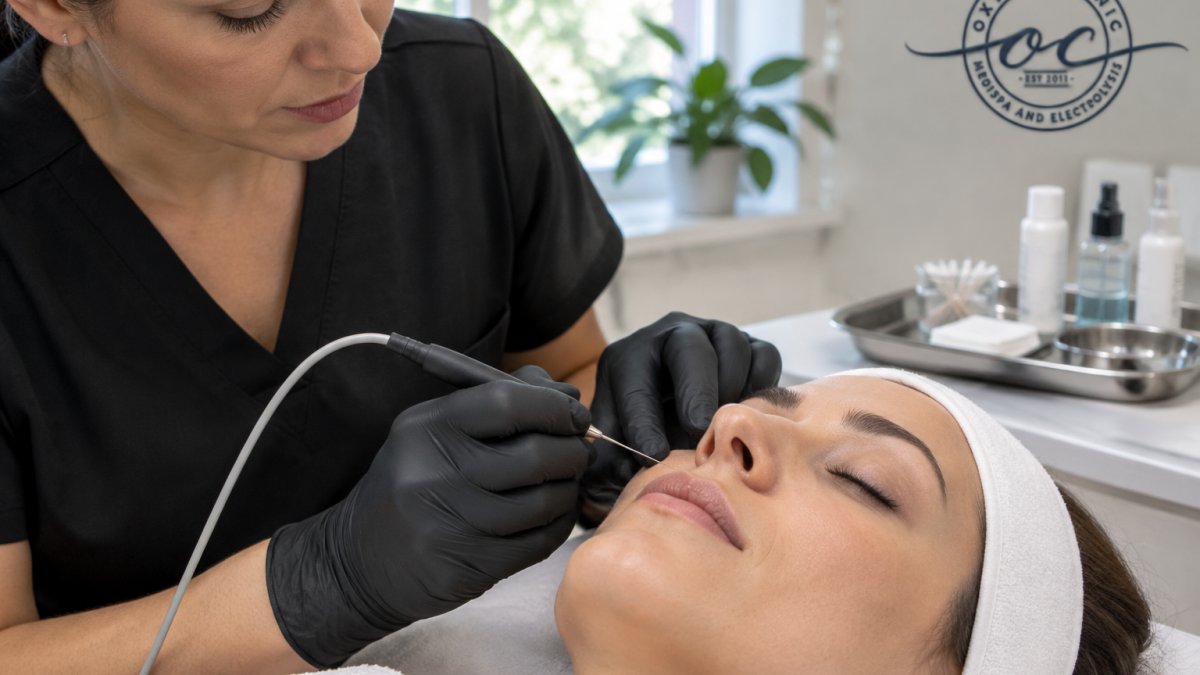
Step 1: Consultation and skin check. We review your history, look at the treatment area, and confirm the plan.
Step 2: Cleansing. The area is cleaned to keep the skin safe and free of oils.
Step 3: Probe insertion. A sterile, fine probe slides into one follicle at a time. Most clients feel a brief warm pinch.
Step 4: Current delivery. A small current destroys the follicle. We work methodically across the area.
Step 5: Post-treatment check. We review the skin, apply a soothing product, and go over aftercare.
If discomfort worries you, our guide on how to manage electrolysis pain during sessions covers practical tips like timing, numbing options, and breathing.
Electrolysis Aftercare for Small Areas
Aftercare for a small area is simple, but the details matter because facial and delicate skin heals differently from a large body patch. Expect mild redness, slight swelling, and tenderness for a few hours. Tiny pinpoint scabs can form over the next day or two. That is a normal response to current delivered into the follicle.
The first 24 hours:
- Keep the area clean and dry. Wash gently with lukewarm water and a mild cleanser, then pat dry.
- Skip makeup on the treated spot for 24 hours.
- Avoid saunas, steam rooms, hot yoga, and intense workouts for a day, since heat and sweat can aggravate freshly treated skin.
- Do not apply harsh scrubs, retinoids, or exfoliating acids to the area.
Days 2-7:
- Apply a broad-spectrum sunscreen if the area will see sun (Sunscreens). Treated skin is more sensitive to pigment changes.
- Let any tiny scabs fall off on their own. Picking can cause scarring or dark marks.
- Moisturize with a gentle, fragrance-free product once the skin feels calm.
When to seek professional advice:
Most reactions settle within 48 hours. Contact your practitioner if you see:
- Redness, swelling, or pain that worsens after 48 hours rather than fading
- Pus, spreading warmth, or a fever, which can signal infection
- Blistering or a reaction that spreads beyond the treated area
- New dark patches that do not fade over several weeks
Assessing your practitioner before treatment:
Aftercare starts with who treats you. When choosing a practitioner, ask directly about their certification and the infection-control standards they follow. A practitioner who cannot answer that question clearly is a reason to keep looking.
For a full recovery timeline, read what to expect during electrolysis recovery.
Book a Free Consultation for Small-Area Electrolysis
Small areas deserve a precise plan, not a one-size-fits-all package. A consultation lets us map your treatment area, estimate your session count, and answer your questions before you commit.
Our clinic specializes in permanent hair removal through electrolysis. Our approach combines science and care.
Ready to start? Book a free consultation and find out what permanent clearance looks like for your small area.
Small areas are where precision pays off most. If you have been frustrated by hair that keeps coming back on your lip, chin, or brows, we can help you build a plan that actually clears it. Get started with Oxygen Facial Clinic and take the first step toward permanently smooth, confident skin.
Frequently Asked Questions
What small areas can be treated with electrolysis?
Electrolysis targets one follicle at a time, which suits small, precise areas where laser paddles are awkward to place. A consultation is the place to confirm which spots are suitable for your skin and hair type.
How many electrolysis sessions are needed for a small area?
Most small areas need a series of sessions rather than one visit, because hair grows in cycles and only follicles in the active growth phase respond. A sparse patch of a few hairs may clear in a handful of appointments, while denser chin or upper-lip growth usually needs more. Expect progress to be gradual and cumulative.
Does electrolysis work on light-colored hair?
Yes. Electrolysis targets each follicle with a fine probe, so it does not depend on pigment to find the hair. That makes it an option for white, gray, blonde and red hair, which laser hair removal may struggle to target.
What should I expect after electrolysis on a small area?
Temporary redness and tenderness around the treated follicles are normal and usually settle within hours to a day. Follow your aftercare instructions: keep the area clean, avoid harsh products, sun exposure and heavy makeup for the first day, and do not pick at the skin. If you notice signs of infection or the area does not settle as expected, contact your practitioner for advice.


