
Microneedling vs Chemical Peels for Acne Scars Compared


Last Updated: November 1, 2026
Quick Summary
Microneedling generally suits indented acne scars better, because it stimulates collagen to reshape the skin over a course of sessions. Chemical peels mainly address surface concerns like dullness and uneven tone, so the right choice depends on your scar type. Scar depth and skin tone should guide the decision with a qualified provider.
- A 2025 study found combined microneedling and chemical peeling outperformed either alone for atrophic acne scars.
- Microneedling works through collagen induction, while chemical peels work through surface exfoliation.
- Rolling, boxcar and ice-pick scars each respond differently to the two treatments.
- Darker skin tones carry higher post-inflammatory hyperpigmentation risk, so conservative settings are commonly considered.
- Anyone with active acne, recent tanning or isotretinoin use should consult a provider before booking.
Table of Contents
- Microneedling vs Chemical Peels: Which Treats Acne Scars Better?
- How Microneedling Works on Acne Scars
- How Chemical Peels Work on Acne Scars
- Side-by-Side Comparison: Microneedling and Chemical Peels
- Which Scar Types Respond Best to Each Treatment
- Recovery Time: Microneedling vs Chemical Peel
- Skin Tone, Safety and Who Should Avoid Treatment
- Booking a Consultation to Choose Your Acne Scar Treatment
- Frequently Asked Questions
Microneedling vs Chemical Peels: Which Treats Acne Scars Better?
Acne scars are one of the most common reasons adults book skin treatments, and two options come up again and again: microneedling and chemical peels. The short answer is that it depends on the scar type. Below, we explain how each treatment works, where each one fits, and what to expect in recovery.
How Microneedling Works on Acne Scars
Microneedling uses fine needles to create controlled micro-injuries in the skin. Those tiny wounds trigger the body’s natural repair process, which stimulates collagen production and helps reshape the surface of the skin over time. For indented or atrophic acne scars, this collagen remodelling is the main mechanism of improvement.
A comparative study of acne scarring found microneedling to be the better option against a 35% glycolic acid peel (PubMed Central study comparing microneedling and glycolic acid peels for acne scarring). Results build gradually across a course of sessions rather than appearing after one visit.
How Chemical Peels Work on Acne Scars
A chemical peel applies an acid solution to the skin to remove the outer layers, encouraging smoother texture and more even tone. Glycolic acid is one of the most commonly studied peel agents for acne scarring, and it works mainly at the surface.
Peels are often better suited to surface concerns such as dullness, uneven tone, and some forms of discolouration. For deeper, indented scars, their effect is usually more limited than microneedling’s. Strength, depth, and the number of sessions all shape the outcome, so a qualified provider should set the plan.
Side-by-Side Comparison: Microneedling and Chemical Peels
Both treatments can help acne scars, but they work in different ways. Here is how they compare on the factors that matter most:
| Factor | Microneedling | Chemical Peel |
|---|---|---|
| Main mechanism | Collagen induction | Surface exfoliation |
| Best for | Indented, atrophic scars | Dullness, uneven tone |
| Evidence in supplied study | Favoured in comparison | Less favoured in comparison |
| Typical course | Multiple sessions | Multiple sessions |
Pros of microneedling:
-
Targets the depth of indented scars
-
Can be combined with other treatments
Cons of microneedling:
- Results build slowly over several sessions
- Not suitable for every skin profile
Pros of chemical peels:
- Effective for surface texture and dullness
- Well established for surface-level concerns
Cons of chemical peels:
- Results depend heavily on peel strength and skin type
Combining both approaches is also an option. A 2025 study found that combined microneedling and chemical peeling outperformed either treatment alone for atrophic acne scars. Ask a qualified provider whether that approach suits your scars.
Which Scar Types Respond Best to Each Treatment
Scar type is a useful guide to choosing between microneedling and a chemical peel. Acne scars are not one condition; they are a family of structurally different defects, and each responds differently to collagen induction versus surface exfoliation.
The three main atrophic scar types
Most acne scarring is atrophic, meaning the skin sits below the surrounding surface because of lost collagen during healing. Dermatologists generally sort these into three groups:
- Rolling scars, broad, shallow depressions with sloping edges, often described as wave-like. They are tethered to deeper tissue by fibrous bands, which is why they can look worse when the skin is stretched.
- Boxcar scars, wider, sharply defined depressions with vertical edges, resembling a shallow chickenpox mark. They vary from shallow to deep.
- Ice-pick scars, narrow, deep, puncture-like tracts, sometimes only 1-2 mm across but extending well into the dermis.
How each treatment maps to each scar type
| Scar type | Microneedling | Chemical peel | Practical note |
|---|---|---|---|
| Rolling | Reasonable first-line option; collagen remodeling can soften sloping edges over a course | Limited; superficial peels rarely reach the tethering bands | Often needs combination or subcision for meaningful change |
| Boxcar (shallow) | Good candidate; responds to repeated collagen induction | May help shallow boxcars by smoothing surface texture | Depth of the boxcar is the deciding factor |
| Boxcar (deep) | Partial response; deeper settings or combination often needed | Unlikely to produce meaningful change alone | Specialist assessment recommended |
| Ice-pick | Modest response; narrow tracts are hard to remodel with needling alone | Poor candidate; peels work at the surface, not down a narrow tract | Often needs a different modality entirely (e.g., punch techniques) |
| Post-inflammatory hyperpigmentation (flat, dark marks) | Not the primary tool; may help texture but not pigment directly | Better suited; superficial peels can accelerate surface pigment turnover | These are not true scars and should be assessed separately |
| Hypertrophic or keloid scars (raised) | Generally avoided; needling raised scars carries risk | Generally avoided | Requires dermatology referral, not a cosmetic course |
When neither treatment is the right answer
Clients sometimes arrive expecting one of these two treatments to be the answer, and a proper assessment may show that neither will deliver what they want. Ice-pick scarring, deeply tethered rolling scars, and raised or keloid scars are the clearest examples. In those cases the honest recommendation is a referral for specialist assessment rather than a course of sessions that will produce marginal change.
A simple self-check before booking: run a fingertip across the scar in good light. If it feels like a shallow dip with soft edges, either treatment may help. If it feels like a narrow pinprick or a hard tether, ask specifically how that scar type responds before committing to a course.
Scar depth, tethering, and how many scar types are present all matter, and a photo cannot reliably show any of them.
Recovery Time: Microneedling vs Chemical Peel
Recovery varies by depth and strength. Microneedling usually causes redness and mild swelling for a short period after treatment, while a chemical peel can cause peeling, dryness, and sensitivity over several days. Your provider will explain the expected downtime for your specific plan and the aftercare it requires, including sun protection.
Skin Tone, Safety and Who Should Avoid Treatment
Skin tone is not a side note in this comparison, it is one of the main factors that should decide which treatment is safer for a given person. Both microneedling and chemical peels work by injuring the skin in a controlled way, and any controlled injury can trigger post-inflammatory hyperpigmentation (PIH), the darkening that follows inflammation. In darker skin tones (Fitzpatrick types IV-VI), that risk is meaningfully higher and needs to shape the plan, not just be mentioned at the end of a consultation.
Why pigment risk differs between the two treatments
- Chemical peels carry pigment risk that scales with depth and agent. Superficial peels (for example, low-percentage glycolic or salicylic acid) are generally lower risk when performed correctly, but medium and deep peels carry a substantially higher risk of PIH and, in some cases, hypopigmentation (lightening) in darker skin. The margin for error is narrower, and the consequences are harder to reverse.
- Microneedling carries pigment risk too, but it is more closely tied to technique and aftercare than to the depth of a chemical agent. Aggressive needle depth, excessive passes, or poor post-treatment sun protection can all provoke PIH. Conservative settings with a gradual course are the usual approach in higher-risk skin tones.
Conservative settings and superficial depth are commonly considered in darker skin tones, with results built across more sessions rather than fewer aggressive ones.
Questions worth asking a provider before booking
If you have a darker skin tone, a history of melasma, or a personal history of PIH after previous treatments, these are the questions that separate a careful plan from a risky one:
- What Fitzpatrick type would you assign me, and how does that change your recommended depth or peel agent?
- What is your plan if I develop PIH after the first session?
- How many sessions are you proposing, and at what interval?
- What aftercare, including sun protection and when to pause actives, do you require?
- Have you treated skin like mine, and can you describe the outcomes?
Who should avoid or delay treatment
Beyond active acne, several factors make either treatment a poor idea until they are addressed. These are screening questions a qualified provider should ask, not a checklist to self-clear:
- Active acne or active infection in the treatment area, treat the breakout first.
- Recent sun exposure or a tan, increases pigment risk and should delay treatment.
- Isotretinoin use, many providers require a waiting period after stopping before resurfacing treatments; ask specifically.
- History of keloid scarring, raises the risk of abnormal healing.
- Impaired healing, for example, uncontrolled diabetes or certain autoimmune conditions.
- Blood-thinning medication or bleeding disorders, relevant to microneedling in particular.
- Pregnancy or breastfeeding, many providers defer elective resurfacing; ask.
- Recent cosmetic procedures in the same area, timing matters and should be discussed.
If a provider is willing to book a course without asking about your skin tone, your history of pigmentation, your medications, and your healing history, that is a reason to seek a second opinion, not a reason to book.
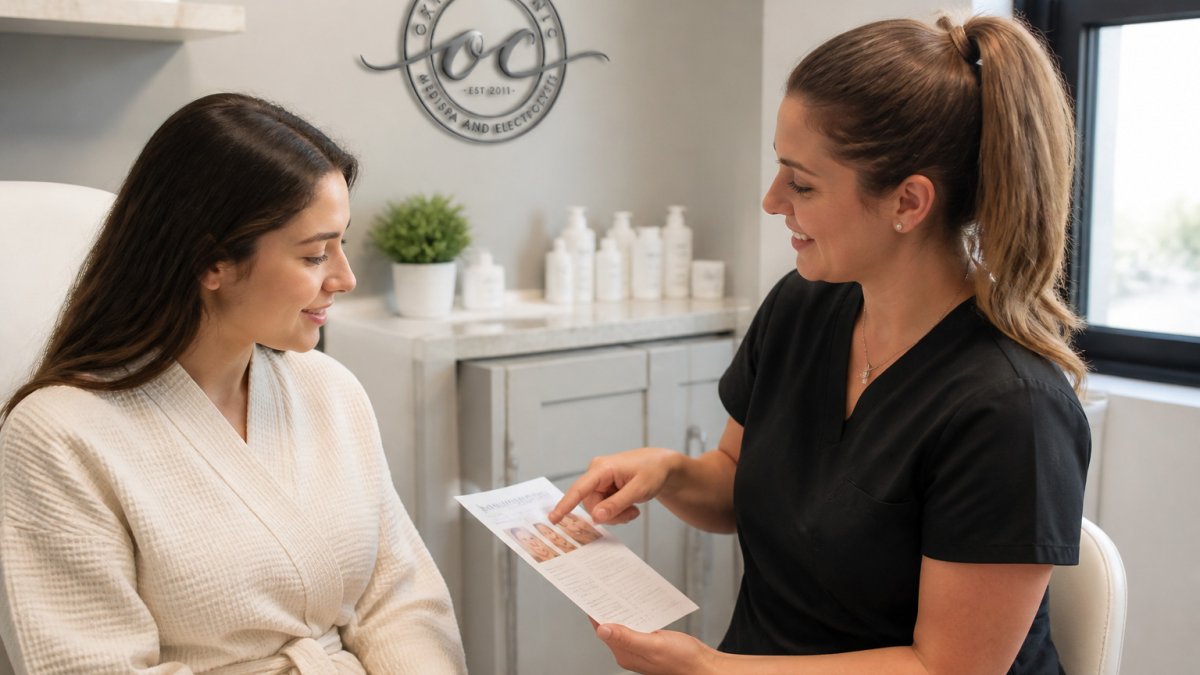
Anyone with an active breakout, a history of scarring or pigmentation problems, or a skin condition should speak with a qualified provider before booking. The guide walks through whether microneedling suits acne-prone skin and who should avoid it. The right choice depends on your skin’s current condition and your history, not on which treatment is more popular.
Booking a Consultation to Choose Your Acne Scar Treatment
The best next step is a consultation. Book a free consultation to discuss your scar type, skin tone, and skin health. Book a free consultation to find the right approach for your acne scars.
Frequently Asked Questions
Is microneedling or a chemical peel better for acne scars?
Neither treatment is better for every acne scar. Microneedling is generally associated with textured or indented scars, because it aims to stimulate collagen production in the deeper skin layers. Chemical peels work mainly on the surface and are often discussed for pigmentation, uneven tone and dullness. A qualified provider can assess your scar type, skin tone and history before recommending one approach, or a combination of both.
Which acne scar types respond best to microneedling?
Microneedling is most often discussed for atrophic scars, including rolling and indented scars that sit below the surface of the skin. These scars have lost tissue, so treatments that encourage collagen production are the focus. Flat, discoloured marks left after acne are less likely to improve with microneedling alone. Your provider can confirm whether your scars fit this pattern at a consultation.
How long does skin take to recover after microneedling or a chemical peel?
Recovery depends on the depth of the treatment and your skin’s response. Many people notice redness and sensitivity for a few days after microneedling, and a chemical peel can cause flaking or tightness over several days. Your provider will give you specific aftercare instructions, including sun protection and which products to avoid while your skin heals.
Can microneedling or chemical peels make active acne worse?
Active breakouts are generally a reason to delay treatment, because irritation can spread inflammation and affect healing. Both treatments are usually planned once active acne is under control. Treatment suitability is a decision for a qualified provider who can review your skin and medical history.

