
Is Microneedling Safe for Acne-Prone Skin? A 2026 Guide


Table of Contents
- How Microneedling Works on Acne-Prone Skin
- Is Microneedling Safe for Acne-Prone Skin? What the Evidence Shows
- Microneedling Contraindications: When to Avoid Treatment
- How Many Microneedling Sessions for Acne Scars and Texture?
- Microneedling Aftercare for Acne-Prone Skin: A Step-by-Step Recovery Plan
- Risks, Side Effects, and How to Reduce Them
- Acne-Safe Skincare Layering Before and After Microneedling
- Frequently Asked Questions
Last Updated: September 27, 2026
How Microneedling Works on Acne-Prone Skin
Microneedling is a skin treatment that uses fine needles to create tiny punctures in the top layer of skin. The body responds by building collagen, the protein that gives skin its structure and smoothness. This process is called collagen induction therapy.
The needles create micro-channels that trigger a wound healing response. That response can soften acne scarring and improve skin texture over time. It can also help topical products absorb more deeply.
But here is the catch. Those same micro-channels create open pathways in your skin. On acne-prone skin, that matters a lot. If active bacteria are present, the treatment can spread them.
So whether microneedling safe for acne-prone skin depends entirely on what kind of acne you have right now. That is the part most guides skip.
Never book a microneedling session while you have active, inflamed breakouts. Pushing needles through infected lesions can spread bacteria and cause new flare-ups.
Inflammatory vs. Non-Inflammatory Acne: Why the Difference Decides Your Candidacy
Inflammatory acne includes red, swollen, painful bumps like papules, pustules, and cysts. These lesions contain bacteria and immune cells. Non-inflammatory acne includes blackheads and whiteheads, which are clogged pores without infection.
This difference decides everything. Microneedling over inflammatory lesions risks bacterial spread. Working over comedonal acne, with no active infection, is far safer.
A simple rule helps here. If a breakout is red, tender, or filled with pus, wait. If your skin only has blackheads and old marks, you are likely a good candidate.
- Inflammatory: papules, pustules, nodules, cysts
- Non-inflammatory: blackheads, whiteheads, enlarged pores
- Safe to treat: post-acne scarring, texture, old marks
- Wait to treat: any active, angry breakout
Is Microneedling Safe for Acne-Prone Skin? What the Evidence Shows
Microneedling is generally safe for acne-prone skin when your active breakouts have settled. It is not safe during a flare-up. That distinction is the whole answer.
The treatment shines for acne scarring and atrophic scars, the pitted marks left behind after acne heals. By prompting dermal remodeling, it can gradually smooth these indentations and improve skin tone.
For post-inflammatory hyperpigmentation, the dark marks left after a pimple fades, microneedling can speed up fading by turning over skin cells faster.
But safety depends on technique. Sterile technique matters. A trained provider uses single-use cartridges and proper disinfection. This lowers the risk of pathogen transmission.
If you have cystic acne, meaning deep, painful nodules, microneedling is not your first step. See a dermatologist first.
Microneedling Contraindications: When to Avoid Treatment
Contraindications are reasons to skip a treatment. For acne-prone skin, the list is specific, and the most important variable is not your skin type, it is what your acne is doing right now. Knowing this protects your skin barrier integrity and prevents the treatment from making scarring worse.
Absolute contraindications, do not treat:
- Active inflammatory or cystic breakouts in the treatment area
- An active skin infection, cold sore, or open wound
- A history of keloid scarring
- Known allergy to any topical used during the procedure
- Pregnancy or breastfeeding (many providers defer as a precaution)
Relative contraindications, discuss with your provider first:
- Isotretinoin use (most providers wait six months after the last dose, though protocols vary)
- Strong retinoids within the past few days
- Eczema, psoriasis, or dermatitis in the treatment area
- Recent chemical peel, laser, or waxing in the same area
- Active autoimmune or bleeding disorders
- Blood-thinning medication
A dermatologist consultation is wise if you are unsure.
Specific Contraindications for Cystic Acne
- Needles can rupture the cyst wall and push bacteria and inflammatory contents deeper into the dermis.
- That displacement can turn a resolving lesion into a larger, more fibrotic one.
- The resulting inflammation raises the odds of atrophic scarring and hypertrophic scarring, the exact outcome the patient was trying to treat.
- Isotretinoin or other systemic therapy is usually the appropriate first step, not a resurfacing procedure.
If you are unsure whether your breakouts are comedonal or cystic, do not guess. A single in-person assessment is cheaper than treating a worsened scar. Deep, painful, recurring nodules under the skin are the signal to see a dermatologist before booking any procedure.
That sequencing is the part most people get wrong. Treat the cause, then treat the scars. Once the cystic acne is under control and the skin has been stable for a few months, microneedling becomes a reasonable option for the marks and texture it left behind.
How Many Microneedling Sessions for Acne Scars and Texture?
Most people need a series of sessions, not one. A common approach is three to six treatments spaced four to six weeks apart. The exact number depends on scar depth, skin sensitivity, and how your skin heals.
- Mild texture: 3 sessions
- Moderate scarring: 4 to 5 sessions
- Deep scarring: 6 or more
- Spacing: every 4 to 6 weeks
Microneedling Aftercare for Acne-Prone Skin: A Step-by-Step Recovery Plan
Aftercare decides your results. Acne-prone skin needs a careful, gentle recovery because the barrier is already compromised and the micro-channels stay open for roughly 24 hours. Here is a plan built around that window.
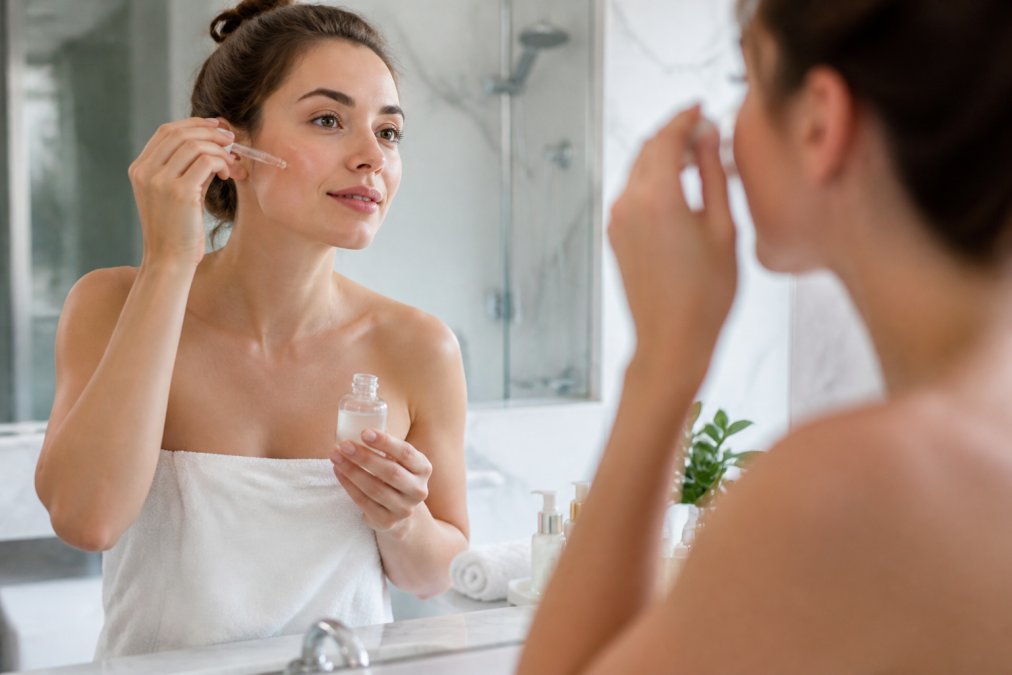
- First 24 hours: Keep skin clean and bare. Skip makeup, skip actives, skip sunscreen if you can stay indoors, most practitioners advise staying out of direct sun entirely on day one. Rinse with cool water only if needed.
- Days 1-3: Use a gentle, fragrance-free cleanser and a bland occlusive moisturizer. A thin layer of petrolatum over moisturizer helps seal the barrier while channels close.
- Days 3-7: Add a hydrating serum once redness settles. This is the window where barrier ingredients do the most work.
- Week 1+: Reintroduce sunscreen daily, no exceptions. Mineral formulas (zinc oxide, titanium dioxide) tend to sting less than chemical filters on freshly treated skin.
- Avoid for 1 week: Retinoids, exfoliating acids (AHA, BHA, PHA), scrubs, vitamin C, and benzoyl peroxide.
Patch-test any new serum on your jawline before applying it to freshly treated skin. Acne-prone skin reacts faster in the first week after microneedling, and a reaction on a treated cheek is harder to calm than one on the jaw.
The Role of Topical Serums During Recovery
Serums matter after microneedling because your skin absorbs them more deeply through the open channels. But that same enhanced absorption cuts both ways: a calming ingredient works better, and an irritating one irritates harder. For acne-prone skin, the goal in week one is barrier repair, not acne treatment.
Safe in the first week:
- Hyaluronic acid, pulls water into the skin without clogging pores. Apply to damp skin, then seal with moisturizer.
- Niacinamide, supports the barrier and can calm post-treatment redness. Most skin tolerates it well, but if you have never used it, do not start it on treated skin.
- Ceramides and cholesterol, replace the lipids the barrier loses during healing.
- Panthenol (vitamin B5) and centella asiatica, soothing, low-irritation options common in post-procedure formulas.
- Squalane, a lightweight emollient that is generally non-comedogenic.
Hold until at least day seven:
- Retinol and prescription retinoids, can sting and disrupt the healing barrier.
- Vitamin C (L-ascorbic acid), acidic and often irritating on compromised skin.
- AHA, BHA, and PHA exfoliants, physically and chemically too much for open channels.
- Benzoyl peroxide, drying and can delay barrier recovery.
- Salicylic acid, useful for acne long-term, but wait until the skin has fully settled.
Risks, Side Effects, and How to Reduce Them
Common side effects are mild and short-lived. Expect redness, tightness, and light peeling for a few days.
Reduce them by:
- Choosing a trained, experienced provider
- Waiting until active breakouts clear
- Following aftercare instructions closely
- Using sunscreen every single day
- Never treating over infected or broken skin
Acne-Safe Skincare Layering Before and After Microneedling
Layering matters as much as the treatment itself. The wrong order can irritate skin or block results.
After treatment, build back slowly:
| Phase | What to Use | What to Avoid |
|---|---|---|
| Days 1-3 | Gentle cleanser, bland moisturizer | Actives, makeup, sun |
| Days 3-7 | Add hydrating serum | Retinoids, acids, scrubs |
| Week 2+ | Reintroduce one active at a time | Layering multiple actives |
Frequently Asked Questions
Can I get microneedling if I have active acne breakouts?
It depends on the type of acne. Microneedling is generally not recommended over active inflammatory lesions, such as papules, pustules, or cysts, because the needles can spread bacteria and worsen inflammation. However, if you have only mild comedonal acne (blackheads and whiteheads) without active inflammation, a trained provider may treat you with adjustments. A dermatologist consultation or in-clinic skin assessment is the safest way to determine whether your skin is ready for microneedling.
Can microneedling cause new acne breakouts?
Microneedling itself does not typically cause acne, but it can trigger temporary flare-ups if the skin is not properly prepped or if aftercare products clog pores. Using non-comedogenic, fragrance-free products during recovery helps reduce this risk. Some people experience small bumps or congestion in the first few days after treatment as the skin adjusts. Following a tailored aftercare routine for acne-prone skin and avoiding heavy creams or occlusives can keep breakouts to a minimum.
Who is a bad candidate for microneedling?
Microneedling contraindications include active cystic acne, active skin infections, open wounds, and a history of keloid scarring. People who are pregnant, taking isotretinoin, or undergoing radiation therapy should also avoid treatment. If you have a compromised skin barrier or are prone to post-inflammatory hyperpigmentation, a provider may recommend a modified approach or an alternative treatment. Always disclose your full medical history during your consultation.
How long should you wait between microneedling sessions for acne scars?
Most providers recommend waiting 4 to 6 weeks between microneedling sessions. This allows the skin’s wound healing response to complete and collagen remodeling to progress. For acne scarring, a series of 3 to 6 sessions is common, with maintenance treatments every 6 to 12 months. Your exact schedule depends on skin sensitivity, the depth of scarring, and how well your skin recovers. Rushing sessions can compromise skin barrier integrity and increase the risk of irritation.
Microneedling can be safe and effective for acne-prone skin, but timing and technique decide the outcome. Treat active breakouts first, then address the scarring they leave behind. Oxygen Facial Clinic offers microneedling alongside medical-grade skincare from Swissline and Dr. Morelli, with routines matched to your skin profile. Book a free consultation to find out if microneedling is right for your skin.
