
Advanced Skincare Treatments for Dull Skin


Table of Contents
- What Causes Dull Skin and How Advanced Treatments Help
- Oxygeneo Facial Benefits for Dull, Tired Skin
- How to Brighten Dull Skin: A Practical Routine
- Oxygeneo Facial vs Chemical Peel: Which Suits Your Skin?
- Other Advanced Treatments for Dull Skin Worth Knowing
- Safety, Skin Tone, and Cost: What to Weigh Before Booking
- Frequently Asked Questions
Last Updated: September 27, 2026
What Causes Dull Skin and How Advanced Treatments Help
Dull skin is a loss of light reflection at the surface, caused by dead cell buildup, slow cellular turnover, and a weakened skin barrier. This guide from Oxygen Facial Clinic covers the advanced skincare treatments for dull skin that actually change how light bounces off your complexion, from Oxygeneo facials to resurfacing procedures. Most products sit on top of the problem. Professional treatments work underneath it.
Two mechanisms drive the change.
Dead Skin Cells and Slowed Cellular Turnover
Cellular turnover slows with age, so dead skin cells pile up and scatter light instead of reflecting it. The fix is controlled exfoliation that lifts that layer without stripping the barrier. Mechanical resurfacing, enzymes, and acids all do this at different depths. Too gentle and nothing changes. Too aggressive and you trade dullness for irritation.
When a Compromised Skin Barrier Steals Your Glow
A damaged skin barrier leaks moisture and looks flat, tight, and grey. Barrier repair comes before any resurfacing. If your skin stings when you apply a basic moisturizer, no acid or laser will give you radiance. Calm the barrier first, then treat texture and pigmentation. Skip that order and you will pay for it in downtime.
Oxygeneo Facial Benefits for Dull, Tired Skin
Oxygeneo facial benefits center on three things at once: exfoliation, oxygenation, and infusion. The treatment uses a reaction at the skin surface to release carbon dioxide, which draws oxygen-rich blood to the area while pushing active ingredients in. The result is immediate glow with no downtime, which is why it suits dull, tired skin better than a single-action peel.
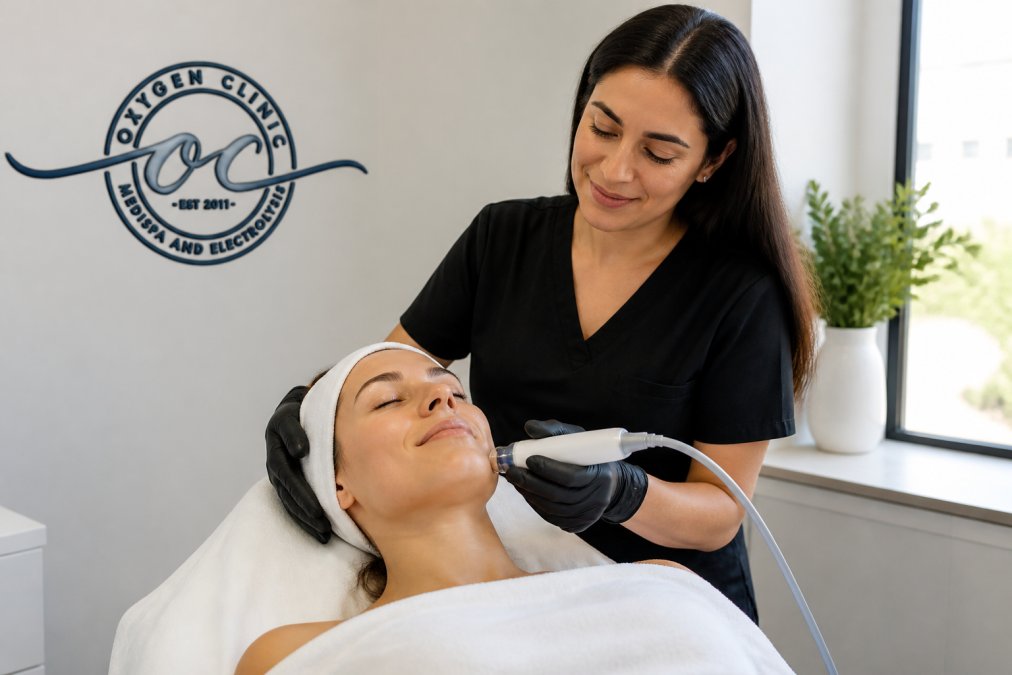
How the OxyGeneo 3-in-1 Technology Works
The OxyGeneo 3-in-1 technology combines three actions in one session. It exfoliates the surface, triggers oxygen release from within the skin, and infuses serum while the pathways are open. That third step is what most facials miss: the exfoliation opens the door, but nothing walks through it. Oxygen Facial Clinic pairs the treatment with European skincare lines including Swissline and Dr.
Book an Oxygeneo facial at least 3 to 5 days before a big event. The glow peaks in the first 48 hours, and any mild redness from exfoliation settles within a day for most people.
How to Brighten Dull Skin: A Practical Routine
Learning how to brighten dull skin comes down to consistency, not intensity. A simple routine done daily beats an aggressive one done twice a month. Build it in this order:
- Cleanse gently, morning and night, with a non-stripping formula
- Apply a vitamin C serum in the morning for antioxidant protection
- Use niacinamide to support the barrier and even tone
- Exfoliate with lactic acid or citric acid two to three times weekly
- Introduce a retinoid at night, starting twice weekly
- Moisturize and apply broad-spectrum SPF every morning
Ingredient Timing and Interactions
Vitamin C works best in the morning under sunscreen because it boosts photoprotection and neutralizes free radicals from UV and pollution. Niacinamide is stable and pairs well with most actives, but if you use both, apply vitamin C first, wait a minute, then niacinamide. Retinoids belong at night because sunlight degrades them and increases irritation risk. Do not layer retinoids with strong acids in the same session; alternate nights instead.
How Oxygeneo Facials Fit Into a Home Routine
An Oxygeneo facial does not replace your daily routine; it amplifies it. The treatment exfoliates, oxygenates, and infuses serum in one session, which temporarily increases absorption of the products you use at home. Schedule the facial when your skin is calm and not already irritated from actives. Skip retinoids and acids for 48 hours before and after the facial to avoid over-exfoliation.
Maintenance Schedule for Lasting Radiance
Consistency matters more than intensity. A common pattern is to exfoliate two to three times weekly, use retinoids two to three nights weekly, and apply vitamin C every morning. If you get Oxygeneo facials, most practitioners recommend every three to four weeks to maintain results. Adjust based on how your skin feels: if it stings or looks red, pull back on actives and focus on barrier repair.
Oxygeneo Facial vs Chemical Peel: Which Suits Your Skin?
An Oxygeneo facial vs chemical peel comparison usually comes down to downtime and depth. An Oxygeneo facial is a no-downtime treatment that exfoliates, oxygenates, and infuses in one session, best for dullness, dryness, and pre-event glow. A chemical peel uses acids such as lactic acid or citric acid to remove controlled layers of skin, which makes it stronger for pigmentation, fine lines, and sun damage, with visible flaking for several days.
| Feature | Oxygeneo Facial | Chemical Peel |
|---|---|---|
| Primary action | Exfoliate, oxygenate, infuse | Controlled acid exfoliation |
| Best for | Dullness, dryness, glow | Pigmentation, fine lines |
| Downtime | None | 3-7 days of flaking |
| Session length | 30-45 minutes | 20-40 minutes |
| Maintenance | Every 3-4 weeks | Every 4-6 weeks |
Other Advanced Treatments for Dull Skin Worth Knowing
Beyond facials and peels, several non-surgical options target dullness at depth. Each carries different downtime and risk, and none replaces a daily routine.
Microneedling and Radio Frequency
Microneedling creates controlled micro-injuries that trigger collagen production, improving skin texture and fine lines over a series of sessions. Radio frequency adds heat to tighten and stimulate deeper remodeling. Expect mild redness for a day or two. Results build across three to six treatments.
Laser Resurfacing and Dermaplaning
Fractional laser resurfacing removes damaged surface layers and stimulates renewal, which makes it effective for pigmentation and wrinkles, with real downtime of several days. Dermaplaning is the opposite: a quick mechanical resurfacing that shaves off dead skin cells and fine hair for instant smoothness and better makeup application. It is a surface treatment, not a corrective one.
Do not book laser resurfacing or a strong peel and then spend the next week in the sun. Freshly resurfaced skin is highly vulnerable to hyperpigmentation, and the damage can be harder to reverse than the dullness you started with.
Safety, Skin Tone, and Cost: What to Weigh Before Booking
Safety and skin tone should decide your treatment before price does. Deeper resurfacing carries a higher risk of post-inflammatory hyperpigmentation on darker skin tones, so fractional laser and aggressive peels need a conservative approach and an experienced provider. Lighter, staged treatments often deliver better results with less risk.
Skin Tone and Ethnicity Considerations
Most generic advice ignores how treatments behave on melanin-rich skin. For Fitzpatrick skin types IV to VI, the risk of post-inflammatory hyperpigmentation (PIH) after any injury, including laser or acid peels, is significantly higher. This does not mean you cannot treat dullness; it means choosing modalities that bypass the melanocyte stimulation. Oxygeneo facials are generally safe for all skin tones because they do not wound the skin or use heat.
Contraindications and Who Should Avoid Certain Treatments
Not everyone is a candidate for every treatment. Avoid Oxygeneo facials if you have active acne cysts, open wounds, or a cold sore outbreak on the treatment area. Chemical peels are contraindicated if you are pregnant or breastfeeding (especially salicylic acid peels), have taken isotretinoin in the past six months, or have a history of keloid scarring. Microneedling and radio frequency should be avoided if you have a pacemaker, metal implants in the face, or active skin infections.
Cost-Benefit Analysis and Maintenance Schedules
Pricing depends on the treatment, the number of sessions, and your provider, so ask for a full treatment plan quote rather than a single-session figure. A series of gentler sessions may cost more in total but carry less risk than one aggressive procedure. For Oxygeneo facials, most clinics recommend a series of three to six sessions spaced three to four weeks apart, then maintenance every one to three months.
| Treatment | Typical Downtime | Best For | Maintenance |
|---|---|---|---|
| Oxygeneo facial | None | Dullness, glow | Every 3-4 weeks |
| Chemical peel | 3-7 days | Pigmentation, lines | Every 4-6 weeks |
| Microneedling | 1-2 days | Texture, fine lines | 3-6 sessions |
| Fractional laser | Several days | Sun damage, wrinkles | As advised |
| Dermaplaning | None | Instant smoothness | Every 3-4 weeks |
Match the treatment to your goal, not to the strongest option available. For dullness alone, a no-downtime Oxygeneo facial every three to four weeks plus a consistent home routine delivers more visible radiance than a single aggressive procedure.
Frequently Asked Questions
What is the best treatment for dull skin?
The best treatment depends on your skin’s condition and goals. An Oxygeneo facial suits most skin types because it exfoliates, infuses nutrients, and boosts oxygenation in one session. Chemical peels work well for pigmentation and texture, while microneedling targets fine lines and collagen production. A consultation with a skincare professional helps match the treatment to your specific concerns.
How does an Oxygeneo facial improve skin radiance?
An Oxygeneo facial uses a three-step process. First, it exfoliates dead skin cells from the surface. Then it infuses active ingredients like vitamins and antioxidants. Finally, it triggers oxygen release within the skin, which supports cellular turnover and collagen production. This combination leaves the complexion brighter, smoother, and more even after a single session.
Are Oxygeneo facials suitable for all skin types?
Oxygeneo facials are generally suitable for all skin types, including sensitive skin. The treatment is non-invasive and does not use harsh chemicals or needles. However, if you have active breakouts, open wounds, or specific skin conditions, a professional assessment is recommended before booking. Your provider can adjust the treatment to match your skin’s needs.
How often should you get professional facials for glowing skin?
Most people see the best results with a professional facial every four to six weeks, which aligns with the skin’s natural renewal cycle. If you are preparing for an event, a single Oxygeneo facial can deliver visible radiance within days. For ongoing improvement in skin texture and pigmentation, consistent sessions over several months work best.
What causes skin to look dull and lifeless?
Dull skin typically results from a buildup of dead skin cells, slowed cellular turnover, dehydration, and a compromised skin barrier. Environmental factors like pollution and UV exposure, along with aging and stress, worsen the effect. Without regular exfoliation and hydration, the complexion loses its natural radiance and appears tired or uneven.
Can I combine an Oxygeneo facial with other advanced treatments?
Yes, an Oxygeneo facial pairs well with other non-surgical treatments like microneedling or radio frequency, but they should be spaced apart to let your skin recover. A professional can design a treatment plan that sequences these services for the best results. Always disclose your full skincare routine and any recent treatments during your consultation.
Dull skin rarely needs the most aggressive treatment on the menu. It needs the right one, applied consistently, with a barrier that stays intact. Oxygen Facial Clinic combines Oxygeneo facials, microneedling, and medical-grade European skincare from Swissline and Dr. Morelli, all planned around a professional skin analysis and a personalized home routine. Book a free consultation with Oxygen Facial Clinic and build a plan that brings your complexion back to life.
