
Electrolysis vs Laser for Chin Hair: Which Works


Table of Contents
- How Electrolysis and Laser Hair Removal Work
- Permanent Hair Removal vs Long-Term Reduction
- How Many Electrolysis Sessions for Chin Hair
- Electrolysis for Hormonal Chin Hair
- Laser Hair Removal for Light or Gray Hair
- Hair Type, Skin Tone, and Treatment Suitability
- Pain, Side Effects, and Treatment Duration
- Combining Methods and Choosing Your Path
- Frequently Asked Questions
Last Updated: October 14, 2026
How Electrolysis and Laser Hair Removal Work
Electrolysis and laser hair removal are distinct methods for permanent hair removal, operating through completely different mechanisms. Understanding how each targets the hair follicle is crucial when choosing an approach for chin hair.
Electrolysis uses electrical energy to destroy individual hair follicles.
Laser hair removal uses concentrated light energy that targets melanin, the pigment in your hair.
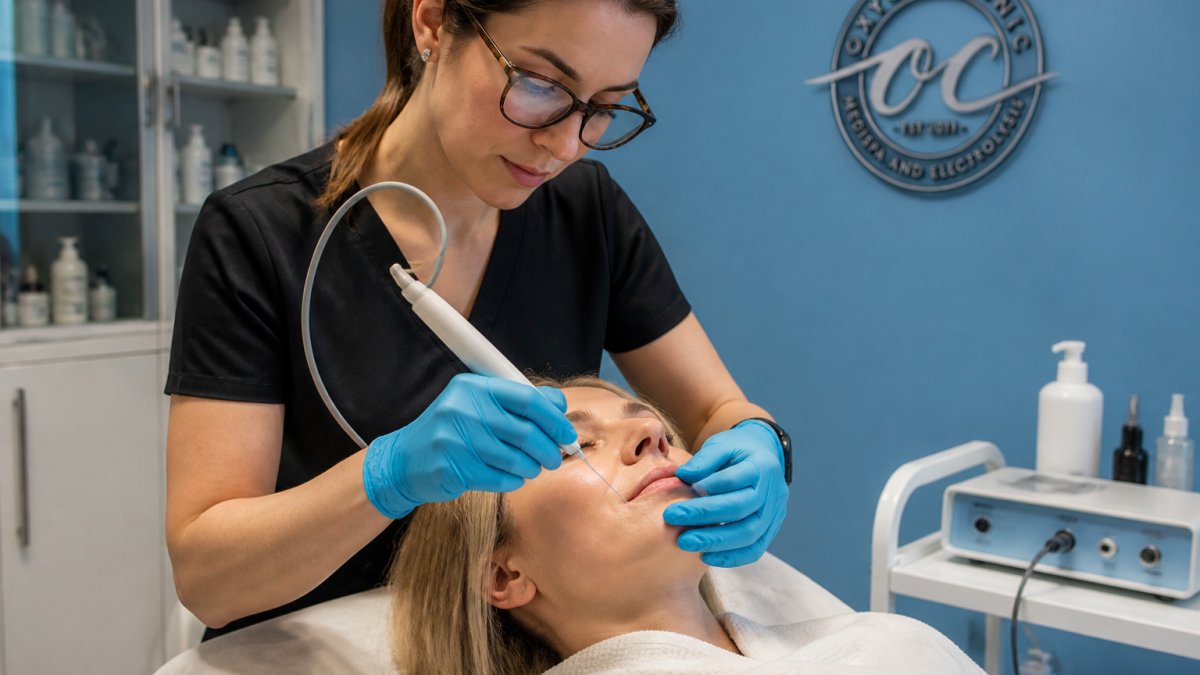
Electrolysis: Treating Individual Hair Follicles
Electrolysis is a method recognized for providing permanent hair removal. A fine probe is inserted into the hair follicle, and electrical current destroys the follicle’s growth cells. Three types exist.
Galvanic electrolysis uses direct electrical current to create a chemical reaction that destroys the follicle. Thermolysis uses radiofrequency energy to generate heat. Blend electrolysis combines both methods for potentially faster treatment.
Laser Hair Removal: Targeting Hair Color and Melanin
Laser hair removal depends on the presence of melanin.
Different laser types are suited for different skin tones. Nd:YAG lasers can be effective on darker skin because they penetrate deeper and are less likely to target melanin in the skin itself.
Laser technology can cover larger areas relatively quickly, treating numerous hairs across your chin and upper lip in a single session. It is most effective during the active growth phase of hair, necessitating multiple sessions spaced several weeks apart for optimal results.
Permanent Hair Removal vs Long-Term Reduction
Here’s what matters most: electrolysis vs laser for chin hair differs fundamentally in permanence. Electrolysis destroys individual follicles permanently, meaning that specific hair will not regrow.
Laser hair removal is technically considered permanent hair reduction, not permanent removal. It significantly reduces hair growth, but some follicles may eventually regenerate. This distinction is particularly important for addressing hormonal chin hair.
After electrolysis, treated hairs are permanently gone. After laser treatment, you might require maintenance sessions annually or every few years. For hormonal chin hair, this difference becomes more significant over time.
How Many Electrolysis Sessions for Chin Hair
The number of sessions required for chin hair varies based on hair density, growth cycles, and individual biological factors. Most individuals require 8 to 16 sessions for noticeable and lasting results.
Each session typically lasts between 15 to 60 minutes, depending on the number of hairs being treated.
Chin hair grows in cycles, meaning not all hair follicles are in the active growth phase simultaneously.
The timeline for complete permanent removal of chin hair generally spans 6 to 18 months of consistent treatment, contingent on hair density and attendance at scheduled appointments.
Electrolysis for Hormonal Chin Hair
Hormonal changes are a significant driver of chin hair growth in many individuals. This is where electrolysis shows a distinct advantage over laser.
Electrolysis is effective regardless of hormonal status.
Laser hair removal faces challenges with hormonal chin hair: if hormonal fluctuations continue to stimulate new hair growth, new follicles may become active after treatment, potentially leading to regrowth even after completing a full course of laser sessions.
For individuals with PCOS or other hormonal conditions contributing to facial hair, electrolysis offers a reliable solution: each treated follicle is permanently destroyed.
Laser Hair Removal for Light or Gray Hair
This is a notable limitation for laser hair removal. Gray, white, and very light blonde hair contain minimal to no melanin, the target for laser energy, making treatment largely ineffective on these hair colors.
If your chin hair is predominantly gray or light in color, laser treatment will likely yield poor results. Electrolysis becomes the clear choice in such cases, as it treats light and gray hair as effectively as dark hair because it targets the follicle directly, independent of the hair’s color.
Many individuals discover this limitation only after undergoing laser sessions and finding their gray or light hairs remain untreated. Electrolysis effectively addresses what laser technology cannot.
Hair Type, Skin Tone, and Treatment Suitability
Your hair color and skin tone significantly influence which hair removal method is most suitable. Electrolysis vs laser for chin hair suitability largely depends on these factors.
Laser works best for:
- Dark hair on light to medium skin tones.
- Coarse, thick hair with high melanin content.
- Individuals without significant hormonal hair growth drivers.
Laser works poorly for:
- Gray, white, or very light blonde hair.
- Individuals with darker skin tones (though advancements in laser technology are improving efficacy).
- Hormonal chin hair that may continue to grow.
Electrolysis works for:
- All hair colors, including gray, white, and blonde.
- All skin tones.
- Hormonal and non-hormonal hair growth.
- Small, precise areas like the chin.
Pain, Side Effects, and Treatment Duration
Discomfort and downtime are considerations, but for chin hair, the primary factor is time: the duration of each appointment, the total number of sessions required, and the spacing between them. The cumulative commitment is often underestimated.
What each method feels like
Electrolysis involves inserting a fine probe into each follicle and applying a small electrical current. Most individuals describe a warm, prickling, or brief stinging sensation for each individual hair treated. This process is repeated across the treatment area as each hair is addressed individually.
Laser treatment feels like a brief snap or a rubber-band flick with each pulse. The sensation is short-lived but can be sharp, and darker or recently tanned skin may experience it more intensely. Because it treats many hairs simultaneously, there are fewer distinct sensations, but each can be more pronounced.
Side effects and skin risks
Both methods can temporarily cause redness, warmth, and slight swelling in the chin area immediately following treatment. These effects typically subside within hours.
Electrolysis may result in small scabs or crusts at the treated follicles, which usually heal within a few days. When performed with sterile technique and proper aftercare, infection is uncommon. Over-treatment or improper technique can, in rare cases, lead to minor textural changes in the skin.
Laser treatment carries a higher risk of pigmentary changes, such as darkening or lightening of the treated skin, particularly on darker skin tones or if the incorrect device or settings are used. Blistering is an uncommon but possible side effect.
If you have a darker skin tone, inquire specifically about the type of laser and settings that will be used. Not all devices are suitable for every skin tone, and using an inappropriate device increases the risk of burns and pigmentary changes.
Session length and spacing
| Aspect | Electrolysis | Laser |
|---|---|---|
| Session duration (chin) | Roughly 15-60 minutes, depending on hair count | Roughly 10-20 minutes |
| Typical spacing between sessions | About 1-4 weeks | About 4-6 weeks |
| Estimated sessions for chin | Often 8-16 or more | Often 6-8 for suitable dark hair |
| Hair color suitability | All colors, including gray and white | Dark hair on suitable skin tones |
| Permanence | Permanent removal of treated follicles | Long-term reduction; maintenance may be needed |
These are typical ranges and not guarantees. Actual numbers depend on hair density, growth cycle, hormonal factors, and the consistency of your attendance.
The cumulative time commitment
This is where chin treatment often surprises individuals. While a single appointment may be brief, the complete course of treatment is not.
For electrolysis, 12 sessions spaced two to four weeks apart represent several months of regular appointments. Because chin hair grows in cycles, some individuals require treatment spread over a year or more to effectively target every follicle as it becomes active.
For laser hair removal, six to eight sessions spaced four to six weeks apart typically spans several months. If hormonal regrowth occurs, additional maintenance sessions may extend this timeline.
When comparing the two methods, do not focus solely on a single appointment. Consider the full course: the number of sessions, their spacing, the total duration in months, and the likelihood of needing maintenance afterward. This represents the true time investment.
Questions to ask before booking
- How many sessions do you estimate will be needed specifically for my chin?
- What will be the spacing between these scheduled appointments?
- What does regrowth between sessions typically look like?
- What aftercare do you recommend to minimize redness and scabbing?
- What is your protocol if I experience pigment changes or irritation?
Obtaining clear answers to these questions before commencing treatment can make the process far more predictable and help you assess whether a provider is offering a realistic plan or an overly optimistic one.
Combining Methods and Choosing Your Path
Many comparison articles conclude with “it depends on your hair and skin.” While true, this is not particularly helpful when you are trying to make a decision. A chin-specific framework is more practical, as chin hair behaves differently from hair on the legs or underarms: it is often hormonally influenced, typically sparse and isolated rather than dense, and located on thinner, more visible skin than almost anywhere else.
A chin-specific decision framework
Work through these questions in order. The first one that applies usually indicates your best path.
1. Is your chin hair gray, white, very light blonde, or fine and downy?
Laser has little to no melanin to target, so it will underperform.
2. Is your chin hair driven by PCOS, perimenopause, menopause, or another hormonal shift?
Electrolysis is usually the more reliable long-term choice.
3. Is it a small number of isolated, stubborn hairs?
Electrolysis is often more efficient for these.
4. Is the hair dark and coarse, and your skin tone light to medium?
Laser hair removal can be a highly effective option for bulk reduction.
When combining methods actually makes sense
Combining methods is not an upsell; it addresses specific challenges. Laser and electrolysis have different strengths and weaknesses, and a chin can present with both types of hair simultaneously.
A common scenario involves a chin with a cluster of dark, coarse hairs alongside finer light or gray ones. Laser can quickly clear the dark cluster over a wider area, reducing overall hair density. Electrolysis can then address the hairs laser cannot target, including light, gray, and fine hairs, as well as any dark hairs that may persist after the laser course.
Combining methods is most effective when each is used to target different types of hair, rather than the same hairs. Use laser for bulk reduction of pigmented hair, followed by electrolysis for precision and to address any hair that laser cannot target.
What to expect from a consultation
A thorough assessment involves examining more than just hair color. A practitioner should evaluate:
- Hair density and distribution: The presence of a few isolated hairs versus a dense patch will influence the recommended method and the number of sessions required.
- Hair texture: Coarse terminal hairs respond differently from fine vellus hairs.
- Skin tone and sensitivity: This impacts laser safety margins and the risk of pigmentary changes.
- Hormonal history: Recent changes, diagnoses, or medications that influence hair growth.
- Treatment history: Prior laser treatments, waxing, plucking, or threading can affect the practitioner’s assessment and recommendations.
Ask directly: Which method are you recommending for my chin, how many sessions are needed, what is the spacing between them, and what does regrowth between sessions typically look like? A practitioner unable to provide specific answers may not be offering a genuine assessment.
Setting realistic expectations
Regardless of the path you choose, prepare for a process rather than a single appointment. Chin hair grows in cycles, meaning not all follicles are active simultaneously. This is why both methods require multiple sessions spaced weeks apart, and results develop gradually.
If your chin hair is hormonally driven, consider hair removal as one component of a broader management strategy. Neither method addresses the underlying hormonal cause. Many individuals manage both aspects concurrently, seeking medical guidance for hormonal issues while adhering to a consistent hair removal plan for visible results, which typically leads to the most stable and satisfactory outcome over time.
Frequently Asked Questions
Is electrolysis truly permanent for chin hair, or can it grow back?
Electrolysis destroys the hair follicle by applying electrical current through a probe inserted into each follicle. Once the follicle is destroyed, that specific hair cannot regrow. However, new hairs in dormant follicles may emerge over time, which is why multiple sessions are needed. Laser hair removal, by contrast, causes long-term hair reduction but not permanent elimination. For chin hair driven by hormones, electrolysis remains the only method that can achieve true permanence on individual treated follicles.
How many electrolysis sessions does chin hair typically require?
Chin hair usually requires 8 to 12 sessions spaced 2 to 4 weeks apart, depending on hair density, skin sensitivity, and individual healing. Some clients need additional sessions for new hairs that emerge from previously dormant follicles. Treatment duration per session typically ranges from 15 to 45 minutes for a small area like the chin. Total timeline can span 4 to 6 months or longer. The exact number varies based on hair growth cycles and the density of hairs present.
Can laser hair removal work on light, gray, or white chin hair?
Laser hair removal relies on melanin (hair pigment) to absorb laser energy. Light, gray, or white hairs contain little to no melanin, making them poor candidates for laser treatment. Electrolysis works on all hair colors because it targets the follicle directly, not pigment. If you have blonde, red, gray, or white chin hair, or if laser treatments have left behind light-colored hairs, electrolysis is the more effective permanent solution.
Is electrolysis better for hormonal chin hair than laser?
Hormonal chin hair is often coarser and may continue to emerge over time due to ongoing hormonal changes. Electrolysis is more suitable because it permanently destroys each treated follicle, regardless of hormonal influences on new hair growth. Laser can reduce hormonal chin hair but does not guarantee permanent removal. Electrolysis ensures that each treated hair will not return, making it the preferred choice for persistent, hormonally driven facial hair.
